Showing posts with label books about writing. Show all posts

Tuesday, February 8, 2022

Winter, Walking Casts, Writing Books. Going on...

At the nearby track where I walk when the roads are icy or I’m recovering from yet another injury, or have time only for a quick two miles, on many mornings on the inside field, a freelance soccer coach takes groups of youngsters through what to me seem like advanced skill drills. A blur of motion, legs, soccer balls. I have almost no interest in the game, but what I love is that no matter where on the track I am, or even how windy it may be, I hear the lilt of the coach’s rich voice, his island accent, urging his players on.

When he first appeared, I noticed that no matter what mistake a player may make, no matter how much one of the kids may be struggling, what comes out of this man’s mouth is: “And, we go on.”

 At first, I couldn’t decipher it, thinking I’d heard: “andweeego own…” But then I got it, and realized he was encouraging his charges, constantly—and more, suggesting that errors, small or large missteps, don’t matter as much as going on, without pausing to worry or feel sorry.

I learned to love hearing him, and some days when I was driving to the track, hoped fervently the coach would be there, boosting those hopeful, keep-on-trying kids. When I hear him encouraging them, especially on days when I’m considering cutting my walk short, that small push is enough.

 And, we go on.

 And so, I do.

Like now. 

Middle of winter in New Jersey. And though I’ve lived here all but a half-dozen years of my life, I’m always and inexplicably a bit surprised at what happens (snow, ice, bone rattling cold), and also a little dismayed (Seasonal Affective Disorder, otherwise known as the daily gray day doldrums). Toss in two new broken bones in my foot, and here we are indeed: February, slightly depressed, too much forced sedentary-ness, staying home far too much.

 And, we go on.

Keeping me going just now, as I clump around in an awkward walking boot: teaching (this semester, an MFA course, “Reading as a Writer,” which I developed several years ago); writing (barely trudging around the track, but showing up); editing and coaching (absolutely nothing better than helping writers polish their drafts, manuscripts, and skills).

Yet, some days, when it all gets to me—like the gray and icy 13-degree day last week when my foot ached and I ran out of British crime dramas to watch—it’s my non-writer, feeling crummy but determined to do something activities that keep me going on. That is, I organize. Cull closets and shelves, then toss, sell, or find ways to give away. I’ve culled my office, notably my bulging bookshelves, three times recently. A neighborhood social media page ensures the novels and memoirs and biographies I part with find new readers nearby.

Most recently, I’ve been thinning my writing craft bookshevles. This group (pictured) is ready to go. (I've either got a duplicate copy, or read it and got what I needed from it, or for some reason it didn't speak to me but may be just what another writer needs.) And I’d love to give them to you, my blog readers and writing and reading friends. Want one? Email me with your U.S. postal address and I’ll send it via media mail at my cost. (If you can make good use of several, and are willing to share mailing expenses, we can do that too.) That’s it. Books to a new home where they can maybe inspire another writer.

Here’s hoping your winter/pandemic/getting-back-to-normal/whatever projects and activities are feeding you.

 And, we go on together.

 P.S. I have two open editing slots for winter and three for spring, to take on full manuscripts, and room for a few new coaching clients. And of course, editing/feedback for shorter works is available almost anytime. Get started here or email me.  

Wednesday, April 10, 2013

Author Interview: Mimi Schwartz, on the second edition of Writing True: The Art and Craft of Creative Nonfiction


New Jersey, the Garden State, has a perpetually abundant crop of writers in every season, and some, like Mimi Schwartz, also write books that other writers in every corner of the country, look to for writing advice. The second edition of Writing True: The Art and Craft of Creative Nonfiction (written with co-author Sondra Peel) is now available. I caught up with Mimi a few days before our paths intersected at an essay conference in Manhattan last weekend, and she agreed to answer my questions.

Q.  In its first edition, your book is a staple on the shelf of many essayists and memoir writers. Was there anything particularly challenging about creating the second edition?  Anything you especially wanted to expand upon or respond to given changes in the literary world since 2006?

A. Lots of interesting things have been happening to creative nonfiction—and our second edition reflects that. We have a new chapter, "Exploring the New Media," that explores the many online possibilities from blogs, to digital storytelling, to graphic memoir. We talk more about up-and-coming forms such as the lyric essay, the braided essay, and the personalized op ed essay you find in the Sunday Review of the New York Times. And we added a section on the role of humor. Part 2, our anthology, keeps the favorites of the first edition—and now includes some promising young writers, some classics by George Orwell and E.B. White, and several essay dealing with timely topics in exciting new formats.

Q.  In the preface, you write that nonfiction writers "begin with a question or puzzlement, and with the help of memory, research, reading, interviews, speculation, imagining – whatever it takes – we attempt to capture the complexity of our subject."  It's interesting that the list only begins with memory, and then cites other avenues of exploration that sadly it seems many writers skip over.

A. “Research,” if done well, certainly enriches a narrative -- whether writing about a childhood memory from third grade or about what happened yesterday. But so does memory and imagination. That is why we have a chapter on “The Role of Research” – and also have a new essay by Lisa Knopp called “Perhapsing” that shows how speculation, even daydreaming, can legitimately enhance true stories.

Q.  You offer several options for gathering information. With information at our fingertips all day long (Google, Wikipedia, websites), have writers paradoxically gotten lazier about the kinds of rich experiential "research" that could make huge contributions to their work – trips out into the physical world to observe, interview, revisit a place, soak up creative energy, information, nuance?  

A. Both forms of research—the ones we read and the ones we feel—are essential for the authenticity of an experience. So yes, I agree with you. Check out Google but also get out there and look, listen, smell, taste, and touch.

 Q.  What advice do you give a writer who, after engaging in research and/or interviews, finds their memory is flawed, either in a significant way, and/or in more minor ways?

A. What to do about discrepancies of memory depends on the story we are telling. Sometimes I let the reader know there’s another point of view, as in “I remember this, but my mother says that….” Sometimes, as in my marriage memoir, Thoughts from a Queen-Sized Bed, I use dialogue—or a footnote—to let the other person have a say. And sometimes I decide it doesn’t matter. As Geoffrey and Tobias Wolff told their mother when she said both their memoirs were incorrect, “Okay. Then write your own story!” We discuss the struggle and various solutions in Writing True.

Q. Your book offers writing exercises, including some lengthy and multi-step ones that I imagine can catapult a writer to a whole list of possible new pieces. For the writer working on his/her own, how might you suggest incorporating writing exercises into everyday writing practice?  And what makes a really good writing exercise?

A. A good writing exercise is one that makes us want to write more. Often we don’t know that right away.  It may be a day, a week, a year later, that we have more to say. That’s why we recommend a notebook—either by hand or on a computer—and devote one chapter to “The Power of the Notebook.” We also discuss free online exercises for getting started.  Try them all, for our belief is: If you don’t have anything on paper, you have nothing to work with!

Q.  I love the chapter "Ten Ways to a Draft," with outside-the-norm ideas for moving toward the writing -- freelisting, map making, time lines, memory chains, clustering, among others. I bet some of these will seem surprising to writers whose inclination is always to go first (or to remain at all times) at the keyboard. How do you see these activities helping writers? Are they mostly intended for those who are stuck? Or do they have value for any writer of nonfiction?

A. I’ve done many of these exercises more than once—and am always surprised by how they trigger new ideas, memories, and details. Clustering, for example, is one I use for new ideas and to help me get unstuck. I put an emotionally loaded word in the middle of the page, free associate as it proscribes, and suddenly there is new energy for writing on.

Q. The chapter, "Workshopping a Draft," is loaded with good advice, and I was especially pleased with the emphasis on the role of listening, both when one's own work is being discussed and when someone else's piece is being reviewed. What is the principle benefit of the workshop, and how can listening skills help a writer got the most out of one?

A. We know stories well in our head, but key details often never reach the page. Workshops, if well run, can help a writer connect the dots between what is intended and what the readers receive. Responses, using our guidelines, lead to discoveries and new insights that make revisions more meaningful.

Q.  In the book, you self-identify as an "underwriter" whose first drafts "tend to be skimpy," but get fleshed out once down on paper "following the clues of first words."  Can you explain how that works for you?  Has your approach changed at all over time, as you've written and published more and more work?

A. My style stays the same. I like to find the story first and then flesh it out—a classic underwriter. What has changed is what I tell myself after I have a draft. I know to coach myself to add detail (and I can cut it back later) and I know to ask at the end “Have a let myself off the hook too easily? Do I need to go deeper?” The answer is almost always, “Yes!”

Q.  Your book includes an anthology of excellent published works by an interesting group of CNF writers. I love what you write in the introduction: "We suggest reading a work once for pleasure and once as a writer looking at craft. It helps to star favorite parts, make comments in the margins…and ask the same questions you ask when reading works-in-progress – about theme, characterization, narrative thrust, pacing, scene development, foreshadowing, use of dialogue and so on."  This, to me, is the heart of reading as a writer. How would you describe the role of reading for writers? Particularly maybe for the writer who claims that they avoid reading too much in their genre, afraid it will unduly influence their work?

A. Reading others gives you permission to try out new ideas and forms. I found the structure for my book, Good Neighbors, Bad Times, Echoes of My Father’s Village after reading Alison Owings' series of dramatic interviews in Frauen, Women of the Third Reich. Her use of multiple points of view was just what I needed—even though her 30 three-page vignettes became full-length chapters in my book of visits with Christians and Jews from my father’s village, all remembering the past.  I do stay away from reading on the same subject before I have my thoughts on paper. I want to know what I think before I learn what others think.

Q.  In a chapter new to the second edition, "Exploring New Media," you offer some cool exercises that might help a CNF writer leap to new ways of telling their stories using online tools. Some writers can blog (or maintain an active Tumblr or Twitter feed) and still produce publishable longer work, while others find the more they write online, the less they have to say in longer form essays or memoir. Any advice?

A. It always comes down to what works for you. Jenny Spinner, who has a blog that we discuss in Writing True, found it was a great platform for writing a book. For others, too much online writing can discourage the Muse; it becomes another form of writer procrastination, like cleaning the refrigerator or the closets.

Q.  What kind of feedback do you get from readers of Writing True?

A. What makes Writing True the most gratifying is when writers who used it in a class stop me at conferences like AWP and ask me to autograph their copy. A textbook? Sondra Perl, my co-author, and I wanted to write a textbook that wasn’t a textbook, and whenever that happens, I think: We did it!

Wednesday, February 15, 2012

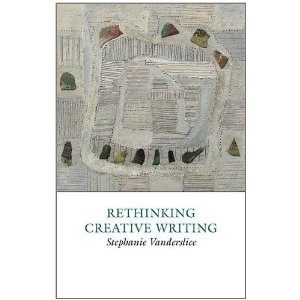
Author Interview: Stephanie Vanderslice on her new book, Rethinking Creative Writing: Programs and Practices that Work


I invited Stephanie Vanderslice to either write a guest post, or to allow me to interview her here on the blog about newest book, Rethinking Creative Writing: Programs and Practices that Work. I loved opening my email a few days later, and finding this:

In appreciation for Lisa Romeo’s generous invitation, and after getting acquainted with her incredibly resource-rich blog, Stephanie decided to cut this obviously crazy-busy writer some slack and interview herself.
Stephanie Vanderslice:  So why this book?  Why now?
SV: Rethinking Creative Writing is actually the culmination of about ten years of work examining and writing about creative writing programs in higher education. In 2001 I worked with the author Tracy Chevalier, who was speaking at our university, the University of Central Arkansas and discovered Chevalier, an American, had done her graduate work in writing at the University of East Anglia, the UK equivalent, in stature, to the University of Iowa.
After talking with Chevalier, I became curious about how creative writing was taught in other English-speaking countries.  The web was just emerging at that point and it dovetailed with my interests beautifully. I spent the next five years forging ties with colleagues abroad and learning everything I could about the history of creative writing in the UK, how and why its path had diverged from ours. This culminated in 2006 with a one month study tour in the UK, visiting other flagship programs such as Bath Spa University. Seeing these programs in action made me realize that creative writing programs in the US could learn a great deal from them. 

Stephanie Vanderslice:  So why isn’t this book titled, Why Can’t We Be More Like the British?

SV:  Well, as I started writing it, I realized that the book just sounded like an anglophile (which I am) scolding American programs and, besides being one-dimensional, that wasn’t going to go over too well here in the US.  Also, looking closely at the programs in the UK made me realize that I really needed to get to know the creative writing program landscape in the US better.

I got an MFA in fiction writing from George Mason University in the early nineties and went on to get a Ph.D. in English with a creative dissertation from the University of Louisiana-Lafayette. I knew a lot of people from other programs (Iowa, Maryland, Emerson, American University) but I only had their perspective on those programs. So I began to really study creative writing teaching in America as well, via the Association of Writers and Writing Programs conference and publications, several books and program histories and of course, what was available online. I was looking for “best practices” at American programs that I could also talk about in my book. And I found them.

Stephanie Vanderslice:  So does creative writing in higher education really need to be rethought? 
SV:  Creative writing in higher education in the US was stagnant for a long time, almost defiantly so. There was this feeling that getting together a few writers and students to form a community,  to lead intense workshops toward a degree—which was how Iowa had started the whole movement—was enough (Mark McGurl writes about this history brilliantly his book, The Program Era: Postwar Fiction and the Rise of Creative Writing). 

In the early years, perhaps it was enough. My book argues that it’s not anymore, not with the sea changes in publishing in the last ten years, not with the exponential growth of MFA programs themselves, flooding the market with aspiring writers. Programs need to be more proactive about how they’re teaching students to make lives for themselves as working artists in the twenty-first century.  They need to think about the world they’re graduating their students into and reflect on how to address that reality that in their courses. They need to go beyond the workshop.

I identified many programs in the US and in the UK that are making these changes, such as the University of North Carolina-Wilmington and Bath Spa University. I told their stories in my book in the hopes of inspiring other programs to take a closer look at the writing educations they were providing their own students.

Stephanie Vanderslice:  So who should read this book?

SV:  If you’re thinking about getting an MFA in creative writing, this book can help you think about what to look for in a program, how to ask the right kind of questions in finding a program to suit your individual needs. If you teach creative writing or help to guide one of the hundreds of creative writing programs in the US and abroad, this book will show you a number of innovative programs and practices that will hopefully help you to think more creatively about your own. 

For example,  UNC-Wilmington’s publishing lab is something many programs could aspire to and the program anthologies that creative writing programs in the UK publish and send to agents and editors (often leading to representation) is definitely an idea ripe for replicating in the US.

Stephanie is also the author of Teaching Creative Writing to Undergraduates, with Kelly Ritter and editor of Can It Really Be Taught?: Resisting Lore in Creative Writing Pedagogy, also with Ritter. Her essays on teaching creative writing are published in many journals and anthologies, nationally and internationally in journals such as College English and New Writing: An International Journal of Creative Writing Theory and Practice. Stephanie publishes creative nonfiction and fiction, is finishing a novel, The Lost Son, and is working on a memoir, Malls of America, about growing up along with this American consumer icon in the seventies and eighties.

Notes from Lisa:  If you have a question for Stephanie, leave it in comments, and she will check back here a few times over the next couple of days to answer. We're also giving away one signed copy of Stephanie's book, to a blog reader. To enter, leave a comment by Feb. 28. (Must have a U.S. postal address.)

Wednesday, November 16, 2011

Women Writing on Family: Always topical here, and now - it's a book!

When your work is occasionally published in essay collections or other anthologies, a fun day is when the ARC (advanced reading copy) arrives, and you get to see, often for the first time, what other writers and topics will be in that same book, and how the issues are treated across hundreds of pages.

Yesterday the ARC arrived of the forthcoming book Women Writing on Family: Tips on Writing, Teaching and Publishing (edited by Carol Smallwood and Suzann Holland – Key Publishing/Canada, Jan 2012). I have two contributions in it, both on the topic of writing about one's spouse in nonfiction. One is a round-up of tips and techniques used by other contemporary women nonfiction writers, and the other is an interview with writer Meredith Hall, about the absence of the spouse in her memoir, Without A Map.

Since the book arrived yesterday, I've been delighted to find within its pages, contributions from one other writer who is a good personal friend – Christin Geall; from writers I've come to communicate with online – Kate Hopper, Cassie Premo Steele, and Caroline Grant; from a writer whose memoir I loved – Catherine Gildiner; and from one whose teaching ideas I admire – Sheila Bender. Together, they've written on such diverse issues as narrative voice, non-paid writing, journaling, writing about memories, writing conferences, confidence, making time to write, and working with editors.

And there are so many other articles and essays from talented, thoughtful and resourceful women writers in the U.S. and Canada. I can tell, from the titles alone, so much of it will be worth reading -- pieces on: voice, marketing and market research, web writing pros and cons, organizing critique groups, personal essay craft, writing about childhood and about one's children, character development, research, writing about grandparents, the MFA and PhD, rattling family skeletons, writing about illness in the family, moving between fiction and memoir, seeing family members as characters, lines between history and imagination, avoiding sentimentality, and so much more. It's packed, at 320 pages.

Timing is everything, right? I worked on my two pieces for this book back in 2008, but just this week, I am concluding teaching an online creative nonfiction class, which has focused each week on a different aspect of writing about family, about our memories, about difficult personal issues. Yet, for the nonfiction writer who focuses on crafting personal narratives, writing essays based on personal experiences, and envisioning memoirs which, of necessity, includes as characters others who are important in one's life, these issues are also timeless.

You can preorder the book now here (I won't earn any commission.) I hope you'll consider getting yourself a copy, and also passing the information/link along to your writing friends.

Thursday, August 4, 2011

What I'm reading, perusing, studying, scanning, dipping into, skimming, leafing through and poring over.

In my experience most writers love dictionaries and thesauruses, some love style manuals, others even adore grammar guides. I love them all, which explains my pleasure reading this week – The Man Who Made Lists: Love, Death, Madness and the Creation of Roget's Thesaurus, by Joshua Kendall.


I guess it didn't surprise me that Roget probably suffered from what today would be called obsessive compulsive disorder. He spent nearly his entire childhood on the tasks of categorizing, listing and codifying everything that comprised his world – people, events, nature, scholarly subjects, animals, gardens, body parts, books, relationships, vegetables.


I haven't finished the book yet, but the other day, when I heard something about promising new treatments that would maybe one day eradicate OCD, I couldn't help but feel a pang of – well, I don't know quite what.


Surely I wouldn't want anyone who must deal with an OCD that impairs their life to continue to suffer when a treatment is one day available. Yet I could not help but also think that the world is probably a richer, more creative place because of the books, films, inventions, ideas, and artwork produced by those who had/have OCD, as well as many other disorders. What would writers have done for two centuries without Roget's Thesaurus? Aren't we all enriched a little bit because of his contribution?


Likewise, I thought of Temple Grandin, an autistic woman who has worked tirelessly over the last 40 years to redesign the modern American slaughterhouse based on her uniquely visual thought patterns, an intuitive sense of what calms herd animals, and an innate geometry ability. Her book about life as an autistic child and adult (recently an award winning HBO film) has also contributed greatly to people's understanding of autism.


The world seems to need all kinds of minds.

Wednesday, March 2, 2011

Panning for Writing Rules, Finding Some

I recently received a copy of MFA in a Box by John Rember, and have been dipping in and out.
Rember ends some chapters with a list of Rules for Writers. Here are some I like so far:
•Writing is co-written. The common name for co-author is reader.
• Every draft takes a layer off the surface of your consciousness. Rewriting is a form of personal archaeology, and the good stuff is never on the surface.
• Don't wade in over your boots unless you don't mind getting wet.
• Treat you reader with respect. They don’t' have the time to know what you know. Your own arrogance can kill the best parts of your stories.
• If you're lucky, the writer and the editor in you will accept the principle of mutually assured destruction and learn to put up with each other. The best I can say for this arrangement is that sometimes the editor saves the writer from going down the wrong path, and the writer saves the editor from reducing the story to a rehash of proven and predictable technique.
• Learn to turn your face toward the things that nobody else wants to look at. You'll find things there that nobody else has seen.

Monday, February 28, 2011

Author Interview: Laraine Herring on The Writing Warrior


I discovered Laraine Herring's first book about writing when I was doing a bad job of getting out my own way as a writer. Her words buoyed me. Since then, Laraine and I have connected online, I've invited her to guest post here before, and she remains one of the sanest voices I know when it comes to helping writers cut through the clutter in our own heads. Laraine directs the creative writing program at Yavapai College in Prescott, Arizona, and is a novelist as well.

She has a new writing book out, The Writing Warrior: Discovering the Courage to Free Your True Voice. Here, in her own voice, she answers my questions.

Lisa Romeo: I loved your previous writing craft book, Writing Begins with the Breath: Embodying Your Authentic Voice. I was bowled over with how you connected the art and act of writing with so much else in a person's life. How, if at all, are the two books connected?

Laraine Herring: I think The Writing Warrior holds a higher level of accountability for the reader in relation to her or his own B.S. I think the tone of Writing Begins with the Breath is softer, more encouraging and more encompassing. With Warrior, I wanted to kick (gently) people into contact with their own tendencies and hopefully help them not only laugh at the ways they trip themselves up, but find the courage to face them head on without dissolving into shame and self-criticism. With Warrior, I wanted to emphasize personal responsibility to writing and to a writing life. Much of the writing life is in the valleys, not the peaks. Much of it is in between the sale, or the book signing, or the good review. What do you do in between those things? Those actions are what make you a writer.

LR: The title, The Writing Warrior: Discovering the Courage to Free Your True Voice, is interesting in itself. It conjures the idea of writing as something we need to gird ourselves for, and to me, also suggests that writing requires grit for the expedition of unearthing one's voice. What led you to this title, and what does it mean for you, both as a writer yourself, and a writing teacher?

LH: The warrior sequence in yoga has always been one of my favorites, and I think it’s often a misunderstood pose and phrase. Being a warrior is not all “rah” – not all yang energy. A warrior also must bend, must practice discernment, self-observation and awareness, and yes, that warrior must also be able to slice through her own illusions, but not in a destructive way, rather, in a way that makes the whole stronger. When you cut away the dead leaves on a plant, the plant grows stronger.

I think writers have to continually face unseen obstacles. The hardest part, in my observation of writing students and of myself, doesn’t occur in understanding how plot works or how characterization can develop; the hardest part comes in sustaining and maintaining a relationship to that writing, with all the ups and downs that any relationship of substance has. A warrior has staying power.

LR: You include a number of writing exercises throughout the book. I am a huge fan of writing exercises and writing prompts, both for myself, and for the developing writers I work with. Can you describe the role these activities can play in a writer's regular practice?

LH. I wish I could do my own exercises because I think they’re pretty cool, and I’ve seen them work quite well with students. I have books of writing exercises from other people (and I’ve subscribed to your Daily Writing Prompts) because I think it’s so important to maintain an element of surprise in your writing practice.

The reason my own exercises don’t work for me as well is because I’ve thought them through and I’ve (no matter how much I may try not to) formed some type of predetermined response to them. There’s no twist or surprise since I wrote them. When a teacher gives you a prompt and ten minutes, you’re free of all accounting and all preconception of what you should be doing. You truly get to play, and if play is a component of a regular writing practice, then you’re going to find a lightness throughout your writing time. I know it gets serious. I know we “angst” ourselves into misery. But we can also feel that sense of wonder, and the more familiar that is, the more our work is going to shimmer rather than sink.

LR. I was intrigued by your chapter "The Beginning is Not the Beginning," since it speaks to something I struggle with, and counsel other writers to address: not forcing the big idea in a piece, but instead working within the material and trusting the process. Why do you think writers fight against this more natural way of letting their work unfold?

LH. I blame it on grade school! But seriously, I think many people are taught to view writing as a product, and even worse, a skill that can be mastered and then pulled out at will to create something perfect on demand. We can memorize our multiplication tables and they’ll always work for us, but there’s no equivalent in writing. I think students and beginning writers often think there is, or should be.

Every semester students wail to me about how hard writing is and how they feel like they should be better than they are. They’ve never tried before, yet they think they should be perfect at it. That’s a damaging myth. No sane person in a first semester ballet class thinks they should be of the caliber to dance with Baryshnikov. Yet, people take one writing class and think they should be good enough for a publishing contract. I don’t honestly know why that’s so prevalent, but I keep seeing it.

I also think there’s a natural element of laziness to being human, and to write something well, we have to have patience and persistence. Those seem to be challenging qualities for many of us. I also think that people are often trained to have a big idea – they must have something to say. They must have a theme (shudder, shudder). So they get hung up on writing in the clouds rather than playing in the dirt. Writing is built from the ground up.

LR. You write, "Few things strike fear in the hearts of writers more than the notion of revision," and list some reasons -- laziness, self-loathing, disappointment at not getting it right the first time, not wanting to look deeper into the work and story, etc. I am continually amazed that newer writers resist revisions so strongly while accomplished writers revel in it (or at least understand revision's value and spend the time). How do you help writers develop an appreciation for revision and build the tools and mindset to make it a regular practice?

LH: In my beginning short story writing class, I require them to completely trash the first draft (they don’t have to burn it or anything!) They have to start their revision on a new, blank piece of paper. We devote a full class period to talking about this and talking them off the proverbial cliff. It’s harsh, I know, but I also know that I only have 15 weeks with them, and this is so uncomfortable that, left to their own devices, they’ll move a comma or two around and call it a revision.

I want to kick them into the unknown and give them a space to return to with something fresh. It works, though there is great weeping and gnashing of teeth. I also try very hard to emphasize that the first drafts are not the end. I try to help them see that each draft gives gifts and sign posts for what the next draft and ultimately the heart of the story could be.

If they can reframe the drafting process as something that is providing messages and clues to them about the story, that helps. If they think the drafting process is just fixing stuff until it’s right, we don’t have a great deal of success. I also try to emphasize the draft as communication between author and story, and that communication gets more refined and distilled as the signal gets stronger.

LR: You write about a time in your life when you and another writer phoned one another at 5:30 a.m. each weekday to check in and be sure you were both writing before heading out to day jobs. I'm a big believer in having writing accountability partners. Now that you've published several books, how do you track your own productivity and stay accountable?

LH: I miss my friend Jeffrey terribly. He’s been dead for three years now, and I have to say, it’s a hole in my writing and personal life. I have a great friend I share writing with, but Jeffrey was someone quite different. We didn’t critique each other’s work as much as demand accountability of one another for the act of writing. I won’t lie. It’s hard to maintain that for yourself alone. Everyone is so uber-busy now. We’re all teaching a gazillion students, trying to balance family and work, trying to write, struggling with health issues or aging parents, cut salaries – it’s hard. Jeffrey may be the only friend of this type I have in this life. So I imagine him calling, and I imagine what he’d say, and I often get up and write for him. He was only 45 when he died. I am 42. My dad died when he was 46. Time is short. I’ve framed my life around the phrase “memento mori” (remember you will die).

LR: I like what you say about the Illusion of Publication: "Your responsibility is to your craft and to the voice of your work. Keep your eyes there. When publication happens, it will neither unmoor you nor freeze you. It will just be the next right thing." Did you have any personal experiences with how publication either unmoored or froze you? And what do you mean by the "next right thing".

LH: For me, publication occurred at the right time. It didn’t occur when I wanted it to (ha), but it occurred at the right time. I already knew that it wouldn’t change anything other than I would have a book to share. I had been rejected for so very long that I learned my primary relationship was to writing, not to publishing.

“The next right thing” means exactly what it says. If you do the work of writing: read, write, revise, read, write, revise, solicit feedback, study the craft, etc, etc that work – that putting one word after the other with no attachment to an outcome, will result in the next right manifestation of that work. The book appears when the book is ready to appear. If the writer will focus on the practice, on the work, the results have a sneaky way of taking care of themselves.

LR: What do you hope, above all else, that a writer can take from your book?

LH: Respect the art.

Note from Lisa: Please visit Laraine's website and blog for further inspiration.

Tuesday, February 22, 2011

Writers: Start Your Exercise Engine

Every month or so, when email coupons arrive, I order a few books about writing. I mine them for new insights and examples to share with my writing students, and read them to expand my own craft development. Some of my favorite writing books are sprinkled with writing exercises, tips, suggestions and "assignments."

One new purchase was Writing Life Stories: How to make Memories into Memoirs, Ideas into Essays, and Life into Literature, by Bill Roorbach, the paperback edition of the successful 2008 hardcover. I especially like his exercises, many of which are infused with the wit and grit of his entire book.

In a chapter titled, Saying it Right, he discusses the importance of assembling words and utilizing language in precisely the right way for your writing project. The beginning of the instructions for an exercise he calls Forget About Style goes like this: "In this exercise you are to throw a fit – perhaps you're furious because of the latest round of rejections slips, a stupid reading from a friend, Cheetah ran off with Ken – throw a fit and kick the pieces of your style kit around the frat house while the drunken brothers yell…."

Later, he talks about the motion, musicality and rhythm of writing, how our words must sing. This reminds me of a writing professor I once had who insisted an essay of mine needed more of a beat, that she should hear a BAM every few lines. Since she said that, I've always read my work aloud and listened carefully for the beats, the rhythm, and – though I never called it this – as Roorbach says, the "motion" in the flow of words.

Roorbach offers this exercise: "Tap Your Feet. Pull out the work of a favorite writer, and read it listening and feeling for the rhythm and rhythms. Tap your feet as you read out loud. Look for repeated words or phrases that set up a beat. Listen for sentences that rise, sentences that fall…." He goes on to suggest doing the same for another writer, and noticing the rhythm differences, and then giving your own work the same treatment.

I've been doing this sort of thing for several years, usually when I'm home alone. If I try to do this when my family is around, even if I close the office door – maybe especially when I close the office door – they begin muttering about how writers really ARE crazy.

Go ahead – get crazy with your words, too!

Thursday, July 1, 2010

Books in My Bag: Used Bookstore Haul, part II

The other day I posted about a mini-spree at a used bookstore and mentioned the memoirs I had picked up. Today, I'll fill you in on the books about writing that wound up in my bag.

Bookworms: Great Writers and Readers Celebrate Reading, edited by Laura Furnam & Elinore Standard (Carroll & Graf, 1997). Sixty short essays by a wide-ranging and somewhat eclectic collection of noteworthy writers and readers, including: Tobias Wolff, W. H. Auden, Sven Birkets, Charles Lamb, Miep Gies, Jane Kenyon, Alan Cheuse, Wallace Stevens, and Anne Lamott. I opened to a page at random and found this: "Reading while watching baseball on television is especially fine, and given light reading, is easily brought off with the help of the instant replay. Why do one thing at a time when you can do two? And between the two done simultaneously, light reading and watching television, the former almost always wins out." – Joseph Epstein

The Elements of Style, by William Strunk Jr. and E.B. White (Fourth edition, 2000). Yes I already have two copies. So what? This one is in a larger format, in pristine condition; mine are tattered, yellowed and often out on loan. Plus there's a foreword by writer (and White's stepson) Roger Angell, who says, "Writing is hard, even for authors who do it all the time." My favorite Strunk & White admonition? Two: "Don't explain too much," and "Be clear."

The Writer on Her Work, edited by Janet Steinburg (Norton, 1980). Another essay collection, bringing the total of essay collections on my shelf to…oh, you don't want to know! Essays by 17 notable women writers, including so many favorites – Joan Didion, Toni Cade Bambara, Mary Gordon, Honor Moore, Maxine Hong Kingston. Opened at random, I read this: "A writers needs certain conditions in which to work and create art. She needs a piece of time; a peace of mind; a quiet place; and a private life." – Margaret Walker.

Roget A to Z, edited by Robert L. Chapman (Harper Perennial, 1994). Yes, I use an online thesaurus; yes I have a battered old copy of Roget's from college. But, you should see this one. Nearly three inches thick. So beautifully laid out, graphically and visually pleasing. And organized alphabetically. 300,000 words! I especially love the slightly tongue-in-cheek quotes, for example, under the synonyms and other information for the word conservative, you'll read: "the leftover progressive of an earlier generation - Edmund Fuller."

So that's my haul. What did you emerge with the last time you stepped into a bookstore, used or otherwise?

Monday, June 7, 2010

Guest Blogger Laraine Herring on Ghost Swamp Blues: The Journey into a Novel

I once reluctantly sat in on a presentation about how yoga could help one's writing. About midway through, something clicked; not enough to send me to yoga class, but later the same day, I bought a book off the conference sales table titled, Writing Begins with the Breath: Embodying Your Authentic Voice. It seemed in sync without being too touchy-feely for pragmatic me. Since then, I've read and reread it, recommended it to others, used chapters in my teaching, and, to my great delight, struck up an online friendship with the author, Laraine Herring.

Laraine directs the creative writing program at Yavapai College in Prescott, Arizona, and teaches workshop at the
Omega Institute (Rhinebeck, NY) and the Kripalu Center for Yoga and Health (Lenox, MA). She's also an award winning short story writer, Pushcart nominee, an interesting blogger, and with the publication of Ghost Swamp Blues this week, a novelist. She's stopped by to let us in on her journey to that novel.

Please welcome Laraine Herring.

"As a writer, I am obsessed with secrets. Where there’s a secret, there’s energy, both the energy of the secret trying to escape and the energy of the secret-keeper trying to keep it contained. You can’t help but have tension when you’ve got a secret. All the characters in Ghost Swamp Blues have secrets. I wanted to explore the power hidden in the things we don’t tell each other. I wanted to look at my own family history in the context of a flawed human condition. And, I wanted to tell a ghost story that wasn’t cheesy. I wanted to experiment with time and point of view and I wanted to see if it was possible to dramatize regret.

I also wanted to pull people into the landscape of the book, much like the landscape pulls and ultimately swallows my characters. The first image that came to me was a pink-feathered hat floating on a swamp. That image raised many questions: Whose hat is it? What is it doing in the water? Those questions started to pull me into the setting of the book, Alderman, North Carolina, a fictional town based loosely on Wilmington, North Carolina.

The next influence was my grandmother’s death. She was a Southern matriarch, rich in contradiction. Her racist worldview, dominant in many Southern whites born in the early twentieth century, combined with the come-to-Jesus dunkings of the Southern Baptist Church raised a lot of questions for me. How do these two diametrically opposed viewpoints exist under the same skin-shell? What has to be denied for that to occur?

My desire to try and understand her better provided the fuel needed for the long journey of a novel. Even though the events in the novel are not based on events from my family’s life, the concepts explored are very personal. I think to make it through the ups and downs of a novel’s creation, there has to be a burning personal question as well as the burning question of the text itself. They can be the same or not, but they both need to be there so the author has the stamina to keep going. If the author isn’t invested in the exploration of the book, then the reader surely won’t be.

In the novel, Lillian Green, one of my protagonists, witnesses her older brother Tommy lynch a black man, Gabriel Wilson, in 1949. She remains silent to protect her brother, and the novel is about what happens to her and those around her as a result of her keeping that secret. Her driving question, “How far would you go to protect someone you love?” grew out of my attempt to reconcile the many contradictions of my grandmother. As a Southerner, I couldn’t help but absorb and observe the schizophrenic racism in my community. For example, when our family moved to Arizona from North Carolina in 1981, our former next-door neighbors built an orange fence between our houses when they found out we had sold our home to a black couple. I left the South with the question: Why did they feel so much hatred towards people they’d never met? I think everything I’ve written in my life deals in some way with this question.

This manuscript for this novel landed me my agent in 2003. Since then, we've sold other books together, including Writing Begins with the Breath: Embodying Your Authentic Voice (Shambhala), and Lost Fathers: How Women Can Heal from Adolescent Father Loss (Hazelden), but not the novel, which was a hard sell. Too literary for popular fiction. Too contemporary for literary fiction. All sorts of reasons why it didn’t fit anywhere, why it wouldn’t work, but we kept trying. I kept revising. I paid attention to the comments from editors who took the time to write more than the “I just didn’t fall in love with it” standard rejection. It has gone through nine complete rewrites – changing everything from point of view to audience (I wrote one draft as a YA novel) and many more edits.

I honestly did not give up hope though. My characters wouldn’t let me let this book go. They’ve helped me to grow, which is reason enough for writing. I’ve lived with them for a decade. We persevered. We waited. We grew. Now, it’s time to set them free to join the imaginations of others."

Note from Lisa: We are giving away a signed copy of Ghost Swamp Blues. To be entered in the random drawing, leave a comment on this post by midnight Saturday, June 19. There must be a way for me to contact you by email to obtain your U.S. postal address. You may also ask Laraine questions, and she'll stop by periodically until then, to answer (also in comments).

Tuesday, August 25, 2009

Author Interview: Sue William Silverman on Memoir Writing


Sue William Silverman's newest book, Fearless Confessions: A Writer's Guide to Memoir, reads like a memoir about writing memoir – and that's exactly what the accomplished and respected nonfiction writer had in mind when she decided to do a book about writing craft. Silverman’s first memoir, Because I Remember Terror, Father, I Remember You, won the AWP award in creative nonfiction, and her second, Love Sick: One Woman’s Journey through Sexual Addiction was made into a Lifetime Television original movie. She teaches in the low-residency MFA in Writing program at the Vermont College of Fine Arts, speaks frequently at writer's conferences – where I've had the pleasure of being in the audience, furiously scribbling notes and nodding my head -- and has appeared as a guest expert on The View, CNN and many other venues.

I'm pleased that Sue agreed to answer my questions. [Note – we are also giving away a copy of the book and Sue is also stopping by this blog several times today to answer any questions readers ask in the comments – see below.]

LR: Your book is filled with writing exercises. What role do these kind of stretching opportunities and experimentation play in your own work?

SWS: Exercises are beneficial because they focus on one specific craft issue at a time. They’re less daunting than thinking about a whole book, or even an entire essay. I can think, “okay, right now, this is all I have to tackle: this one exercise.” It’s a kind of a playful (not intimidating) way to proceed with a piece of writing. Then, what I learn in this short exercise, I can bring to bear on the larger work. In many ways, exercises are prompts to get us going.

LR: There are so many forms of nonfiction, but I've seen writers force themselves and struggle to emulate the more literary memoirs. Advice?

SWS: There are different ways to explore a life narrative. Sure, you can write about your life in journal form, or as a diary—a document meant for your eyes only. Or, say, you can write a family history, something for your children or grandkids. In these instances, of course, simply tell the story straight: this is what happened to me...let me tell you my story. Period. With these kinds of documents, metaphor and other literary devices aren’t necessary. There’s no pressure to force the manuscript into a literary form.

If, however, you want to write literary nonfiction, then it is incumbent upon the author to structure the material, deepen it with metaphor and reflection. You are shaping life into art.

But rather than feel pressured to do so, most writers, I hope, see this as a wonderful opportunity to study the craft of writing, to be able to engage in this journey of self discovery, to understand what the events in your life mean.

And I don’t mean to go off-message, but this leads me to think: why, really, do I write memoir? I write to solve “mysteries” about my life. It’s strange to think, but I don’t fully understand my life until I write it.

Which is a good thing! If we knew all the answers ahead of time, there’d be no reason to write our narratives. We write to find out what our stories mean—rather than merely state what we already know.

In short, if you are writing literary memoir, then my advice would be to stay with the material, keep peeling away those layers, like an onion, until you do discover the deeper layers of self and experience. This is a gift a writer gives herself! So, yes, my advice is to see this writing process as a gift—rather than pressure.

LR: Your book includes many published examples of exemplary nonfiction. How much of a writer's developing craft depends on reading and examination of masterful work?

SWS: Reading well-crafted literature is essential. Absolutely. I can't imagine writing without reading. One of the appendices in Fearless Confessions, by the way, has a long creative nonfiction reading list, divided into categories, by subject matter. There is a fairly extensive list of my nonfiction reading recommendations here.

LR: You've described the book as a "memoir about writing memoir". How does this work technically in the book? Why this tone and structure?

SWS: Yes, rather than write what I would consider an academic textbook (which would have put me to sleep during the writing of it—and you to sleep during the reading of it!), I invite the reader along on my own writing journey.

I teach by example: this is what I struggled with as a writer; this is what I ultimately learned; let me share it with you.

So while I address important craft issues such as theme, plot, character development, voice, metaphor, etc., the voice itself of Fearless Confessions is intimate and friendly, not dry or academic. I wanted the book to be informal and inviting. In this way, then, it could be called a memoir about what I learned through the writing and publishing of two memoirs.

LR: Regarding nonfiction I often tell writers, "readers don't care about you, they care what your story says about them," and so I was excited to see that this seems to be at the center of your discussion about how nonfiction makes a contribution to the reader, and to the world. Can you talk a bit about that and what the writer must understand about this seemingly paradoxical truth?

SWS: Yes, that's exactly right! If, say, in my first book, I just whined and complained and wanted the reader, basically, to feel sorry for me because my father sexually molested me, well, really, the reader wouldn't feel sorry for me! Sure, my therapist and best friend would care, but a general reader would not care.

If, however, through metaphor, reflection, use of sensory imagery, plot, and the development of a literary voice, you artfully bring the reader inside the experience, then they care about you; you have discovered a way for them to feel your experience in a tangible and visceral way.

When I write about recovering from incest or sexual addiction, I’m also writing about loss, alienation, identity. Aren’t these universal themes to which most anyone can relate? So by casting light on my story, I’m hopefully helping others better understand their own.

In short, the more you craft your real-life story into art, the more the reader engages in it, identifies with it. It is paradoxical, as you say, but that’s how art works!

LR: Many would-be memoirists (or personal essayists) are nearly crippled by the idea of not having "permission" or "the right" to tell stories which include others – loved ones, former friends, relatives, acquaintances. I've been puzzled at times too. Your advice?

SWS: The memoirist James McBride says, “Fear is a killer of good literature.” So, yes, I agree with you that many memoirists, or would-be writers, are afraid of committing their stories to paper. And while I understand this fear—especially since it took me many years to overcome it myself—I would still urge beginning memoirists to write anyway—regardless of the fear.

One way to overcome it, at least initially, is to pretend to write just for yourself, ignoring (as much as possible) the fact that others might one day read your story. For me, while writing, I always pretend no one else will ever see my work. And, in any event, it’s my choice whether I’ll ultimately share it with anyone or not.

I tell myself I’m writing this book, first and foremost, because I must. Which is true. The act of writing, itself, is of primary importance. This is where the spirituality of artistic endeavor resides. Focus on the words, themselves, during the creation process. Worry about the outside world later.

In order to be creative and fully engage in the process, writers must give themselves permission to set aside the fear about what the outside world might think. Remember, we own our own stories! Our stories belong to us. As writers, they are ours to write.

LR: You talk about the writer having two voices, the Innocent Voice (from the past, at the time of the remembered events) and the Voice of Experience (present day, through lens of reflection). Can you talk about being aware of which is which, how to make transitions between the two, and when each may be appropriate?

SWS: Yes, in Fearless Confessions I developed the idea of how every memoir needs two voices in order to fully explore your experience, fully capture your persona on the page.

One aspect of yourself is conveyed in what I call the Voice of Innocence. Here, using this voice, you relate the facts of the story— the surface events in the past that actually happened. It’s the voice that portrays the raw, not-yet-understood emotions associated with the story’s past action: How you felt, what you did at the time the events actually occurred.

For the Voice of Experience, on the other hand, imagine the writer “you,” now, sitting at your desk writing, trying to make sense of these events that happened to you years earlier. It’s a more mature voice that deepens the Voice of Innocence with reflection and metaphor. It’s a more complex viewpoint that interprets the surface subject.

Using these two voices you are showing, in effect: This is what happened to me in the past; this is how I now, with more wisdom, feel about it looking back.

In terms of when to use any given voice, a lot of that is trial and error, in that there are no hard-and-fast rules as to when to use one, when the other. Each memoir or essay we write will present its own challenges.

Generally speaking, however, these voices are very fluid. One page, one paragraph, even one sentence might incorporate both.

Within one brief section of Love Sick, for example, I use these two voices when describing a maroon scarf that once belonged to my married lover, but which he gave to me: “I press the scarf against my nose and mouth. I take a deep breath. The scent is of him—leaves smoldering in autumn dusk—and I believe it is a scent I have always craved, one I will always want. I don’t understand why the scent of the scarf seems more knowable, more tangible, than the rest of him.”

Here, I begin with the Voice of Innocence, providing factual and sensory details about the maroon scarf, romanticizing its scent of smoldering dusk. The raw (albeit unexplored) emotion I feel toward this man—who wraps such a magical scarf around my neck—must prove this is love. Doesn’t it?

“No,” the Voice of Experience implies, in that last sentence. Instead, the scarf embodies alienation and loneliness, as well as a need for comfort. I love the scarf because, as an addict, I don’t know how to love the man—and, more importantly, myself. This sober, authorial voice of experience guides the reader through the confusion of the addiction, depicting, over the course of the memoir, why I have self-destructive affairs with dangerous men.

In short, the Voice of Innocence conveys what happened: I press the scarf to my face, inhaling autumn dusk. The Voice of Experience examines what the author, sitting at her desk writing, understands about events now: The scarf is more knowable than the man. Ultimately, a writer’s exploration is more interesting than just the facts by themselves.

LR: Your new book includes many examples of how you solved many craft and technical challenges while shaping your memoirs. As you were writing this book and thinking back to those examples, did you learn anything new about your own writing process and craft?

SWS: Yes! That’s the thing about writing. It’s much easier for me to know what I think about something if I write about it. Certainly, too, I think it’s made me a better teacher. I teach at the Vermont College of Fine Arts, a low-residency MFA program, which is a great community of writers, by the way.

LR: Can you suggest a short writing exercise for any readers of this blog who may be stuck or struggling at the moment?

SWS: Well, you asked about that paralyzing fear would-be memoirists sometimes experience, which can actually prevent them from writing altogether. So here is a writing exercise from Fearless Confessions that might help.

“Who is the person whose potential reaction most scares you? Write him/her a letter, whether you send it or not. Tell this person all the reasons why you must write your story, why your story is important, why your voice must be heard and not forgotten…why you must write anyway.”

LR: That's a great one. Thanks for all your insights.

To be entered in the random drawing for a copy of Fearless Confessions, please leave a comment (and be sure there is a way for us to contact you) by midnight, September 1. In addition, Sue has agreed to drop by this blog several times today to answer questions – so post yours in the comment section too and check back at the end of the day for Sue's answers.

[Update: The "answers from Sue" part is now concluded, but anyone else can still leave a comment for a chance to win the book. If you don't win it - go buy it. I can't think of a better way to spend the money if you are serious about writing any kind of personal nonfiction.]

Thursday, March 12, 2009

Guest Blogger Christina Katz: A Village to Raise a Book (and one comment to win one)


I'm a writer. And a mother. Sometimes I write about my kids and motherhood. Sometimes not. I don't really consider myself a mother-writer, mom writer, or writer mama, and in fact I have often discouraged others from using that label when describing me. This has a lot more to do with my own disinclination to limit myself than the nomenclature itself. I say limit because unfortunately these labels are often meant to describe a writer who writes almost exclusively about being a mother. Truth is, many – perhaps even most – writers who also happen to be mothers, actually write about much more than their children and their maternal roles. I'd even hazard a guess that most mothers who are writers usually DO NOT write only, or even mostly, about mothering.

That's where
Christina Katz comes in, a.k.a. Writer Mama (also the name of her first book). It's her mission to help writers (who are mothers) fashion viable writing careers – writing for magazines, the web, newspapers, paying blogs; or novels, memoirs, prescriptive nonfiction; or copywriting or…any kind of writing. Through in-person and online classes, books, blogs, newsletters & ezines, Katz offers education, support and networking possibilities to help women, as her book's tagline notes, "raise a writing career alongside your kids." Not necessarily a career writing only about mothering. That's the category of writer mamas in which I wouldn't mind being included.

Please welcome Christina Katz…and leave a comment here by midnight tonight to win a copy of her book.

The Writer Mama Two-Year Anniversary Blog Tour Giveaway!

Post #12: It Takes A Village

Lest we forget, it takes a village to write a book. Writing a book is not an event; it’s a journey, similar to ascending a mountain. (A mountain that you create as you climb!) Don’t go it alone. And, for heaven’s sake, don’t create an antagonistic dynamic with the folks who can be your allies and help you champion your book into the world. I’ve already talked about collaborating with the folks over on the publishing end of your book. So let’s talk a bit about these mysterious folks:

The Acquisitions Editor
Jane Friedman was my acquisitions editor for Writer Mama. She was the editor who offered me the contract and who was my first ally inside the publishing company. The AE is the person who went to bat for your proposal and helped get your book concept through the approval process so you can receive an offer and sign a book contract. Keep in touch with your acquisitions editor, even after she’s handed you off to your book editor (if this happens).


The Book Editor
Chances are good that your acquisitions editor will hand you off to another editor, your book editor. A book editor may or may not be the project manager of your book as well. But don’t be surprised if your Acquisitions Editor is still involved in major decisions like cover art, formatting, and how to structure the book (at least this was my experience).


The Cover Designer
Cover designers may work in-house for publishers or as freelancers. The cover designer for Writer Mama was a member of the in-house team for F+W. I was fortunate that my agent negotiated to include me in the cover review process. Working closely with your acquisitions editor and book editor can only help when it comes time for cover art reviews. And of course, it goes without saying that you won’t always love your cover design. Always get your agent involved when offering input on cover design. That’s one of their helpful roles.


The Copy Editor
You will interact with your copy editor after you have completed your final manuscript. The copy editor assigned to you will likely be a freelancer. You will receive a series of suggestions from your copy editor that further refine your manuscript and help prepare it for publication. However, it’s good to prepare yourself for the inevitable typos that your entire editorial team will likely miss. Typos happen. That’s just life. And don’t worry, your writer friends will likely let you know all about the typos that they find when they get their copies. (Or you can ask them to so you can alert your publisher for the next printing.)


The Publicity Director
Whoever manages book promotion and book events for your publisher is definitely a person you want to get to know. That is, if you want to be invited to literary conferences and get support publicizing your book. I am fortunate that the publicity and events manager at Writer’s Digest Book was such a charming and organized guy. If you make an effort to get to know your publicity director, everything promotion-related with your book is bound to go better.


The Sales Team
I dropped the ball on this one. It never occurred to me that the sales team would care to meet me, so I didn’t initiate anything. When I finally met the two sales team leaders at a conference, I kicked myself for not getting to know them sooner. My bad. Go ahead and ask one of your editors, if and when it would make sense to introduce yourself to the sales folks.


We’ll talk more about the other important “village people” at the next stop on the blog tour.


Today's Book Drawing: To enter to win a signed, numbered copy of Writer Mama, answer the following question in this blog's comments:

How shy are you about contacting people you don't already know? One thing I discovered when I became an author is that I am pretty comfortable chatting with folks I already know, but I hesitate when I haven't met the person before. Will you be willing to stick out your hand to all of the folks you'll need to meet at your future publishing house?

Thanks for participating! Only US residents, or folks with a US mailing address can participate in the drawing. Please only enter once per day. Where will the drawing be tomorrow? Visit the
Writer Mama blog to continue reading the rest of the Writer Mama story throughout March 2009!

Monday, December 29, 2008

One Writer's Holiday Haul

In the spirit of it being a week in which not much real work will get done, I'll simply ask if you got (or treated yourself to) anything this holiday which will make your life as a writer easier, or just more fun? I did:

-An inexpensive, simple-to-use digital camera of my own (meaning it won't always be in my husband's office just when I need it, or in my 10-year-old's hands, or at the bottom of the camping bag, or the dashboard of the car).

- An oversized calendar titled, The Reading Woman, featuring gorgeous images of paintings of a woman alone reading. They are mostly carefully attired and coiffed women in period dress and lush surroundings, although I must say my favorite is At a Book, by Maria Konstantinova Bashkirtseva (Ukrainian, 1860-1884), in which a grey-haired woman dressed in plain black is at a table, her head bent over, ample hand splayed across her forehead and hairline. I guess I like it best because it's how I picture myself, me and something to read, alone, in any simple setting, shielding out the world. (Except that my grey hair is Medium Brown #43). With online calendars, I suppose I don't really need this, but my office walls always have a place for inspiration.

- A book about Latin for word geeks, Carpe Diem by Harry Mount, which I requested, since my teenager is studying Latin (and scoring 98s), and I'm convinced that if I knew more about Latin words, I'd have a better writing vocabulary. Plus, I'm one of those odd people (otherwise known as writers) who like reading about words.

- Paper. Green paper. Rectangular-shaped. With two-digit numbers on it. Every writer always needs more paper, especially that kind. Thanks, Mom.

As a show of support for the print media industry, I gave subscriptions, but since my husband made it clear that war would ensue if one more magazine or literary journal arrived in our own mailbox, this was probably the first year no one gave me one in return. He doesn't really need to know about the ones I get shipped to a friend's address now does he?

Hope you got something nice too.