Showing posts with label novels. Show all posts

Tuesday, June 16, 2020

Guest Blogger Shelley Blanton-Stroud on Fact and Truth, Fiction and Nonfiction


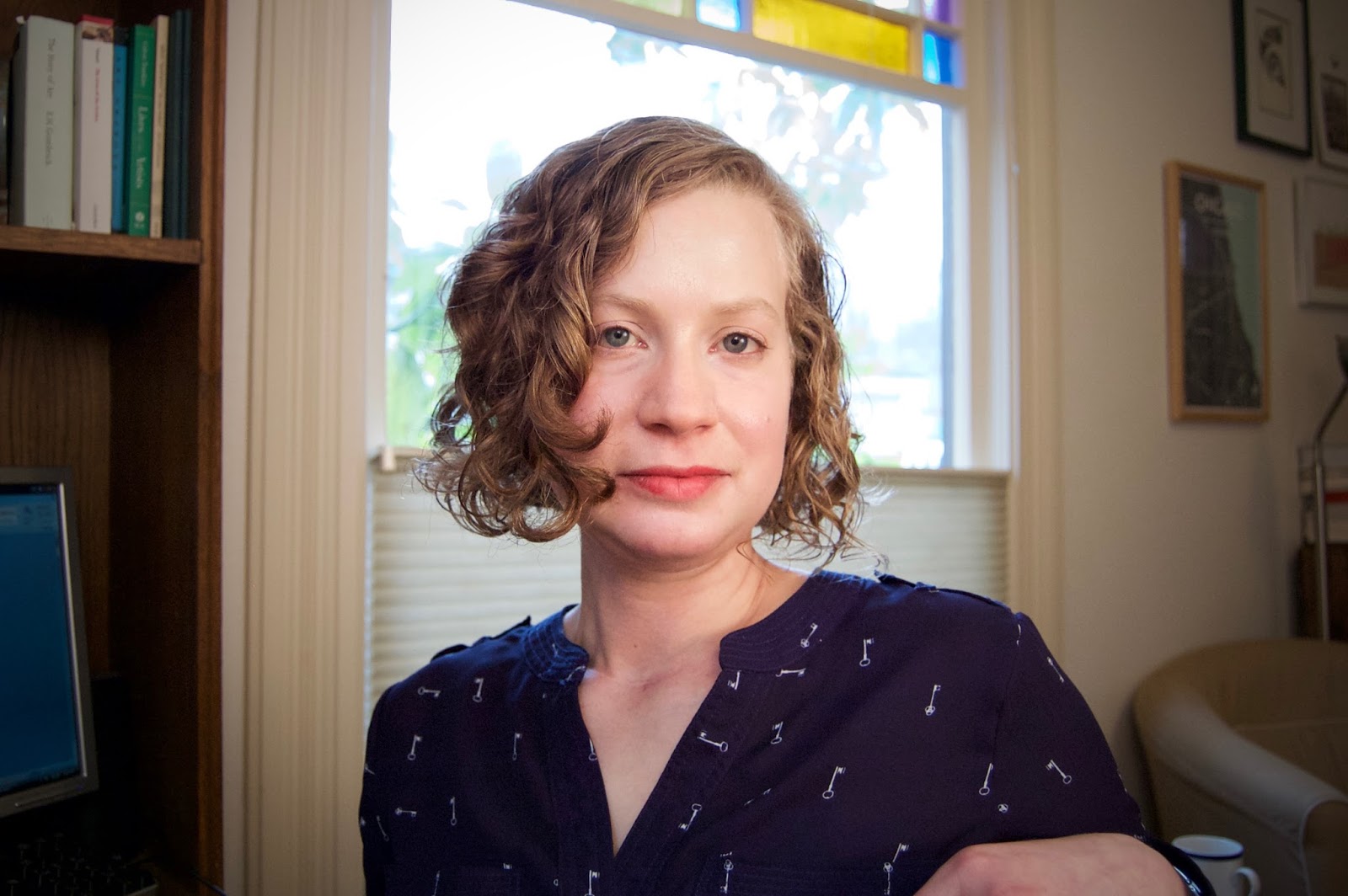
Shelley Blanton-Stroud grew up in California’s Central Valley, the daughter of Dust Bowl immigrants. She teaches college writing in Northern California, consults with writers in the energy industry, co-directs Stories on Stage Sacramento, and serves on the advisory board of 916 Ink, an arts-based creative writing nonprofit for children. Copy Boy is her first novel. She also writes and publishes flash fiction and nonfiction, including pieces at Brevity and Cleaver.

Please welcome Shelley Blanton-Stroud.

It took me quite a while to figure out what my book, Copy Boy, would be, my trouble mostly arising from the gap between fact and truth. Facts are verifiable things. Truth is the meaning an individual makes of the facts we choose to consider.

I first began to write ten years ago by focusing on my own family’s history of moving west to California from Texas and Oklahoma in the Dust Bowl exodus of Okies looking for work in the Great Depression. I was thinking about a memoir because I had access to the facts. My father, especially, had dramatic stories to tell, one of which now sets my book in motion. But it soon became obvious that the “facts” changed in his every retelling—how old he was, exactly where the incident took place. And the facts really changed when my father’s siblings shared their versions of the family story. That’s what happens with memory and with storytelling. Though I knew my father was telling his truth, I was unsure of what the facts really were. I didn’t think I could get a memoir right.

So, I decided to turn to traditional historical references—books and newspapers about the Dust Bowl/Great Depression period in California—for a more-complete context on my family’s life. But there was often so much missing in these sources—the feel of the time.

I turned to more subjective, artistic, personal work from the period—the photographs and biography of WPA photographer Dorothea Lange, the essays of the iconic columnist Herb Caen, the biographies of folk roots musician Woody Guthrie and SF Chronicle editor in chief, Paul C. Smith. There was a lot in these sources to use.

I decided. I was going to write a historical novel. 

But I soon learned the problem with doing so is the way fact and truth conflict, every scene requiring a negotiation between the two. Could I use the names of real-life people in my fiction? Many authors do this, to great effect. And I have done so, on the periphery—most notably, letting J. R. Oppenheimer wax philosophic and bed an important character. But I didn’t feel I could do so with the major characters. I couldn’t take the risk of getting their lives wrong, factually, in order to create what was my truth about these lives. I couldn’t limit the story to what “really happened.”

Yet, even though a person might think authors of straight historical nonfiction would have an absolute obligation to only rely on facts, many such authors turn to fictive techniques—creating composite characters, recreating conversations the writer never heard or read, creating interior thought based on speculation.

At any rate, for me, it doesn’t make sense to expect a big fat line between fact and fiction; because scholars have by now established that all memory is a kind of fiction. We never remember things objectively. Such nonfiction is less like fact than it is like what we call “truth”—a mix of verifiable facts and one person’s impressions and reflections about those facts, arrived at via memory.

Even when the nonfiction historical writer has zero intention to use fictive strategies, if they collect ten facts but use only nine, the elimination of that ninth fact, the choice of the writer to focus here, but not there, in favor of their sense of the truth, introduces the potential for inaccuracy. When you collect verified facts and then choose which of those you will write about, you are subjectively creating a particular truth the reader will perceive, and perhaps believe.

This is a moral weight that historical novelists must bear.

In Copy Boy, I found early inspiration for my protagonist in the life of iconic San Francisco columnist, Herb Caen. I never considered using his name (even when my protagonist was a boy, before I turned him into a cross-dressing girl), not just because it would be too hard to get everything “right” but because I wanted the freedom to make my protagonist behave very badly. I wanted to let her run to the edges of what the real-life writer might have been tempted to do. I wanted the freedom of letting her do awful things, without the guilt of attaching a real person’s name to that behavior.
This was doubly important to me about my father’s stories, which inspired so much in the book. But those scenes in the novel are not the same as his stories. The facts aren’t the same. And my truth in using those stories is different than his truth in telling them in the first place.

Still, I breathed in relief at his comment after he read my final version of the first chapter based on his story—Good job. That’s not what really happened.

Connect with Shelley via her website, Facebook, Twitter, or Instagram. Find all links to purchase Copy Boy here, including major online retailers as well as independent bookstores. Join her online for the book’s launch. Register at Crowdcast.


All images courtesy Shelly Blanton-Stroud

Tuesday, April 7, 2020

Guest Blogger Michelle Cameron on: Launching a Book in the Time of COVID-19: A Personal View

 A little more than seven years ago, I began teaching with The Writers Circle, a regional New Jersey writing community, in large part because of Michelle Cameron, an historical fiction novelist and poet. Since then, we’ve become colleagues in so many ways, and friends.

Please welcome Michelle Cameron, whose newest novel launches today.

I’ve been here before. Sort of.

My first novel, The Fruit of Her Hands, was published by Simon & Schuster’s Pocket Books, during the recession of 2009. My beloved editor was let go three days before my launch, meaning I was then – using the term for authors who experience this phenomenon all too often – orphaned.

No editor means no advocate in the publishing house, so while I had the foresight to hire a publicist who knew the Jewish reading market (my novel was a Jewish historical) and who scheduled many events locally and further afield, I was largely on my own.

The book – a $25 hardcover – was a tough sell. People were hesitant to spend any extra money in a recession, and even those who showed up to events and seemed like the ideal appreciative audience, told me they’d wait for the paperback. But the publisher decided my numbers weren’t strong enough for a paperback.

Fast forward eleven years.

In that time, I’d written three novels. The first, based on the Babylonian Exile, was completed during the long wait for Fruit to be published. I loved the book; I still love the book. My agent did not. After a lukewarm attempt to place it, it went back in my drawer. The second, based on Jewish emancipation during the French Revolution, never really gelled. When I finally, reluctantly, realized the story wasn’t strong enough, I put it aside.

The third novel launches today.                           
                                                          
Beyond the Ghetto Gates, a historical novel set during Napoleon’s first Italian campaign when he liberated the Jews from their restrictive ghettos, had a long slog to publication – an initially enthusiastic agent who tried hard, some nice rejections from publishing houses looking exclusively for the now-pervasive WWII novel. (The trend was for “contemporary historicals,” a phrase that still makes me shake my head in disbelief.)

Finally, I approached the hybrid publisher She Writes Press. And I loved what they did with the book – the beautiful cover, the care and attention to production values. After years of writing, revising, and trying to get published, I wanted to give the novel the best possible chance to find its audience.

From the start, my promotional strategy was to secure synagogue events close to my New Jersey home – hoping that by the time I reached the Jewish Book Council’s presentation to Jewish organizations nationwide, there’d be enough buzz that I’d be one of the lucky authors to be invited to present my novel further afield. (JBC covers airfare and lodging for those authors.)  I hired two publicists – one who worked the media side and a second who by February was doing a brilliant job, booking me for more than two dozen events during April, May, and June.

I was set. I was excited.

Then, COVID-19 struck. And everything unraveled.

Now, I know my problem is tiny in the face of this deadly pandemic. I’m home and my family is healthy. I can continue to teach and work virtually. There’s enough stored food in the house for weeks. I can walk outside without undue fear. I have so much to be thankful for.

Still – this stinks. I’ve postponed or canceled most events. Some may be rescheduled when things return to normal. But I’m not naïve – I know some simply won’t. People move on. Newer books always seem shinier, more appealing.

And I realize this is what publishers have always worried about – sudden catastrophes no one can anticipate or prevent that steal the spotlight from new books. Julia Alvarez’s first novel in 14 years, Afterlife, is pubbing today too. Just imagine how the folks at her publishers, Algonquin, must feel!

But here’s where my bleak story turns positive. Through the generosity of fellow authors and organizations, I’ve pivoted energetically toward social media, accepting offers of video placement, podcasts, blog posts, interviews and live book events on Zoom.

I was featured in a recent virtual reading presented by Murphy Writing of Stockton University and my first chapter will soon be read aloud online (see link below). My publisher is dramatically boosting one book a day for all April releases – my day is April 8. 


The friends I’d tapped for my Street Team are making tremendous efforts on my behalf – re-posting my teaser passages and blurbs, talking up the novel. I’m grateful to them all.

Of course, the essential question remains: will all this virtual activity turn into book sales? For now, I’ve decided only that it certainly can’t hurt. Maybe I’ll reach readers that I never would have before. I truly hope my novel can provide a much-needed escape from this nightmare we’re all living – that my words can touch someone who would never have heard of the book otherwise. May it indeed be so.


Note from Lisa: Connect with Michelle on Facebook, Twitter, and Instagram, and at her website.

You can catch part of Michelle’s Social Media Tour at the following. (More being added daily. See the Events page on her website.)

April 7 – Readers Coffeehouse
April 8 – She Writes Press KEEP CALM AND READ ON Spring Virtual Book Tour with Girly Book Club
April 15, 7:00 pm (Eastern) – She Writes authors Eileen Sanchez and Michelle Cameron in conversation about Beyond the Ghetto Gates via Zoom; click here to register  
April 26 – First Chapter Fun on Hannah Mary McKinnon’s website and on her Instagram Live


Wednesday, February 7, 2018

Guest Blogger, Novelist Anca L. Szilágyi on Whatever Works: Looking at Visual Art to Write Inspired Prose

 I guess in the past debut authors talked in person about the trajectory hurling them toward launch day—and the rolling emotions and endless details that accompany that journey. Today, we find one another in specialized Facebook groups and exchange intel. That’s how I got to know Anca Szilágyi.

Anca is the author of the newly published novel, Daughters of the Air, which Shelf Awareness called “a striking debut from a writer to watch.” Her writing appears in Salon, Los Angeles Review of Books, and Lilith Magazine, and she will be teaching Writing Contemporary Fairy Tales at Portland (Oregon’s) Literary Arts and with StoryStudio Chicago while on book tour. She received the inaugural Artist Trust/Gar LaSalle Storyteller Award, and earned grants and fellowships from Vermont Studio Center, 4Culture, Made at Hugo House, and the Jack Straw Cultural Center. Originally from Brooklyn, she currently lives in Seattle.

Please welcome Anca L. Szilágyi.

            When I was just starting to write seriously, I fetishized notebooks—and, like an eight-year-old—stickers.  I preferred black, hard-backed notebooks with graph paper that forced my writing into small, neat boxes.  My favorite treat was popping into a stationary store in Cobble Hill, Brooklyn, to buy a cheap book of Dover Art Stickers depicting famous paintings by Michelangelo, Kahlo, Goya, and the like. I was trying to write the first draft of my first novel, Daughters of the Air, using Hemingway’s supposed model of 300 words a day, no more, no less, stopping mid-sentence and all that jazz. The mid-sentence idea was cool; there’s always something to come back to. (And if you didn’t remember what you were coming back to, maybe it wasn’t all that good to begin with.)

            Aside from the word count, I didn’t have a very language-oriented approach to writing, which, come to think of it, is kind of strange. I don’t like complicated writing prompts. (Write a dialogue between a mother and a cat. The mother should be in a sour mood saying sweet things, and the cat should be doing something that is both like and unlike a cat. Include the words mousse, temperament, and proclivity.)  In addition, the blank page was your typical blank-page nightmare, even with all those calming blue gridlines. So, in came the art. I would shuffle the stack of sticker books with my eyes closed, randomly open one and choose a sticker. Then came joy, disappointment, or bafflement at my selection. The tiny reproduction took up a square of space on the page, and then I had to write. Whatever came to mind. Hopefully related to the book. Sometimes not.

            The really famous painters oozed their egos all over the page. I had little to say about Michelangelo. Kahlo demanded I only write about Kahlo. Which is fine, because I love Kahlo, but my novel has nothing to do with her. It was the lesser known painters, to me at least, that gave me an opening. Sad, dark flowers by Nolde. Chagall’s gold-hued and green warmth. Modigliani’s eyeless women. Kandinsky’s colorful abstractions, suggesting messy, unarticulated internal conflicts.

            Over time, Nolde faded away, but Chagall fueled the father in my novel, Modigliani the mother, and Kandinsky their daughter, Pluta. Through all this groping in the dark with my shuffling, I learned to return to these three artists in particular. (Goya dropped in sometimes.)  In retrospect, I can see how these painters shaped the novel’s characters in personality and to some lesser extent, their biographies.

The father in my novel is warm and is an Ashkenazi Jew. Modigliani didn’t paint eyes as he felt they were too intimate, and the mother in my novel is cold and distant. And, like Modigliani, a Sephardic Jew. (These two demographic tidbits also aligned with the Jewish cultures of Buenos Aires I had been researching.)  Writing from Kandinsky’s works was a special challenge (no gestures, no objects), but somehow, they suggested a path for my protagonist, Pluta, in her emotional and actual journey: messy, indirect, all scribbled up.

            When I finished the first draft, this ekphrastic process gradually fell away. The raw material was before me, and it was time to make sense of it. A couple of reviews have called my book surprising (in a good way, thank goodness), and I think in part the surprising quality came from the experiment of engaging with art in this way.

It was hardly the most efficient way of writing a novel. That first draft took several years, and then I went to graduate school and rewrote the book. But I’m not sure efficiency is something we should necessarily value in art. It’s art, after all—not paint-by-numbers. Even as it is painful to grope around in the dark looking for the shape of a story and its meaning, even as it could take longer—much longer—than you would expect—if it wasn’t a surprising process with surprising results why would I even write?


You can find Anca at her website or on Twitter. Her book tour is taking her to Bainbridge Island, Spokane, Portland, Boston, New York, Chicago, and Tampa (for AWP) this winter, with additional spring and summer West Coast events, all listed here.

Monday, March 27, 2017

Guest Blogger Judy Mollen Walters on Creating Fictional Worlds From What We Know

I shared a meal at the AWP conference last month with four other writers. We're all part of the same Facebook group of women writers, and when discussing where we each live, they assumed I already knew their mutual friend Judy Mollen Walters, who lives less than an hour from me in New Jersey. Well, I didn't then, but I do now. Judy is a novelist and also writes occasional essays, with work in The Washington Post, The Huffington Post, SheKnows, Spring St. Scary Mommy, Kveller, and other places. Looks like I met Judy just in time to learn about her fifth novel, A Million Ordinary Days, published this month—and invite her to write this guest post.

Please welcome Judy Mollen Walters.

You know what writers I admire the most? Historical fiction writers, who are able to catapult themselves—and their readers—into a completely different time, whether it be back to the ancient days of the Romans, the time of twentieth century World War I or WWII heroes and survivors, or when the Declaration of Independence was signed. Even those who write about the 1960s and 70s, when flower power and bell bottom jeans were in full fashion, impress me.

Historical novelists can go back and visit a completely different space and time, and literally plunk their readers right there beside them. They need to conduct hours and hours, and days and days, and months and months of research—online and in person research, talking to historians, librarians, and experts, taking countless notes, and reading countless books about their subjects. And that’s all before they start writing. And, as they go along, drafting, revising, rewriting.

I hate research. I always have. I can remember when I was in middle school, trying to learn the techniques of research, annoyed and bored out of my mind. As soon as I got to the library, I didn’t scurry to the encyclopedias to look up my topic. I went to the fiction section to find a new novel to read. Research was painstakingly agonizing for me, looking up articles, trying to find good, interesting information, and then just as painful to try to flesh it all out into a solid paper. I just didn’t care. I only wanted to go back into worlds I knew along with authors like Judy Blume, worlds I was familiar with. I loved realistic fiction about girls my own age, then.

Now as a writer, I have the same tastes. I am the opposite of the go-into-other-worlds, spend-a-lot-of-time-researching historical fiction writer. I’m in the solid write-what-you-know camp. For me, that’s contemporary women’s fiction. I write about families and mothers and wives. Many of my characters have some sort of affliction or illness or struggle that I’ve either gone through personally or can identify with because I know someone who has experienced it. 

Subjects I’ve explored in my novels include a Jewish family struggling with adoption (I am Jewish and know many adopted people); autism (My best friend’s son is an adult autistic man.); infertility (I went through it myself twice!); a best friendship that ends with a shock and a secret (With one of the women discovering a shocking truth about her ex-best friend, which happened to me, too.)

Yet the characters in my novels are not me, nor are they my children, husband, or family. (My sister kept trying to find herself in my books, so finally I created a character who was a middle school math teacher, like she is, so she would stop bugging me about it.)

My latest novel, A Million Ordinary Days, is about a mother like me, at the prime of her life with two daughters, battling a chronic illness. While I have Crohn’s Disease, my character has multiple sclerosis (MS). I have several friends with MS, and I reached out to them in order to make sure I was telling an accurate story. Okay, so maybe I do some casual research after all!

These friends were so supportive—and excited about—a novel about MS. They wanted a character like them to rule a novel. So they were happy to read my drafts, offering suggestions to make my character more “real.”  They also suggested blogs by writers living with MS that helped me get an accurate picture of living with the disease.

But to create my protagonists, I do not have to pursue pure research. I simply watch the lives of those around me, listen, and am able to reproduce what I observe well enough to, I think, build a credible story. My fictional worlds have everything in common with the current-day world my readers and I all live in.

If I was trying to replicate historical times, I would be miserable. There’s so much to get right: language and dress, food and lifestyle, politics and environmental conditions.  Even if I wanted to write a coming of age novel set in the 1970s and 80s when I was growing up myself, I still think I would have a hard time. I don’t remember all the fads, music, movies and TV from then!

Of course, with the Internet, research isn’t nearly as difficult now as it was back when I was in school. But that doesn’t make it any more appealing to me. I still love to write about the lives I see unfolding around me now. Mothers. Wives. Friendships. An illness or condition that's familiar. That’s how I’m most successful.

My hat's off to all the historical fiction writers out there. And the science fiction writers. And the biographers. Writers who really dare to take us into worlds so different than we could ever imagine. I admire them. But for me, I’m still sticking to the old adage: write what you know.
                                                                                                                
Note from Lisa: You can connect with Judy at her website,  Facebook, or Twitter. Find a review of her newest novel at Books is Wonderful, and order the book here.

Wednesday, September 16, 2015

Author Interview: Linda Sienkiewicz on her Debut Novel and the Twisty Road That Got Her There

At one of the on-site residencies during my MFA program, a visiting writer told us students that the people in that room were going to be the foundation of our future writing community, regardless of geographic location, writing style or genre, age, or any other factor that might, on the surface, seem to separate us. Lucky for me, she was right.

Linda Sienkiewicz was one of the people in the room at that time, and eight years later, she's a valued part of my personal writing community. Linda has contributed posts here in the past (not once, but twice), and I've been a guest at her blog too. I'm extremely pleased now to offer this interview with her, as she steps out with her debut novel, In the Context of Love (Buddhapuss Ink), released just last week.

Please welcome Linda Sienkiewicz.

Q: Linda, I understand it was a twisty road from initial draft to publication by Buddhapuss Ink LLC this month. How long did it take from that first manuscript to that publishing contract? Did it surprise you that it didn't happen sooner?

A. I finished the manuscript shortly after graduation from the MFA program in 2009. It was incredibly frustrating to have long spells where seemingly nothing happened. In retrospect, if not for that time, the manuscript would never have reached its potential. That surprised me. I had an agent in 2010, but I’m glad she didn’t sell it. In the Context of Love is a much different novel than it was back then.

Q. Can you tell us about some stops and starts along the way? I believe you rewrote the entire novel in a different POV? What other major changes did you tackle in revision and why?

A. The manuscript was originally in first person—second person address, where the narrator is telling her story to a lost love, addressing him as “you.” Early in my agent search, I worried that might be a problem (I was so unsure of myself) so I rewrote it as a traditional first-person “I” narrative. I queried 83 agents before I got two offers of representation.

Then, when my agent sent the novel out to publishers, initial feedback showed editors thought it was YA because it began with the narrator as a teen. My agent had me rewrite the story so it starts when she’s an adult and then looks back to when she first falls in love and learns the family secret that alters her life.

The manuscript didn’t sell. Editors praised it, but apparently it wasn’t what they wanted. Incredibly frustrating, but my agent was encouraging. She suggested I work on something new, but writing became a struggle. I have to admit I was crushed.

Q. In addition to writing/revision challenges and publishing industry vagaries, you had a daunting trauma in your personal life. Would you mind discussing how the family tragedy affected you as a writer?

A. Shortly after that blow of rejection, my eldest child at age 32 took his own life. Let me tell you, there’s nothing that prepares you for such a tragedy. My goals and dreams of publication fell to the wayside. Nothing mattered. I couldn’t write. I didn’t feel like a writer anymore; I felt like an utter failure. It took two years before I gave myself permission to have goals again. Two years before I even turned on my computer. It was daunting, but I had to know if I would ever write again. I wasn’t ready for a new project yet; I couldn’t give up on In the Context of Love.

Q. At one point I think you hired an editor. What role do you think that played in moving the manuscript toward publication?

A. First I decided to change the story back to the way I had originally conceived it, using the second person address. Then I sought the advice of an author/editor. She absolutely loved the story, but she saw a few issues, too. She suggested I start the book at a low point in the narrator’s life — when she takes her two young children to visit their father in jail for the first time. That made a huge difference. She also advised me to speed up the narrative in some scenes, and pump up others. Her ideas, with the point of view change, were instrumental. The manuscript was a whole new animal! I was so excited!

I contacted my agent only to learn she had left the business. Not a happy moment. But in reality, she’d shopped it all around the larger publishers, so there wasn’t much more she could have done. I researched small presses and queried them myself.

Q. When you began submitting to small presses, what did you have in mind as the ideal offer and publisher?

A. I knew small presses don't have money to pay advances, but they see potential in stories that big houses ignore. I didn’t want to pay for publishing, I wanted standard royalties from book sales, and maybe some extra attention that a large publishing house doesn’t have time for.
 
Q. How close did you get to that?

A.    I got what I was looking for and more in the sense that my publisher is truly invested in my novel.

Q. If you don't mind saying, how many submissions did you make, and what kinds of responses did you get?

A. I queried six small presses. I got the standard “not right for us,” and “I'm sure you understand that small presses are creatures of their editors' individual tastes, an idiosyncratic but unavoidable standard.” Ha. The response that really had me scratching my head was “It has potential, with interesting situations and characters, but the prose style is slack and the narrative structure awkward.” I thought that was funny. By then, I had already signed a contract with Buddhapuss.

Q. Were there any surprises – pleasant or otherwise—in working with a boutique independent (though traditional) publisher? We know you're not jetting off on a nationwide book tour on their dime, but that's also true of most authors published these days by the biggest houses.

A. I had to laugh when someone asked me if I was going on tour. Does anyone do that anymore? But, it’s been great. I certainly didn’t expect to consider my publisher a friend. It’s a business relationship, true, but it’s really nice. I also appreciated having input on the cover and the inside layout. That was important to me, having an art background. I had input on just about everything every step of the way.

Q. We hear about how much work even a traditionally-published author has to do to help with (in some cases, to spur any) marketing and publicity efforts. I know you produced your own lovely book trailer over the summer. What else are you doing, what is your publisher doing, and are you exhausted?

A. Buddhapuss put together an amazing media kit for new releases and bloggers. They sent advance copies to long lead reviewers and entered the book in contests. They did a pre-release giveaway on Goodreads. They've sent me business cards, postcards, book markers, author cards and posters. They are a cheering squad.

Six months before the book launch, I revamped my website I’ve worked on creating a buzz using graphics and excerpts for Twitter, Pinterest and Facebook. Twitter is great for networking, Facebook is pretty good, Pinterest not so much. I’m entering the book in other contests and trying to schedule appearances now, but I feel tapped out. I’m glad I hired an outside publicist to handle blogs, press releases and news articles (I hear even authors from large houses have resorted to hiring publicists).

Q. Before you wrote the novel, you published a good deal of poetry, earning a Chapbook Award and Pushcart Prize nomination. Had you always been writing fiction?

A. A few years before Stonecoast, I had success with publishing short stories, and even had an early novel and agent, which was kind of a fluke, really. Let’s not go there. But I wanted to write a good, solid novel. I entered the MFA program in fiction with a rough draft of In the Context of Love, eager to learn all I could. I was a sponge.

Q. Besides all the time and energy going into the book launch, are you finding any time to work on new writing?

A. Um… I have an outline and a few chapters. I’m anxious to get back to serious writing.

Q. What's your favorite piece of advice for writers who are now seeking publication for a book-length work?

A. Think of your chapters as publishable excerpts and submit them to literary journals and contests. It’s a good way to gauge how marketable your work is, and it helps establish credibility. Write a synopsis. No one likes writing them, but you’ll be surprised at how it helps you see the big picture. You’ll need one to query agents or publishers, anyway. And don’t ever give up. It’s hard work, and it gets discouraging, but don’t quit.

Note from Lisa: Linda would like to send one of this blog's readers a signed copy of her novel. Simply leave a comment here by the end of the day, Sunday, September 27, or tweet a link to this post, making sure to tag @LisaRomeo, to be entered. Must have a US postal address.


Monday, August 3, 2015

Guest Blogger Lisa Alber on Hope After (Traditional Publishing) Rejection

I came to know  Lisa Alber when she was a participant in my online *I Should Be Writing!* Boot Camp, and later as a private coaching client. She is the author of Kilmoon, an atmospheric mystery set in Ireland, which was a Rosebud Award finalist for best debut novel. About a year after publishing Kilmoon with a hybrid publisher, she landed a two-book deal with Midnight Ink Books for new mysteries in the series slated for August 2016 and August 2017. Before all that, Lisa took workshops with New York Times bestselling author Elizabeth George and received an Elizabeth George Foundation writing grant. She is also a Walden Fellowship recipient and Pushcart Prize nominee. She lives in the Pacific Northwest.

Please welcome Lisa Alber.

Anyone can become an author these days. It’s as simple as signing up for Kindle Direct Publishing or any other self-publishing service. That said, most of us dream of “getting published," and by that I mean landing a literary agent and then a traditional publisher that pays an advance, and produces and markets your book at its expense, not yours.

To all you aspiring novelists who despair of getting published: I’m here to tell you that there’s hope after rejection from literary agents and traditional publishers. Most of all, I’m here to tell you that no matter where you start, you can progress—move up the publishing ladder, so to speak.

I spent many years holding out for The Agent and The Deal. When I finally landed The Agent, I was still rejected everywhere she submitted my novel manuscript. How could that be? Was the agent not a great salesperson? Was my manuscript not as polished as I’d (we’d!) thought?

The answer is probably a combination of the two, plus a third factor: the fickleness of the business. Alas, unsurprisingly, that agent relationship didn’t work out and neither did the next two agents.

I grew horribly depressed. I gave up on the mystery manuscript many times during this ten-year period. I tried my hand at writing thrillers and women’s fiction with sucky results. The rejections continued to rack up and with them arrived the insidious self-doubts.

There came a point in my journey when I needed to shite (how’s that for being polite?) or get off the pot. I could no longer wait for the powers that be to deem my story acceptable. Who gets published and who doesn’t seemed like a crapshoot.

In fact, given that you have a publishable novel, it is a crapshoot. Assuming that you’ve intensively studied your craft, gathered outside feedback to further improve your storytelling, and revised and polished to within an inch of your life, your novel is probably as good as any debut novel out there. All you need is for your manuscript to land on the perfect agent’s desk at the perfect time and for about a million other random things to line up perfectly too. Easy peasy. (Not.)

Also, keep in mind that you can’t predict what publishers are looking for or what types of novels they already have on their lists.

When I distanced myself from the rollercoaster that is querying and pitching and pining, I saw what was in my heart. The heart knows things that the mind doesn’t. Mine told me that my writing, my story, had merit. It took awhile for me to shake off the rejections, but I’m so glad I did.

All we can control is ourselves. So I decided to leap, and it was one of the best decisions I ever made. The trick these days is to get our feet in the publishing door. From there, who knows what may happen?

So how did I poke my feet in? An acquaintance asked me to join her fledgling publishing enterprise, and I said yes. Muskrat Press is a hybrid/self-publishing LLC. A cooperative, I guess you’d call it. (There are many of these around nowadays.) Three of us debut authors supported each other on the way to publication. Professional editing, professional cover art—the whole deal.

The whole deal also included plenty of marketing and publicity. Goodreads giveaways, Twitter and Facebook virtual book parties, guest blogging, you name it. I was even a blogger on The Debutante Ball, a well-established blog for debut authors. I worked my fanny off to give my debut novel Kilmoon the best entrée into the world that I could. I organized a fantastic launch party at an Irish pub complete with a signature cocktail called the Kilmoon Sour (yum!). I landed a coveted guest post spot on the premiere mystery writers blog, Jungle Red Writers. I went to conferences such as Left Coast Crime and participated in debut author breakfasts and panels. It was all quite exhausting but so worth it.

Here’s one of the biggest and best things I learned from that experience: Most readers don’t care where their books come from. It’s mainly your fellow writers who care. I have a friend who also began with self-publishing. She told me that the most dismissive people were—hold on to your hats here—aspiring novelists! Yes, those who only had their eyes on The Agent and The Deal.

Another friend started off as a novelist-for-hire. (Sometimes in-house editors come up with ideas and hire novelists to write them.) All readers see are the authors’ names on the covers. Like I said, They don’t care. Now this friend has a thriving career writing books based on her own ideas.

The long and short of it is that if I were still holding out for The Agent and The Deal, I probably wouldn’t be published yet. Now, a year after publication—guess what?—I do have a traditional two-book deal and a fabulous agent!

And that, my friends, is how it can start. And it’s a perfectly fine way to start.

Once upon a time, I had a writing teacher who used to say that the people who get (traditionally) published are the people who don’t give up. In this new era of Amazon and ebooks and indies, I’d say that the people who get (traditionally) published are the ones who don’t give up and who keep their options open about how to get a foot in the door.

Start somewhere. You’ll see. Because if it can happen for me, it can happen for you.

Note from Lisa R.: Lisa Alber will check back to answer any questions and converse, via comments. What does your writing journey look like right now? How do you keep your hopes up in the face of rejection?

To keep up with Lisa Alber’s antics, follow her on Facebook and Twitter. 


Tuesday, July 6, 2010

Guest Blogger Julie Maloney on Finishing the First Draft of a First Novel

I met Julie Maloney, a fellow New Jersey writer, about five years ago. Although I was already completely entrenched in the writing community of the low residency MFA program I was attending, I wanted to enlarge my local writing community. I attended a one-day workshop sponsored by Women Reading Aloud, the non-profit organization Julie founded and directs. I came away with a clutch of new writer acquaintances (now friends), as well as a sense of gratitude for Julie's gifts to the writing community.

Julie's book of poems,
Private Landscape, details her journey through breast cancer. In addition to workshops and a Writing Wellness Day, she also offers a three-day Writers Weekend Retreat on the New Jersey shoreline. Through Mango Press, Julie also designs and sells a line of stationery and writing journals.

Please welcome Julie Maloney.

"Six years ago, I discovered a character in response to a writing exercise. Four of us sat near a lake in the heat of a July afternoon and wrote to different prompts each had brought along with the watermelon. I remember it well because it was then and there that a character entered my life so defiantly she wouldn’t let go.

What choice did I have but to listen? So I decided to write a novel. The decision was easy. I'm not partial to one genre, although people tell me I'm a poet. I write memoir and have written a column for a magazine for years. I had not even dreamed of writing a novel.

I wrote the final words of the first draft on June 15, 2010. I walked around close to tears most of the following day. I had a sick feeling in the pit of my stomach and worse, I couldn’t name it. If it was a twenty-four hour virus, the flu, or an intestinal screw-up, I could have anticipated some kind of closure but I knew it was none of the above. It was fear. Fear that when I revise, edit, and delete, I might not have the same insatiable writing experience.

Bottom line is that I was scared I had poured everything into the draft. Okay, I know that’s not really true because I have pages of notes in giant notebooks referencing scenes to revisit and stating why. My favorite word in the margins is “fix.” I have files of research, notes written on yellow post-its and stacks of papers on the floor all around my writing room. One lone pad sits on my night table by my bed with fragments and questions written in an almost
unrecognizable scrawl.

But now it was time to stop. I wasn't sure how.

I remember meeting my characters for the first time. Sometimes, I shouted a big yes over their entrance onto the page. Other times, I tried keeping the door shut but they came in anyway. One mysterious woman refused to give me her name but I kept her alive all the way to the end. I loved getting to know them. I want them all to come to my house for Thanksgiving dinner. Even the not-so-pretty ones.

And now? Now, friends and writing colleagues are telling me to put the manuscript away for two or three weeks. You mean walk out on them? I want to scream.

A friend came to my rescue this week and passed along a quote by Truman Capote about how revising is the time to discover the “inner music.” After reading this, I calmed a bit and my stomach problems disappeared. I’m still pretty darn scared that I’ve let my characters down, maybe gave them troubles they didn’t need or asked them to reveal things they’d rather not. But I did allow myself a glass of sparkling Prosecco on June 15th and thanked them for sticking with me all this time. Never abandoning me when I left them to write poetry and they were stuck mid-sentence for weeks (sometimes months) at a time. Always, they welcomed me back to the page like friends waiting for me to pick them up at the train station.

So now, I’m going to listen as hard as I can to get that musical thread of the novel just right. And when I get scared, I’ll do what I always do. Put one foot in front of the other. Only this time, I’m hoping to find that inner music of the novel to help me waltz through my separation anxiety."

Tuesday, June 22, 2010

Author Interview: Jane Green

Promises To Keep, released in the U.S. in hardcover last week, is the newest novel from Jane Green, a British author now living in Connecticut, who has been credited as one of the first to help carve the chick-lit genre in the mid 1990s.

But according to at least one recent review, that doesn't exactly describe her current work.. Alicia Rancilio of the Associate Press wrote, "Jane Green's books are often described as a beach read or chick lit, but don't mistake those labels as meaning frivolous or light. Green's writing has both heart and depth. Her latest novel, "Promises to Keep," is the story of Callie Perry, wife, mother, photographer — and breast cancer survivor."

Green took some time recently to answer just a few of my questions.

LR: If I’m counting correctly, this is your 12th novel. In what ways have you found the writing process has gotten easier, and in what ways does it get more difficult?

JG: Life gets busier and busier, so far more discipline is required as the years progress. It is definitely harder to make the time, but at the end of the day it’s my job, and whether I feel like it or not, I have to sit down at my desk and get those words on the page.

LR: Having begun your writing career in feature journalism and public relations, are there any skills you learned which are still beneficial to you now as a novelist?

JG: The discipline of journalism is the greatest gift I was ever given. When you have an editor demanding a thousand words in an hour, you do it. You can’t claim writer’s block, or lack of inspiration. You just write, because it’s your job, and I apply the exact same principle to writing novels.

LR: Do you have any atypical writing advice? Anything you’ve done as a writer, especially in the writing process, that is maybe a little bit unusual but which has worked for you?

JG: No Just keep writing. The only way to unlock the creativity is to write through it. You may think you have writer’s block, and it may feel like squeezing blood from a stone, but the only way to free the creativity is to keep writing until the block disappears.

LR: No matter who they are or what they are doing in the story, all of your female protagonists are so damned likeable. Any tips for developing characters readers will want to follow around for a few hundred pages?

JG: Like them yourself, and identify with them. The key to your writing resonating is to keep them emotionally honest, and I’ve always found it easiest to write about subjects I know, or am passionate about.

LR: On your website you advise aspiring authors, “Just keep writing. Don’t go to conferences and classes and workshops, because that is just procrastination. A little of that is fine, but the people who become professional conference-goers, are actually procrastinating, and just putting off the actual business of writing.” Can you elaborate?

JG: I meet people all the time who call themselves writers, but have not written anything. Instead of writing, they study writing. The only way to be a writer, is to write.

LR: While promoting this book, are you already deep at work on the next? Do you find that talking a lot about the just-published (or soon-to-be-published) book makes it difficult to switch gears and continue on another?

JG: I’m currently taking a break whilst coming up with the storyline for the next…I’m hoping inspiration will strike very soon.

LR: Any upcoming readings or other events on your calendar?

JG: A number of fundraisers for breast cancer, and several book readings around the country. Check the calendar on my website.

Monday, June 7, 2010

Guest Blogger Laraine Herring on Ghost Swamp Blues: The Journey into a Novel

I once reluctantly sat in on a presentation about how yoga could help one's writing. About midway through, something clicked; not enough to send me to yoga class, but later the same day, I bought a book off the conference sales table titled, Writing Begins with the Breath: Embodying Your Authentic Voice. It seemed in sync without being too touchy-feely for pragmatic me. Since then, I've read and reread it, recommended it to others, used chapters in my teaching, and, to my great delight, struck up an online friendship with the author, Laraine Herring.

Laraine directs the creative writing program at Yavapai College in Prescott, Arizona, and teaches workshop at the
Omega Institute (Rhinebeck, NY) and the Kripalu Center for Yoga and Health (Lenox, MA). She's also an award winning short story writer, Pushcart nominee, an interesting blogger, and with the publication of Ghost Swamp Blues this week, a novelist. She's stopped by to let us in on her journey to that novel.

Please welcome Laraine Herring.

"As a writer, I am obsessed with secrets. Where there’s a secret, there’s energy, both the energy of the secret trying to escape and the energy of the secret-keeper trying to keep it contained. You can’t help but have tension when you’ve got a secret. All the characters in Ghost Swamp Blues have secrets. I wanted to explore the power hidden in the things we don’t tell each other. I wanted to look at my own family history in the context of a flawed human condition. And, I wanted to tell a ghost story that wasn’t cheesy. I wanted to experiment with time and point of view and I wanted to see if it was possible to dramatize regret.

I also wanted to pull people into the landscape of the book, much like the landscape pulls and ultimately swallows my characters. The first image that came to me was a pink-feathered hat floating on a swamp. That image raised many questions: Whose hat is it? What is it doing in the water? Those questions started to pull me into the setting of the book, Alderman, North Carolina, a fictional town based loosely on Wilmington, North Carolina.

The next influence was my grandmother’s death. She was a Southern matriarch, rich in contradiction. Her racist worldview, dominant in many Southern whites born in the early twentieth century, combined with the come-to-Jesus dunkings of the Southern Baptist Church raised a lot of questions for me. How do these two diametrically opposed viewpoints exist under the same skin-shell? What has to be denied for that to occur?

My desire to try and understand her better provided the fuel needed for the long journey of a novel. Even though the events in the novel are not based on events from my family’s life, the concepts explored are very personal. I think to make it through the ups and downs of a novel’s creation, there has to be a burning personal question as well as the burning question of the text itself. They can be the same or not, but they both need to be there so the author has the stamina to keep going. If the author isn’t invested in the exploration of the book, then the reader surely won’t be.

In the novel, Lillian Green, one of my protagonists, witnesses her older brother Tommy lynch a black man, Gabriel Wilson, in 1949. She remains silent to protect her brother, and the novel is about what happens to her and those around her as a result of her keeping that secret. Her driving question, “How far would you go to protect someone you love?” grew out of my attempt to reconcile the many contradictions of my grandmother. As a Southerner, I couldn’t help but absorb and observe the schizophrenic racism in my community. For example, when our family moved to Arizona from North Carolina in 1981, our former next-door neighbors built an orange fence between our houses when they found out we had sold our home to a black couple. I left the South with the question: Why did they feel so much hatred towards people they’d never met? I think everything I’ve written in my life deals in some way with this question.

This manuscript for this novel landed me my agent in 2003. Since then, we've sold other books together, including Writing Begins with the Breath: Embodying Your Authentic Voice (Shambhala), and Lost Fathers: How Women Can Heal from Adolescent Father Loss (Hazelden), but not the novel, which was a hard sell. Too literary for popular fiction. Too contemporary for literary fiction. All sorts of reasons why it didn’t fit anywhere, why it wouldn’t work, but we kept trying. I kept revising. I paid attention to the comments from editors who took the time to write more than the “I just didn’t fall in love with it” standard rejection. It has gone through nine complete rewrites – changing everything from point of view to audience (I wrote one draft as a YA novel) and many more edits.

I honestly did not give up hope though. My characters wouldn’t let me let this book go. They’ve helped me to grow, which is reason enough for writing. I’ve lived with them for a decade. We persevered. We waited. We grew. Now, it’s time to set them free to join the imaginations of others."

Note from Lisa: We are giving away a signed copy of Ghost Swamp Blues. To be entered in the random drawing, leave a comment on this post by midnight Saturday, June 19. There must be a way for me to contact you by email to obtain your U.S. postal address. You may also ask Laraine questions, and she'll stop by periodically until then, to answer (also in comments).