Showing posts with label MFA. Show all posts

Thursday, July 21, 2016

The Circle of the MFA: What I Learned 10 Years Ago, and What I'm Passing On (I hope)

Every January and July, I anticipate the photos and congratulatory notes for the newest graduates of the MFA program I myself completed in 2008. The two years I spent attending residencies at Stonecoast (at the University of Southern Maine) were pivotal for me as a writer, and in many ways, as a human being.

Almost coinciding with the news about this summer's graduates, I found myself talking about what I learned at Stonecoast and how that influences my work today as an instructor and thesis advisor (in the Bay Path University online MFA program in creative nonfiction). The occasion was an interview for the Bay Path Director's Blog.

Here's a bit of my response to a question about what I most want to tell students: 

"... I want to advise every student to savor every moment, to dive in deep to every opportunity the program puts in their path, because any MFA in any form is always over too soon..."

You can read the rest of the interview here.

Friday, July 24, 2015

Friday Fridge Clean-Out: Links for Writers -- July 24, 2015 Edition

> Weary of those "writers under 30/40" lists? So was Claire Fuller, debut novelist at 48, who helped form Prime Writers.

> Poet Jessica Piazza vowed to only submit to paying markets in 2015. At the mid-point of the year, she tallied her dollars and reflected on the process.

> Is Joan Didion "the ultimate literary celebrity"? Laura Marsh, at The New Republic, thinks so, and makes the case for why and how.

> In two weeks, I'll give a presentation and be on a panel at HippoCamp2015, a Conference for Creative Nonfiction Writers (Lancaster, PA). There's still time to register, and using the code HippoFriend, you'll save $25. (Some less-than-full-conference registration options are also available upon request.) Not long ago, I interviewed conference organizer (founder/editor of Hippocampus Magazine) Donna Talarico.

> Cathy C. Hall shares some tips on getting the most from a short (in this case, three-day) writing retreat.

> At Creative Nonfiction, exploring the origins of the CNF term itself.

> The Millions takes a look at what's coming up in new nonfiction books for the balance of 2015.

> While I teach in an MFA program, I also think the degree is not for every writer; that not every good writer needs or wants one. In this account at The Millions, a non-MFA writer examines his reasons for skipping it (and the article is jammed with other interesting links, too.)

> Jessica Page Morrell discusses the need for messy emotions in writing.

Have a great weekend!

Thursday, April 2, 2015

One for me, Two for You: Writing Community and Paying it Forward (and Sideways, and ...)

What does it mean to be part of a literary or writing "community"? At every level: it means the world. To have writer friends and acquaintances who have your best interest at heart? Alliances built on the idea of mutually assisting one another as we blunder, write, and make and break our way through this life. My own literary community delivers gifts to me every day. Two very recent examples:

1. The play's the thing: Deborah Lerner Duane and I have been friends for 22 years. She's had a successful corporate, then solo PR career (during which we often collaborated when I too was running a small PR agency), then went on to complete a master's program in a totally unrelated field. Now, she will soon also be a produced playwright,( not once but twice!). Deborah and I have met for breakfast once a month, every month, for many years, a kind of two-person board of directors; we're there to encourage (often push!) one another, cook up strategies, check in on goals, set deadlines, vet plans; keeping each other honest when we say we're going to do something. Over the years, she's helped me get over many self-imposed hurdles, urged me to seek bigger opportunities, agree to do something challenging, and achieve goals. 

Last fall I challenged her to begin entering play festival script contests. We set deadlines. She wrote, entered, won. I am so proud of her, and reminded again of the power of two friends seriously committed to each another's goals. 

Did I mention that I only knew of the existence of 10-minute play competitions because a student of mine in a workshop at The Writers Circle last year was a fledgling playwright who had entered and won a particular competition, and that's how I could recommend it to Deborah – with a link at the ready – that first time we talked about her moving from writing to submitting?

2. From her to me to you, etc.: Last month, Alyssa Martino, a writer completing an MFA at University of New Hampshire, mentioned she was moving to Brooklyn, and maybe we could have a cup of coffee in Manhattan? I asked if she'd be at the ASJA conference (American Society of Journalists and Authors), and sent her the link to the ASJA Education Foundation's annual conference scholarship. You know the rest. She won, and we'll be having that coffee at ASJA next month where I'm on a panel because Candy Schulman, who I met on Facebook through our mutual writing friend Liane Kupferberg Carter, invited me. 

Did I mention I won the first ASJA conference scholarship in 2011, and only because my writing friend Erika Dreifus clued me in?  That I attended my first ASJA-sponsored event 30-odd years ago, because Bill Glavin, my college magazine professor, took the time to recommend it? And at that panel, a freelance writer named Arky Gonzalez, gave me his card and when I moved to Southern California two years later, met me for lunch and shared editorial contacts? Did I mention Alyssa was once a private student of mine? That I was so pleased to write her a letter of recommendation for UNH, where she would study with Meredith Hall, who once lectured at my Stonecoast MFA program? And who took the time to let me interview her the next year?

I have dozens of other such stories. This may sound like I'm tooting my own horn – look at me, I'm such a good literary citizen; but in each case, I was only able to do what I did because another writer had done what he or she did.

Many other people have similarly helped me in small and large ways. When I tweeted about Alyssa, she noted "writers pay it forward."

My goal is to always be paying, and not as often looking to see who pays me. Because sometimes, though only occasionally, that reciprocal payment is withheld. And it stings.

Sometimes, though happily only very occasionally, people I've assumed are part of what I'd thought of as a mutually supportive literary community have let me down. Behaved badly. Just a couple of weeks ago, in fact. When it happened, I briefly considered (hell, I wrote), a rant of a post about it. 

Then, semi-smart 50-plus-year-old human and writer I am, I put that messy, needy draft aside for a while. Yes, it hurt like hell. Then, the moment passed (okay, it took two weeks), and I deleted the draft of that whiny rant. Decided the better approach was to write this post – the one about how much I love helping other writers, and how much I appreciate when another writer helps me.

Onward.

Friday, September 26, 2014

Friday Fridge Clean-Out: Links for Writers, September 26, 2014 Edition

> Monica Byrne, a published novelist and produced playwright, discussed her submission, rejection, and acceptance stats in a brief Washington Post article, shared her spreadsheet, and offered some perspective: "That means I got 32 rejections for every acceptance."

> A bonanza of articles, essays, lists and more, all about the MFA, at Publisher's Weekly.

> Then, from the Ploughshares blog, there's an "MFA for the Rest of Us" -- a semester-by-semester list of oh-so-aptly-named "courses". Ahem.

> Wired magazine (and science) explains some of the reasons why we can't catch typos, why those who can type without looking at the keys know they've made a mistake before even looking at the screen, and other cool stuff.

> What's everybody reading? I like finding out, in the Books by the Bed section of the We Wanted to be Writers site.

> Many literary journals and small literary presses are closed to submissions over the summer, and re-open in early fall. Lists of some are posted here and here and here and here.

> Check out the first issue of Assay: A Journal of Nonfiction Studies. 

> A new anthology from Creative Nonfiction magazine, marking 20 years, "True Stories, Well Told," will soon be available for pre-order. If you teach, you may be able to request a desk copy now.

> Finally, leave it to Powell's Books to graphically explain why physical books are best.


Have a great weekend!

Image by Eric Crowley vie Flickr/Creative Commons

Friday, May 30, 2014

Friday Fridge Clean-Out: Links for Writers -- May 30, 2014 Edition

> Richard Gilbert, author of a new memoir, Shepherd, has some good advice on obtaining advance trade press reviews, over at his blog.

> This summer, three writers I'd had the pleasure of working with as students or coaching clients are beginning low residency MFA programs, and in the fall another is entering a full time program; so the advice for new graduate writing students in this John Vanderslice post is particularly timely.

> If you're not reading book coach and author Jennie Nash's How to Write a Book blog, you're missing out.

> Determined to crack that one important journal? Read how Laura Maylene Walter (finally) made it into The Sun. (hat tip Erika Dreifus)

> In the next month or so, I'll have an interview here with essayist/memoir writer Sue William Silverman, but I can't wait: her interview at The Artist's Road, about building a memoir from essays, is too good not to pass along.

> Wondering if Tumblr will help your freelance writing career? Some quick tips via the ASJA newsletter.

> Sure, I'm biased (since I'm the creative nonfiction editor) but I'll say it anyway -- there is some seriously good writing, across all genres, in the Spring issue of Compose Journal. Plus, a few excellent craft and business-of-writing articles, too.

> Perhaps by now everyone has seen the "Look Up" video exposing the anti-social effects of social media, texting, and cell phone addiction, but it's worth sharing. Extras: it's by a Brit, in rhyme, and hey, my teenager sat through the whole five minutes and pronounced it "cool". Pass it on.

> Essays that rise to the top of the submissions pile at Prairie Schooner have a few important things in common, according to assistant nonfiction editor Sarah Fawn Montgomery.

> In case you missed it, scroll down one post to the interview with Brain, Child magazine editor/publisher Marcelle Soviero...and leave a comment by Tuesday night to win a subscription and batch of recent issues.

> Finally, listen to Rosie Perez's passionate reading of the poem "Still I Rise" by the late, wonderful Maya Angelou. 

Wednesday, March 5, 2014

A Circle of Writing Mentors and Students and More

I love a circle. 

During my time in the Stonecoast MFA program, I was lucky to meet Meredith Hall, whose essays I had read in Creative Nonfiction. She gave a rousing guest lecture that stirred up strong feelings for many of us, about thinking bigger, about being generous with our stories, and bringing everything to the page, not holding back.  

Mostly what I remember is this advice:  Be audacious in what you go after -- and go after a lot. Age doesn't matter! Apply for grants! Seek residencies! Enter contests! Be bold! Why not you?

I went home, bought her memoir, Without A Map, read it in one afternoon. We exchanged friendly emails. I reread her book again slowly, and realized she'd grown up in the same New Hampshire town as my husband's cousin. A few quick emails confirmed that they were once good friends, and Meredith also remembered my sister-in-law, a frequent New Hampshire visitor during their childhoods. I was able to put them all back in touch, and that felt wonderful. 

It would be enough if the circle ended there.  But there's more.

After hearing Meredith at Stonecoast, I began submitting my work more often, and entered my first contest with an essay about visiting my father in the hospital in Las Vegas. It placed second in the Charles Simic Graduate Student Writing Contest, and with the honor came a bit of cash and publication in Barnstorm, the journal edited by the MFA program at University of New Hampshire.

Though energies and enthusiasm sometimes flag, I've kept entering, submitting, applying, and often while doing so, I think of Meredith. I interviewed her for my research thesis, and for an anthology of craft and publishing advice. 

The circle widens.

After I began teaching and coaching writers, I got an email from someone I would get to know as a lovely writer and delightful person. I remember Alyssa Martino's first email because at the moment it arrived, I was waiting for another flight in the Las Vegas airport, where I'd been visiting my ill mother. I was glad for a distraction from my sadness.

Alyssa signed up for an online classes, then to continue working on essays and memoir pieces, and finally to shape and polish her portfolio to accompany applications to MFA programs.

Where does she land but at University of New Hampshire, and in whose class does she find herself? Meredith Hall's. I've had such fun hearing from Alyssa periodically, about how much she's learned from Meredith, and the deep satisfaction she's experiencing developing her writing craft. Tell Meredith hello! I've often written back. Meredith says hi! she's replied.

When I send a newsletter about something I've accomplished, a reply invariably arrives from Meredith:  thinking of you...congratulations...delighted and not surprised...such lovely news. When I look back at craft notes taken during the MFA, she's there too.

Now, Alyssa is working toward graduation, building her own teaching skills, and working on the editorial staff of...Barnstorm. One of her responsibilities is to interview writers for a section called The Writer's Hot Seat. A few months ago, she asked to interview me. 


I'm tempted to say the circle now feels complete.  

But I know better.

Monday, July 22, 2013

The Good, the Bad, the Uncomfortable: The MFA, Five Years Later

This weekend, while I was doing nothing writerly -- okay, I did take notes for a future essay while in a gorgeous hotel that reminded me of traveling with my parents -- a guest essay of mine was posted on the Stonecoast Community Blog.  

It's my take on what's happened for me, and more importantly, what has not (yet?) happened in the five years since I graduated from the Stonecoast MFA program, and why both matter.

I hope it instigates some thoughtful questions for writers anywhere along the MFA trajectory--before, during, upon completion and several years out.

In part, the post reads:
Some of the mile markers I had originally set for myself upon graduation—maybe overly hopeful, surely overly confident—simply fell away. Others got moved further into the future. Most are in a constant state of revision. Getting from one point to the next was, is, taking longer than I liked. But as one year sloughed into the next, and X hadn’t happened on schedule, I watched myself respond with less of the judgment that is my initial self-critical reflex. Instead: 'Oh, not now? Okay, next year will be fine too. Or the next.'
So, some days, I don’t mind at all.
I’m not lazy or apathetic, but understanding that what seemed so clear to me in 2008 was an illusion, has been freeing, until suddenly, it isn’t. Like one day last month...
You can read the entire post here.

What about you?  Did you complete an MFA program several years ago, and looked back? I'd love to hear, in comments.

Wednesday, February 15, 2012

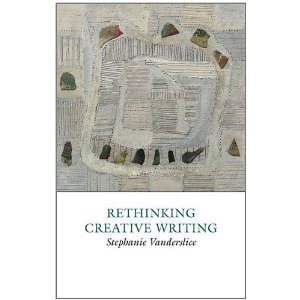
Author Interview: Stephanie Vanderslice on her new book, Rethinking Creative Writing: Programs and Practices that Work


I invited Stephanie Vanderslice to either write a guest post, or to allow me to interview her here on the blog about newest book, Rethinking Creative Writing: Programs and Practices that Work. I loved opening my email a few days later, and finding this:

In appreciation for Lisa Romeo’s generous invitation, and after getting acquainted with her incredibly resource-rich blog, Stephanie decided to cut this obviously crazy-busy writer some slack and interview herself.
Stephanie Vanderslice:  So why this book?  Why now?
SV: Rethinking Creative Writing is actually the culmination of about ten years of work examining and writing about creative writing programs in higher education. In 2001 I worked with the author Tracy Chevalier, who was speaking at our university, the University of Central Arkansas and discovered Chevalier, an American, had done her graduate work in writing at the University of East Anglia, the UK equivalent, in stature, to the University of Iowa.
After talking with Chevalier, I became curious about how creative writing was taught in other English-speaking countries.  The web was just emerging at that point and it dovetailed with my interests beautifully. I spent the next five years forging ties with colleagues abroad and learning everything I could about the history of creative writing in the UK, how and why its path had diverged from ours. This culminated in 2006 with a one month study tour in the UK, visiting other flagship programs such as Bath Spa University. Seeing these programs in action made me realize that creative writing programs in the US could learn a great deal from them. 

Stephanie Vanderslice:  So why isn’t this book titled, Why Can’t We Be More Like the British?

SV:  Well, as I started writing it, I realized that the book just sounded like an anglophile (which I am) scolding American programs and, besides being one-dimensional, that wasn’t going to go over too well here in the US.  Also, looking closely at the programs in the UK made me realize that I really needed to get to know the creative writing program landscape in the US better.

I got an MFA in fiction writing from George Mason University in the early nineties and went on to get a Ph.D. in English with a creative dissertation from the University of Louisiana-Lafayette. I knew a lot of people from other programs (Iowa, Maryland, Emerson, American University) but I only had their perspective on those programs. So I began to really study creative writing teaching in America as well, via the Association of Writers and Writing Programs conference and publications, several books and program histories and of course, what was available online. I was looking for “best practices” at American programs that I could also talk about in my book. And I found them.

Stephanie Vanderslice:  So does creative writing in higher education really need to be rethought? 
SV:  Creative writing in higher education in the US was stagnant for a long time, almost defiantly so. There was this feeling that getting together a few writers and students to form a community,  to lead intense workshops toward a degree—which was how Iowa had started the whole movement—was enough (Mark McGurl writes about this history brilliantly his book, The Program Era: Postwar Fiction and the Rise of Creative Writing). 

In the early years, perhaps it was enough. My book argues that it’s not anymore, not with the sea changes in publishing in the last ten years, not with the exponential growth of MFA programs themselves, flooding the market with aspiring writers. Programs need to be more proactive about how they’re teaching students to make lives for themselves as working artists in the twenty-first century.  They need to think about the world they’re graduating their students into and reflect on how to address that reality that in their courses. They need to go beyond the workshop.

I identified many programs in the US and in the UK that are making these changes, such as the University of North Carolina-Wilmington and Bath Spa University. I told their stories in my book in the hopes of inspiring other programs to take a closer look at the writing educations they were providing their own students.

Stephanie Vanderslice:  So who should read this book?

SV:  If you’re thinking about getting an MFA in creative writing, this book can help you think about what to look for in a program, how to ask the right kind of questions in finding a program to suit your individual needs. If you teach creative writing or help to guide one of the hundreds of creative writing programs in the US and abroad, this book will show you a number of innovative programs and practices that will hopefully help you to think more creatively about your own. 

For example,  UNC-Wilmington’s publishing lab is something many programs could aspire to and the program anthologies that creative writing programs in the UK publish and send to agents and editors (often leading to representation) is definitely an idea ripe for replicating in the US.

Stephanie is also the author of Teaching Creative Writing to Undergraduates, with Kelly Ritter and editor of Can It Really Be Taught?: Resisting Lore in Creative Writing Pedagogy, also with Ritter. Her essays on teaching creative writing are published in many journals and anthologies, nationally and internationally in journals such as College English and New Writing: An International Journal of Creative Writing Theory and Practice. Stephanie publishes creative nonfiction and fiction, is finishing a novel, The Lost Son, and is working on a memoir, Malls of America, about growing up along with this American consumer icon in the seventies and eighties.

Notes from Lisa:  If you have a question for Stephanie, leave it in comments, and she will check back here a few times over the next couple of days to answer. We're also giving away one signed copy of Stephanie's book, to a blog reader. To enter, leave a comment by Feb. 28. (Must have a U.S. postal address.)

Friday, June 10, 2011

Friday Fridge Clean-Out: Links for Writers, June 10, 2011 Edition

►As the Iowa Writers Workshop turns 75, here's a peek inside, and what's new, what's better and what not to do there (think social media).

►Library Journal offers a roundup of links to posts with takeaways from Book Expo America, which was held in New York late last month.

►Do you spend big chunks of time quietly writing in an elegantly furnished room of your own, a lovely lakeside retreat, the lobby of a 4-star hotel? Nah, me either. And Nicole Cooley thinks it's better that way, and explains it all "In Praise of Ugly Writing Spaces."

►Two upstart site concepts: Freelancers are chattering about eByline and writers in search of agents and publishers are checking out Storiad. At both, writers post expertise and content, editors/publishers post needs/wants, and the two are meant skim one another's listings in the pursuit of assignments, sales and finding new projects/talent.

►This long piece -- featuring practical writing tips from 23 authors --is (mostly) in list form, so it's not such a long read.

►See if you can spot all the fat in the excerpt Michelle Seaton uses to show how much can be trimmed in her post about line editing, at the blog of Grub Street, Boston's wonderful writing center.

►Finally, I often feel like the only writer around who is not a yoga practitioner, but even I could appreciate yoga poses for writers, such as: "Cash-Your-Huge-Royalty-Check-Asana: This pose is actually for advanced yogis and I don’t really know how it’s done. You might try standing on your head."

Have a great weekend!

Friday, November 5, 2010

Friday Fridge Clean-Out: Links for Writers. November 5th Edition

► Even if you're not a poet, a rhyming dictionary can be fun. This one is online and free (hat tip Pimp My Novel's fabulous and always funny Friday Round-up by Laura).

►What are the economic realities of being a novelist? Catherine Ryan Hyde shares. Warning: you may wish to be seated, drink at hand.

► Authors setting up a Facebook fan (sorry, "Like") page should consider delivering a "signature experience" according to this advice from Amy Porterfield (via Arielle Ford on HuffPo).

► I've done my share of fact-checking at numerous jobs and couldn't help but feel a mix of nostalgia, indignation and resignation when I read this piece (WAY back in August) about what passes for fact-checking at many online venues today.

► The pro/con Is An MFA Worth It? debates continues. This one runs down the pro side of the list, from an instructor's perspective. Here, another look at the question, with links to some of the most relevant screeds, endorsements and tips.

► Puking. Hot-blooded. Alligator. What do they have in common? Oh, my liege, you need to brush up on words Shakespeare invented. Be warned: This one's from Cracked.

► Chuck Sambuchino on "writing for love and money." Are there any other reasons?

► Finally, when an agent or editor says sure, send it along, that amounts to "requested materials." How to send them? Probably not like this.

Have a great weekend.

Thursday, July 22, 2010

Writing Reruns: Posts from the Past.

Over the last few weeks, I've noticed a bunch of new comments here on old posts. Which suggests that perhaps newer readers might find some value in some posts from the past. (How's that for justifying a too-busy-to-blog day?).

So what do editors really do with a pile of submissions? In which I feature excerpts and links from Peter Selgin's cop to how he manages his role as literary journal editor.

A Writer's Creed: Get What You Need. Maybe It's What You Want After All. In which I discuss how getting that MFA, or any good chunk of writing education, will disrupt life in general.

Point of View: A 10-year-old Explains it All. In which my son teaches me something. (Happens all the time.)

Writing the Seasonal Essay: This Time Next Year. In which I advocate getting a really big jump start.

Writing and Kids: Not So Mutually Exclusive. In which I get a little tough with writers who blame poor productivity on having procreated.

Wednesday, July 7, 2010

Stuff My (Writing) Students Say: Part Four

"But I don't want to write about X."

I understand this complaint, I do. I've been there. Twice, during my MFA program, two different faculty members insisted I write about topics I had rather not. The assignments annoyed me. I had no time to waste and wanted to stick to my own writing agenda. But I had also made a commitment to myself at the start of the program, to try anything, to say yes, to remain open to creative possibilities.

One assignment was to write an essay about the "danger of memory." I wanted to vomit. Not only was I not interested, I found myself strongly resisting. At the time, I was working on memoir pieces rooted in my childhood and far from viewing memory as dangerous, I thought of it as my ally. Yet, I reasoned this mentor must have a reason. I wrote the piece, which was an unwieldy mess at first, but then, as I revised and researched and rewrote, a strange thing happened. Something in the memoir pieces I thought of as my "real" work, began to shift. Something about the process of writing that piece had moved the rest of my work to a different, and better, place. I was connecting to my own memories in a different, more complex and much more self-aware way.

The other time, a faculty member who had been offering critique on several of my pieces, circled a reference, in each of four pieces, to a relationship in my life which up to that point I was not writing about, and had no plans to ever write about. "This," she said, "is what you are avoiding. Write about it."

I growled inwardly and on the one hand felt she was wasting my time on something insignificant, but on a deeper level I must have known that she'd hit the one nerve I was trying – obviously awkwardly – to protect. Later, after I'd written the long and surprisingly satisfying essay, she explained: Always go where you are resisting. Write what you are avoiding. Write what you don't want to write about. Write what scares you. When you think, "oh I can never write about that," that's what you need to write. There's a reason you have those feelings.

Fast forward a few years. A writer I was coaching, who I'll call Jim, keeps turning out lovely essays about various aspects of his life as a husband, father, son and friend. Each one has publication potential and he works hard on them, but somewhere in the revision process, he always loses interest and sets the piece aside. After about four of these pieces, I notice something. In each, whether it seems connected or not, there is always a line or two, often buried and mostly as an aside, about how, years before, as a new father, he was working in a highly-paid position at a prestigious company, exactly the sort of job his Ivy-league business school education has prepared him for, yet it had made him profoundly unhappy.

Finally, I gave him an assignment: Write about that job and how it sapped your soul and affected your family and how and why you eventually got out. He resisted, strongly. He was done thinking about that period of his life. He had moved on. It had taken a huge emotional toll to break free. He had a great job now, a balanced life. He didn't want to go there.

Go there, I advised. He did. Not overnight and not happily at first. Eventually though, Jim began to produce a series of pieces around this topic, pieces that were so much more nuanced and energetic than his previous work that he was able to place one in his alumni magazine, one on a men's website, and another in an essay collection.

Now, let me be clear. I take no credit for Jim's success. Eventually someone else would have given him the same advice. Or he may have noticed it himself. He'd have gotten around to it at some point, whether out of frustration or curiosity, or an annoying urge to scratch some vague but persistent itch.

Or, maybe not. Maybe what we all need is someone to say, "Hey, how come you aren't writing about…."

Take a look at your work. What keeps showing up? What often seems to be missing? What do you tend to skip over because you just can't quite figure out how to deal with it on the page? What are you dead set against writing about?

When I say one can grow as a writer by writing about what one is avoiding on the page, I don't always mean that you must write about some painful topic you'd be happier leaving alone. Maybe you are funny in short bursts but avoid (or just won't let yourself) try an entire humor piece. Perhaps you unconsciously keep sneaking in small references to a favorite deceased relative, when what you may truly be itching to do is write about how much she influenced you or why you miss her. Or have you made a conscious decision to never write about X? Hmm.

I have a favorite saying which I believe stems from Confucius: What you resist, persists.

Sometimes the more we avoid writing about something, the more it haunts our work. We avoid writing about certain topics or in certain ways for a number of reasons. Fear that it may lead nowhere. Fear that it may lead somewhere we're not sure we want to go. Habit. Feeling inadequate to the task. Being uncertain about where or how to begin. Thinking it's not really all that interesting. Knowing it's so complicated, if we start, we may never have the time or energy to write about anything else.

And we may be right, about any or all of these reasons. Or, we may be ducking a rich source of material. Chances are good that if someone else notices something, especially if it's a repeated quirk, there's something there worth exploring on the page.

Here's the thing. It might not work out. But what if it does?

The first two installments of the Stuff My (Writing) Students Say series are here.

Friday, May 21, 2010

Friday Fridge Clean-Out: May 21st Edition

►Real Delia’s Wednesday tips post this week was all about generating ideas, in some not-so-usual ways.

►Wondering if it’s okay to use that image you found online? Getty Images has put up StockPhotoRights, an easy-to-navigate new site to help with that and other questions.

►Who didn’t love Betty White on SNL? Can a writer learn anything from White’s career longevity? This literary agent thinks so.

►Been invited to write a guest blog post? Or wondering if guest blogging might enhance your career and/or book marketing efforts? C.M. Mayo has tips, offered via – what else – a guest post over at Christina Baker Kline’s blog.

►Check out this interview over at HuffPo, with John McNally about his new novel After The Workshop, a satire set against the backdrop of the Iowa Writers Workshop.

►Have you read any of these seven online literary magazines, given a rave review by, of all sites, ModCloth? There were two on the list I hadn’t read checked out before

►And finally: rejection is hard, but these 50 famous rejections seem cruel, at least in retrospect.

Have a great weekend.

Friday, April 23, 2010

Friday Fridge Clean-Out: April 23rd Edition

► Interesting interview with novelist J.A. Konrath, who is apparently making a tidy living from selling his books almost exclusively on the Kindle: “I've sold 40,000 ebooks since last April. At first, I was amused to be paying my mortgage with Kindle earnings. But now it's turning into serious money.” Indeed.


►Good tips over on Women’s Memoirs, on how the words we remember loved ones saying, and the way we remember their being spoken, can impact our memoir writing.

►The Rejectionist (an assistant to a literary agent), takes aim at the submissions by MFA graduates (mostly fiction).

► Hey, I may never get to Hawaii, but I like the tours and reviews of the state’s libraries over at the Hawaii Book Blog. I don’t know of any other sites that do this for libraries, do you?

►Every freelance writer has seen their share of lousy fee offers. Now, Forbes wants some of the contributors to its website to work for free because “your posts would be available to millions of Forbes readers.” Gee, swell. Wonder if any of them will offer to pay the writers’ rent. And by the way, we’re not talking “citizen journalist” bloggers here. Apparently, the magazine/site – dedicated to helping its readers increase their financial position – is making the offer to established financial journalists.

► Narrative magazine is coming to the iPad, and they’re holding a contest to help kick off the new free app.

► Writers in the San Mateo County, California area have a few days left to enter the nonfiction contest about a special horse, sponsored by local resident Verna Dreisbach, editor of Why We Ride: Women Writers on the Horse in Their Lives, which, if you haven’t been reading this blog much, is just out from Seal Press (and I am one of the contributors).

► One of my online students published this fun little piece, which she worked on during a week we focused on humor. It’s up over at The Writing Mamas – a nifty site for those who write and mother.

►Finally, when I want a quick laugh, I sometimes head over to Dr. Grumpy’s blog, written by a fed-up anonymous neurologist. It has nothing to do with writing, usually. Except for the other day, when I was working on a future lesson about comic dialogue for my online classes and came across this:
Dr. Grumpy: "What time was your seizure last night?"
Mrs. Etoh: "Around 10:00, as we were leaving the bar."
Dr. Grumpy: "I thought you'd stopped drinking?"
Mrs. Etoh: "I did, but last night we had a round after our AA meeting."

Have a great weekend.

Thursday, March 25, 2010

Guest Blogger Pat Berry on her MFA Reading to Write Experience

While in college, my friend Pat Berry planned to be a writer until a post-graduation opportunity led her down the editing path. She became a specialist in children's magazines, her name appearing on the mastheads of Sports Illustrated for Kids, 3-2-1 Contact, and Muppet Magazine, among others. Fifteen years later, Pat left full-time editing to freelance and be around her own children more. She contributed to several essay collections including Over the Hill and Between the Sheets: Sex, Love and Lust in Middle Age, and Unbuttoned – Women Open up About the Pain, Pleasures and Politics of Breastfeeding. Now, at 50, her kids closing in on college, Pat's gone back to school to put writing first. Here, she shares a discovery made early in the program.

Please welcome Pat Berry.

Lately, I’ve been buying novels, memoirs, and biographies like a fiend and not leaving them on the nightstand to catch dust indefinitely. What inspired this reconnection with my bookish, 13-year-old self? Last fall I entered Columbia University’s MFA program in writing. The 50 or so books I’ve purchased since September are homework.

As you can imagine, we grad students are asked to churn out a substantial amount of original work on a regular basis. But the writing—my concentration is creative nonfiction—is on top of as many as 1,000 pages of published fiction and nonfiction reading we’re assigned—each week!

Of course, the authors are the really good ones—Woolf, McEwan, Didion, Orwell, Mailer, and Austen, among them—and the obvious objective is that some of their skill will rub off on us. Although I can’t speak to the transfer of creativity (what, and jinx myself?), I am almost up to date on the reading list. (Alas, the bookmark in last semester’s Low Life, Luc Sante’s dense study of New York City’s more sordid history, is wedged—likely for good—between pages 72 and 73.)

There’s plenty about this grad school experience that I could not have accomplished on my own. For one, the structure keeps me honest, and for another, a research internship offered by the university has opened new doors. But the epiphany happened when I realized that for years, inspiration had greeted me every morning, lined up neatly in a basket next to my clock radio, all but holding up the sign: “Read good stuff and your writing will benefit.”

Words all writers can live—and work—by.

Here’s a partial list of assigned reading that has filled my book bag and blown me away:

- Persuasion by Jane Austen (fiction)— Austen’s last novel and a standout for its older, less-maiden-like protagonist and appreciation for self-made men
- One Writer’s Beginnings by Eudora Welty (nonfiction)— Assembled talks about creativity by a writer known for her novels and short stories about the South
- Fever Pitch by Nick Hornby (nonfiction)— Coming of age told through an English boy’s cataloguing of Arsenal football games
- A Civil Action by Jonathan Harr (nonfiction)— A Massachusetts town’s legal fight against an industry whose toxic dumping has had deadly consequences
- Mrs. Bridge by Evan S. Connell (fiction)— Sharp take on a Cold War-era housewife’s discomfort with her mundane suburban life
- King Leopold’s Ghost by Adam Hochschild (nonfiction)— Fast-moving narrative, alive with heroes and villains, about a tyrant’s exploitation of the Congo Free State
- Stuart: A Life Backwards by Alexander Masters (nonfiction)— An unusual approach to writing biography, in this case about a homeless man
- Survival in Auschwitz by Primo Levi (nonfiction)— Matter-of-fact account of a young Italian’s year in a concentration camp
- Saturday by Ian McEwan (fiction)— Quite a bad day in the life of a London-based neurosurgeon
- Speak, Memory by Vladimir Nabokov (nonfiction)— Dreamlike recollections of a pre-Revolution childhood in Russia and the émigré years that followed

Pat is happy to answer readers’ questions about her MFA experience, and can be reached here.

Monday, December 21, 2009

Gold in Them Notebooks: Part 14, and -- That's a Wrap.

While reorganizing my office a few months ago, I took a break to flip through the notebooks I filled during my MFA program. Rereading the notes I'd taken at faculty lectures, workshops, panels, visiting writer seminars, and graduating student presentation, I didn't want to stop. There was so much wisdom gleaned from so many talented individuals. I decided to leave the notebooks in a prominent place on my newly-neatened bookshelves, and every week or so, randomly select something to share here on the blog. As the year winds down, I'm concluding the Gold in Them Notebooks series with these random bits of advice I gathered:


• Beware the happy ending.
• When you
tell your readers, you are the only one involved in the quest. When you show them, they can participate in the quest along with you. Guess which they'd rather do?
• Memory is the mother of all muses.
• Write about what you cannot shut up about.
• When you write a story, you create a world, whether you plan to or not. So why not do it with intention?
• A sense of humor is a universal need for readers.
• At the pre-writing stage, two thoughts are usually sure signs you are on to a good thing:

1. I'd better write about that because it won't leave me alone. Or, even better: 2. Oh, I could never/should never write about that.
• When looking for prospective agents, always check the author's acknowledgements page in books that you like or that have a similar vibe to your manuscript. Authors almost always thank their agents by name.
• When writing a scene, think about the strip tease. One reveals
gradually.


You can read the other 13 parts of the series here.

Friday, December 11, 2009

Friday Fridge Clean-Out: December 11 Edition

► Let's get the grim news over with first: Kirkus Reviews has folded.

►Pictory is a new site combining – as its name implies -- excellent photos with story.

► I'm not much of a technophile, but this – sending an email directly from a print publication page -- sounds quite cool. Be sure to watch the short video.

► If you want to keep up-to-date on what's happening in the rapidly developing e-book
industry, you might want to check this new Mediabistro blog (and daily free email) on the topic.

►Some literary journals still insist on snail mail submissions, and if you don't own a postage scale, this handy new site will calculate the postage based on number of pages, envelope size – even if there are paper clips and a SASE.

►Save the date – April 24, 2010. Welcome Table Press will hold a day-long symposium, In Praise of the Essay: Practice and Form, at Fordham University (NYC). (More to come on this in a future post.)

►Nearly every writer has taken jobs that pay the rent. But working for the online writing mills probably shouldn't be one of them. What do you think?

►Debra Schubert discusses her journey to landing an agent over on MFA Confidential.

►Self-editing got you grumbling? The Crabbit Old Bat (a.k.a. British novelist Nicola Morgan) has some cheeky advice. Somehow I think anyone who calls herself a crabbit old bat finds it somehow satisfying and charming to talk about killing her darlings.

►Ever thought someone should invent a platform that hooks on a steering wheel so you can write in the (hopefully parked) car? Well, someone did and this somewhat alarming device, along with 19 other cool or kooky items, are on this list of gifts for journalists.

►If I were anywhere within reasonable commuting distance of northern Wisconsin, I'd seriously consider this February Mother Words Writing Retreat, organized by Kate Hopper.

► And finally, what has Twitter taught you? (Even if you don't actually tweet, you may enjoy this Simon Dumenco essay/rant.

Have a great weekend.

Friday, November 27, 2009

Friday Fridge Clean-Out: Everything But the Turkey

► A really wonderful collection of essays on the craft of nonfiction resides over at Narrative Digest, from the Neiman Foundation for Journalism at Harvard.

► Interesting piece at Salon about Ben Yagoda's new book, Memoir: A History, and how and why memoir has apparently taken over the literary world.

►Nancy Rawlinson had a recent post listing a bunch of useful links for those contemplating, enrolled in, or just curious about the value of, an MFA program.

► The Poetry of Food is a new place on the web to read and write about food, and don't let the name fool you; there's plenty of prose there too.

► At Stacked Up, successful writers show off and talk about their personal bookshelves.

► And finally, if you like Twitter and the avatars that live there, try this quiz.

Have a great weekend.

Tuesday, November 17, 2009

Guest Blogger: Susan Kushner Resnick on Putting Procrastination in its Place


Ten years ago, emerging from a second round of postpartum depression, I stumbled across Susan Kushner Resnick's memoir, Sleepless Days: One Woman's Journey Through Postpartum Depression. When I closed the book, I has one of those moments of realization that are incredibly clear and also painful -- I had to dramatically revamp my writing life.

The author's note said Susan was a fellow alumna of the journalism program at Syracuse University, so I emailed her, and in the course of a few exchanges (though I really had no right to do so) I unloaded my anxiety and frustration about not doing the kind of writing I really wanted to do. Susan wrote me back with a bunch of really good advice, but for me it all boiled down to one sentence: look into a
low-residency MFA in creative nonfiction, and do it right away. I had never heard these terms before, but I printed out her email and kept it on my desk -- for another two years. But finally, I leaped.

A final requirement for my MFA was to write an Artist's Statement, which contains this important line: "As with everything in my life, it began with a book." Susan's book. We recently reconnected. I can't remember exactly why or how, but it doesn't really matter because all of that time I never really felt disconnected.

Please welcome Susan Kushner Resnick.

Here’s what I’ve learned about working on more than one book project at a time: it enhances the craft of procrastination. Even if you thought you were impressively skilled at putting your writing last, as I did – you should see my clear kitchen counters, my every washed and folded towel, my tidy car interior – this talent can be honed by adding additional writing projects.


I figured this out as I began to corral hundreds of tiny yellow airsoft gun pellets from far under my couch. My son’s obsession of the month involved assaulting empty soda cans in our yard, then trailing the ammunition throughout the house. For a long time, I thought the sunny little balls were candy so I threw them away. But when my son requested a ride to the creepy hunting store to restock, I realized that I’d been tossing the arsenal. I decided to collect the strays instead. After all, a trip to buy new ones would take a lot of time away from my writing!

I flattened myself onto my belly and lifted the couch skirt. This was supposed to be the last of many “straightening up” tasks I’d been at that morning, despite having free time and the word WORK written in my datebook. As I reached under the couch and through the dust, I saw that I had reached the pinnacle of avoidance. Pathetic.


How had I fallen so far? I have rules and strategies designed to prevent time burning. I’ve followed them for years and they’ve allowed me to maintain a writing career while raising two relatively sane teenagers (the gun is a phase!), staying married, and occasionally seeing friends.
How could I have forgotten?


In this case, I blame paralyzation. Somehow, I’d gotten myself involved in three book projects at the same time. This was a very good thing for my identity (I guess I really am a writer if I’m straddling projects), but not so good for time management. When I wrote WORK in my datebook, I didn’t specify which work.

Do I plunge into Project Past, getting my 10-year-old book on postpartum depression reprinted to coincide with my testimony to the state legislature about the need for mandated postpartum care?

Do I stick with Project Present, a marketing plan I’ve created for my second book, which comes out in January?

Or do I take notes for/organize research for/manage translators for Project Future, my third book, which really isn’t a book at all yet, but just a big box of notes?

Or, do I clean up airsoft pellets?

We all know the default answer. We know that it’s easier to clean or shop or cook or rake than it is to open the proverbial vein and write. Writing is complex and fraught. Housework is simple and straightforward, not to mention immediately rewarding. With housework you aren’t digging into yourself. It’s literally a surface activity. And if it gets interrupted by an actual crisis – big or small – who cares? When writing gets interrupted, when we have to cauterize that vein that took so much effort to open, it hurts.

Still. We aren’t in this business to avoid pain. We writers woo pain. It’s part of the fun and most of the challenge. So I will forgive myself for getting daunted by multiple projects. And I will remind myself of the rules.


*Set Deadlines: As a freelance writer, I struggled when I didn’t have a professor or editor waiting for my work. Then I realized I could fill that disciplinary role myself. Since I was trained to never miss a deadline, it works. I usually set my goals according to season: I’ll have this chapter done by the end of summer, I’ll begin that outline before Thanksgiving break, etc.

*Remember Your Long Term Goal: Everyone’s long term goal is different. I’m committed to being a role model for both of my kids, but especially for my daughter. I don’t want her to remember me as a woman who sacrificed her passion to take care of others, or to think that’s her fate.

*Think About Your Deathbed: I know, it’s a cliché. But do you want to lie there and realize you didn’t reach your writing goals because you wasted time cleaning? Or do you want to die knowing that you really tried your hardest, no matter how it turned out?


*Don’t Look Under the Couch: Just don’t. Look into your stubborn writer’s heart instead.

Susan's forthcoming book is Goodbye Wifes and Daughters, an account of the 1943 Smith Coal Mine disaster in Bearcreek, Montana. It's available for pre-order from University of Nebraska Press.

Tuesday, November 3, 2009

Author Interview: Leslea Newman


One particular group of writers has always especially interested me: Those with full time careers revolving around a constantly changing combination of writing, teaching, and editing projects. In other words, those who make a living with words, but are not on staff full time at a university or media enterprise. The ultimate freelancer, if you will. It is the writers who write and publish, teach and give seminars, edit and consult with other writers, whose careers I study and try to learn from.

An excellent example is Leslea Newman, who has published nearly 60 books -- children's books, poetry, personal essay, short stories, novels, young adult fiction, middle grade novels, and books on writing craft. During my MFA program, I was fortunate enough to participate in a writing workshop under Leslea's direction, and to attend many of her presentations on writing craft and publishing. I'm so pleased that she agreed to a rather lengthy question-and-answer interview.

Lisa Romeo: When you wrote Heather Has Two Mommies in 1988, you co-published it with a friend who owned a small desktop publishing business. Now here you are on the eve of the 20th anniversary edition. Can you talk about your original decision and the journey you've been on with that book ever since?

Leslea Newman: Heather Has Two Mommies started as a grass roots project. I was asked by a woman to write a children’s book that showed a family like hers (two moms and their daughter). No established publisher would touch the book, so a friend of mine, Tzivia Gover, who at the time was a lesbian mom with a small desktop publishing business, and I decided to publish the book together. We raised $4,000 in $10 donations, found an illustrator, and printed the book. Six months later, Alyson Books took over. And the rest is history! I’m very proud of the fact that the book is still in print 20 years later (and the new edition has wonderful illustrations in full color). It’s been challenged many times, but the message of the book remains the same: the most important thing about a family is that all the people in it love each other.

LR: You work in many genres and forms. How do your varied endeavors nurture one another?

LN: Each genre informs the others. For example, I believe that being a poet has made my fiction more lyrical; being a fiction writer has helped me write narrative poems. I always encourage writers to think of themselves expansively—there’s no limit to one’s imagination!

LR: How do you approach your work time and make decisions about what to work on next? Do you make long-range plans, or do you tend to respond more or less organically to the material which is calling out to you most strongly?

LN: I try to write every morning, though sometimes that is not possible because of travel plans, deadlines, and other responsibilities. I never plan ahead; when I sit down to write, I stare at a blank page and pray some words will come along to fill it. If I see a trend develop, for example, if I seem to be working on poems over a period of time, I’ll consciously say, “Oh, I’m working on a new poetry collection.” But the work is the boss; it tells me what to do, not the other way around.

LR: What about saleability and concerns of the literary marketplace?

LN: I never write to sell. Well, I take that back. Once I wrote a romance novel with the intent of selling it and perhaps making some money. It is the only book I have never been able to sell (though it did come close at several presses). Oh well. You can’t blame a girl for trying.

LR: I know you are a big believer in writing every day. Can you explain why you feel that way, how it fits in to your own writing regimen, and make suggestions for others who may be finding it challenging to find either the time or the mental commitment to write every single day?

LN: I do think one gets better the more one writes. It’s like anything else, playing an instrument, playing a sport. And you never know what you’re going to write on any given day. The only thing that’s a guarantee is that if you don’t pick up your pen (or turn on your computer) nothing will happen on the page that day. Often—more often than I’d care to admit—I scribble and scribble and nothing interesting happens on the page. This can go on for days, sometimes weeks. Then one day something interesting will emerge. If that happens on day #42, I know the 41 days that preceded that writing were absolutely necessary. It’s all part of the process.

LR: You are one of the most hard-working writers I've ever met, and yet I don't think I'd call you a workaholic; it's more that I get the feeling you both treat writing as a job, and yet also retain all the joy and love of writing that occasionally gets lost over a long writing career. What do you think helps you achieve this kind of love/work relationship with your writing career?

LN: All I know is that I’m happier writing than not writing (even when the work isn’t going well). I think the reason I still love writing and being a writer is that I’m really in love with language. Nothing pleases me more than coming up with a phrase or image that moves me in some way, whether it makes me laugh, cry, or just impresses me with its rhyme, meter, or originality. This is what I live for, the joy of discovery, or what a writer friend of mine calls the daily miracle.

LR: In one memorable seminar, you brought in a stack of manila envelopes which contained the 17 drafts of Jailbait, the young adult novel you published in 2005. You went on to trace the changes, share your reactions to the editorial suggestions of your agent and publishing house editor, and emphasize the importance of being willing to try new things on the page. You even agreed to refocus the original novel manuscript into a young adult novel – a huge shift. I was so impressed with your professionalism (and willingness to let others inside the process). What do you want not-yet-published writers to take from your experience?

LN: It’s important to realize that more often than not you are not the best judge of your own work. You have a whole head full of other information about your book—information about the characters, the setting, the plot—that is not on the page. Your reader does not have that. Your reader only has the words that appear on the page. That’s important to remember. Also, you have to realize that you and your editor want the same thing: to make your book the best it can be, both for artistic merit and for success in the marketplace. Editors edit—that’s their job. Your relationship with your editor is like any other relationship; it demands mutual respect, an open mind, the ability to listen, and the willingness to compromise. When an editor makes a suggestion, I’m always willing to try it. I may not always do what my editor says, but I am always willing to consider her or his suggestions and see what happens.


LR: When writing across genres, writers often wonder how and when to best showcase the material. Do you ever rewrite a published poem as a piece of nonfiction or use it as a basis for a short story or novel – or vice versa? For example, the poem, “When My Father Stopped Tucking Me” In, from your latest poetry book, Nobody's Mother, has all the markings of morphing into a compelling personal essay or short memoir piece. (And there are so many other examples.) How do you know if that is do-able? Is it a matter of forging ahead and seeing what eventually works out? Or do you try to always begin fresh with each new project?

LN: It is sometimes said that writers really only have two or three stories to tell. I’m not sure if that’s true, but there are definitely themes that come up in my work over and over again. For example, I’ve written so much about mothers and daughters, and do so again in a forthcoming children’s book called Just Like Mama (Abrams, spring 2010), in many poems in both Signs of Love and Nobody's Mother, and in my latest novel, The Reluctant Daughter. When I had various friends dying of AIDS, I wrote the poetry book, Still Live with Buddy, the children’s book, Too Far Away to Touch, and the short story, “What Ever Happened to Baby Fane?” (in Girls Will be Girls) etc. I write whatever compels me, whatever I care passionately about, in whatever form it takes.

LR: Your middle grade novel, Hachiko Waits, based on the legendary dog who waited 10 years for the return of his deceased Japanese owner – will likely get new attention once the Richard Gere film of the story is released. Are you doing anything to prepare for that?

LN: You bet! I have been contacted by several bookstores and organizations, including the Animal Cancer Foundation to do booksignings once the movie is released. I’m very eager to see this new reinterpretation of Hachiko’s story. The new movie is based on the Japanese film which was made in the 1980’s and was very beautiful.

LR: As a writing teacher, what big mistakes do you see not-yet-published writers making, not in terms of technical writing issues, but in terms of the trajectory of their writing careers and development?

LN: Many beginning writers don’t understand that writing is a business, as well as an art, and one has to treat it like any other business. One has to be professional. One has to network. One has to be willing to take risks. One has to give one’s all, 100% of the time. One has to accept failure as well as success. One has to be in it for the long haul. One must be humble. And of course, one has to do one’s best writing. One has to, as Jerry Garcia famously said, “Accept every assignment. Build your fan base one person at a time.” At least that is my philosophy.

I find, much to my surprise, that many writers who have yet to publish have an attitude of arrogance, and only want to be published in the most prestigious publications around. For example, I know a poet who will not send his work anywhere except The New Yorker. And he has yet to be published. I have made a career of publishing with small presses, many of whom published my work when they were just starting out. And it has not hurt me. I still publish with small, as well as large presses. A friend of mine who is a folk singer has a motto: Go where you’re wanted. I think that’s solid advice.

LR: I've used your craft book, Write From the Heart, when teaching, especially the writing exercises. Are there other books on writing craft do you recommend?

LN: To tell you the truth, I find reading beautifully written books of fiction and poetry a lot more useful than reading books on writing. One learns about craft by reading well-crafted books and absorbing technique on a cellular level. However there is one book I absolutely love: The Art of Writing by Lu Chi, translated by Sam Hamill. It was written in the third century, and it is still relevant today. I also like If You Want to Write by Barbara Ueland. And On Writer's Block by Victoria Nelson.

LR: Tell us a little about your newest novel, The Reluctant Daughter.

LN: The Reluctant Daughter is a novel about a woman who can’t decide whether or not she wants to be a mother until she decides whether or not she wants to be a daughter. Lydia Pinkowitz seemingly has it all: a successful career as a Professor of Women’s Studies, a loving spouse named Ali, and many friends. What she doesn’t have is a close relationship with her mother, which is what she yearns for. Lydia and her mother are at constant odds with one another; after a particularly painful encounter, Lydia decides to cut off communication with her family of origin. Then she gets a call from her father: her mother is in intensive care. Will Lydia fly 3,000 miles cross country to try and make peace with her mother, or simply let the woman go? I’ve gotten many letters from women who say the book has moved them enormously and that has been very gratifying. I haven’t met a woman yet who doesn’t have a complicated relationship with her mother!

LR: What's on tap for you next?

LN: I am very excited to have four children’s books coming out in the next two years. Just Like Mama is a sweet book about the special relationship between a mother daughter, which is being released for Mother’s Day 2010. Miss Tutu's Star is a book about a clumsy little girl who wants to be a ballerina, and will be published in fall 2010.

I will be the keynote speaker at the Write Angles Conference in Amherst, Massachusetts on November 21st, and teaching at The Frost Place in June 2010. I’m also participating in the 30 poems in 30 days project that I initiated as poet laureate in Northampton, Mass., to raise money for the Family Literacy Project of the Center for New Americans. And I continue to work as a mentor with private students in all genres -- fiction, nonfiction, poetry, and children’s books.