Friday, April 27, 2012

Friday Fridge Clean-Out: Links for Writers, April 27, 2012 Edition


► Duotrope continues their beta launch including literary journals that publish nonfiction into their system, and has begun a series of interviews with nonfiction editors, like this one with River Teeth managing editor Sarah Wells.


►There's so much great material and fun stuff over at RedRoom, for both writers and readers.


► At the Parents blog on HuffPost, Lisa Belkin writes about Anna Quindlen's new memoir, Lots of Candles, Plenty of Cake, and notes that in the book, Quindlen  "writes of a friend 'who has always provided dispatches from the foreseeable future because her children are just a little bit older...' Anna has always provided those dispatches, those glimpses, for me." Lisa B. said what I've been thinking, for years, and still do.


►Don't have any inside information about the Self-Publishers Online Conference (May 8-10), but the experts line-up looks promising, including book marketing/publicity experts Sandra Beckwith, Penny Sansevieri, and Dana Lynn Smith.


►The folks who run the site IndieReader, which carefully selects books to review and recommend, reminds writers "The Big Reasons Indie Authors Aren't Taken Seriously". Be prepared.


►The American Library Association's blog posted a Best Books of 2011 Honor Roll: Narrative Nonfiction, How-To, and Art. 


►A few nonfiction panelists at the Los Angeles Festival of the Book were asked for key advice. They replied:  Read. Write. Expect to be poor.  Who knew?  (via GalleyCat) 


► Finally, check out these "crazy and unusual book designs."  Really unusual.


Have a great weekend!

Wednesday, April 25, 2012

I've been thinking. That's all.


Over the past few months, I've been absent here more than present. (If I recall my basic Emily Dickinson knowledge, she made a pretty good case that absence is indeed presence, compressed. But I digress.). I suppose you've noticed. I have run many guest posts, and am grateful to the writers who have been willing to share their stories and advice here about aspects of writing, publishing, and the writing life. 


Yes, partly my non-blogging is a result of (thankfully!) being quite busy with paid work – writing, editing, teaching, coaching, and with family…stuff. (Sartre was wrong, by the way, hell isn't "other people," it's shepherding one's oldest child through the college application, admittance, visit, scholarship, financial aid, and decision process.)


But.


The silence has also been partly intentional. 


I have been thinking. Thinking about so many writing-related things. Thinking takes time, or at least, it should. And sometimes, it requires more input, less output. 


Sometimes one needs to regroup, to listen and not speak, to absorb and ponder, and refrain from churning out more words, advice, ideas, (noise?). That's what I've been doing.  Observing, considering, reading what (many) others have to offer in the way of writing and craft advice, publishing guidance, career development. 


Being in that kind of mode typically is not that interesting to anyone else; it doesn't look exciting from the outside, either in person or on the page. I decided that while I'm in that zone, it's probably not all that useful, at the same time, to also write blog posts. 


Often I point out to writing students and coaching/editing clients that in the total writing process, in both the act and business of writing, the most underrated facet is -- thinking. We are all so busy writing, talking, revising, editing, explaining, defending, pontificating, discussing. Thinking falls off the radar. 


When I want to, when I can, I'll have something more to say. Maybe tomorrow, maybe not.


Meanwhile, I'm thinking.

Tuesday, April 24, 2012

Guest Blogger Mary Rice on Finding Virtue in Women's Narratives

This is the second in a series of guest posts from writers who, like me, are contributors to Women Writing on Family: Tips on Writing, Teaching and Publishing. You can read the first in the series here.  
Please welcome Mary Rice.

"And what do I say to my children?  Honesty has always been the bottom line between us, but did I really want them going through this with me during their final difficult years in college? On the other hand, how could I shut them out of this most important decision of my life?"  - Audre Lorde, from A Burst of Light: Essays on Living with Cancer
I admire women who, as storytellers, explore virtues in subtle, non-self-conscious ways. In the memoir excerpt above, Audre Lorde outlines the conflict in negotiating a personal plotline of living with breast cancer. As Lorde faces the decision of undergoing invasive and expensive treatment or letting nature take its course, readers begin to see the complexity of her circumstances. 

On the surface, her dilemma is whether to be honest with her children about her disease and the reality that she will die.  A deeper problem is whether treatment and fighting for her life demonstrates greater integrity than surrendering early to her mortal ailment.  For Lorde, the question of what is virtuous sustains the tension of the narrative. Whichever decision Lorde makes will carry consequences not only for herself, but for her family. Bravery is not demonstrated merely in the choice, but in the acceptance of whatever happens afterward. That acceptance, grounded in honesty, gives her narrative power. 

Let's look at the virtuous explorations of two other women authors—Jeanne Wakatsuki Houston and Barbara Kingsolver -- who both negotiate questions of virtue in interesting and admirable ways that are also literary.  

"Suffice to say, I was the first member of our family to finish college and the first to marry out of my race.  As my husband and I began to raise our family, and as I sought for ways to live agreeably in Anglo-American society, my memories of Manzanar stayed far below the surface."  - Jeanne Wakatsuki Houston, from Farewell to Manzanar.

Houston’s memoir of her experiences at Manzanar, an American camp of concentrated Japanese citizens during World War II, was assuredly about herself. Even so, Houston spends much of her narrative about Manzanar discussing her family she arrived with, as well as the family she came to know through friendship and trust.  She worked to harmonize family life and personal satisfaction.  Houston mentioned that she married “out of her race” as a confession to Japanese readers and as a way to assert honesty with herself.  Describing the ways in which she sought to live “agreeably in Anglo-American society” as a Japanese woman married to an Anglo man, simultaneously suggests acquiescence to a system while interrogating it. 

"I thank Virginia and Wendell Kingsolver, especially for being different in every way from the parents I created for the narrators for this tale.  I was the fortunate child of medical and public-health workers, whose compassion and curiosity led them to the Congo.  They brought me to a place of wonders, taught me to pay attention, and set me on an early path of exploring the great shifting tension between righteousness and what’s right."  - Barbara Kingsolver, Author’s note, The Poisonwood Bible.

Kingsolver reasons in her author’s note that even though her parents are not literally in the text, they make it into the book because they were the ones who took her to the Congo, taught her the observational skills necessary to be a gifted writer, and started her on a long journey of trying to figure out the balance between “the righteous and what’s right.”  Kingsolver’s statement suggests, just as Lorde’s and Houston’s did, that the virtuous action does not necessarily fit tidily in one recognizable place. The “shifting tension” Kingsolver delineates in her author’s note is precisely the mechanism by which narrators are bound together in story and authors are bound to the narratives they have designed. 

Lorde's, Houston's, and Kingsolver's writing explores the claim that truth is important to most people, but how truth interacts and entangles in life, is relative.  It is that kind of realization that I admire when I read and I hope makes it into my work when I write. 

Mary Rice writes frequently about the methodology of narrative in the context of folklore, geography, women’s studies, literacy, linguistics, and teacher education. Her work has appeared in many journals and collections. Her book Adolescent Boys’ Literate Identity was named Outstanding Publication of the Year by the Narrative SIG of the American Educational Research Association. 

Thursday, April 19, 2012

Guest Blogger Jenn Brisendine on Directing Scenes of Dialogue


A perk of contributing to a collected work is making contact with the other contributing writers. One way I like to explore those new connections is to invite fellow contributors to write a guest post here, and at the same time (let's face it, for every perk, there's a payout) bring attention to the book to which we've contributed. So for the next couple of weeks, I'll periodically feature a post from another writer whose work also appears in Women Writing on Family: Tips on Writing, Teaching and Publishing, edited by Carole Smallwood (The Key Publishing House/Canada).

 Please welcome Jenn Brisendine
I love the theatre. I spent more on hours onstage and backstage in college than reading all the works assigned in my English major. When I taught high school literature and writing, I also directed school plays. One semester I designed and taught a fiction writing elective, and many student actors signed up. Teaching them how to craft natural, dramatic dialogue was exciting—we likened their story characters to actors in a play, and I encouraged them to first “direct” the sound and appearance of the scene on an imaginary stage, complete with props, actions, and cues.
When I write dialogue now—fiction or creative nonfiction—I don’t just compose the conversation; I "direct" the dialogue as a theatre director coaches a scene for emotion and meaning. The director listens for emphasis of certain words, but also suggests pauses, inflections, vocalizations, movement, and nonverbal action. Similarly, a writer can control a scene of dialogue in ways that enhance its significance and mood.

We writers have great devices at our disposal, including punctuation, pauses, and action tags. Punctuation is a tiny tool that wields great impact on dialogue:

“I’m leaving, and you are too.”  (With a comma, there’s barely a pause.)
“I’m leaving. And you are too.” (Now it’s a period, and a much stronger break.)
“I’m leaving? And you are too?”  (The meaning has changed.)
“I’m leaving! And you are too!”  (Wow! Use exclamation marks sparingly!)
“I’m leaving. And you…”  (Trailing off indicates uncertainty or distractedness.)
“I’m leaving. And you–-”     (The speaker is interrupted.)

Pacing the scene with pauses adjusts the sound of the dialogue to your reader’s ear:
“Would you sit down?” He hesitated. “I have something to tell you.”
 
With action tags, you can pace the scene, adjust the mental sound of it, and let slip a tidbit of characterization:
“Would you sit down?” He sipped the bourbon and waited for the burn to fade. “I have something to tell you.”

I often write important scenes in play format first, to focus on the characters’ words:
Barney: If you’d sit down for ten seconds, maybe I’d know what you’re talking about.
Alicia: Why should I believe a word out of you?
Barney: Because I’m your husband. Or did you forget that in New York too?
Alicia: That’s not fair.
Barney: No, you’re not fair. Didn’t anyone ever teach you to take turns? You got to do the leaving last time. This time, you stay here. I’m going.

Then I add stage directions to pace the beats of the scene, so the “actors” can emphasize or punctuate the spoken words:

Barney: (watching Alicia for several seconds from his place by the bedroom door) If you’d sit down for ten seconds, maybe I’d know what you’re talking about.
Alicia: (folds two shirts and places them in the suitcase before speaking) Why should I believe a word out of you?
Barney: Because I’m your husband. Or did you forget that in New York too?
Alicia: (stops moving, stares straight ahead) That’s not fair.
Barney: No, you’re not fair. Didn’t anyone ever teach you to take turns? You got to do the leaving last time. (opens door, stops) This time, you stay here. I’m going.

This helps me frame a mental stage performance of the scene. Finally, I can rewrite the scene in fiction format:

Barney watched Alicia yank clothes off hangers. “If you’d sit down for ten seconds, maybe I’d know what you’re talking about.”
She folded two shirts and placed them in the suitcase before speaking. “Why should I believe a word out of you?”
“Because I’m your husband. Or did you forget that in New York too?”
Alicia didn’t move. “That’s not fair.”
“No, you’re not fair. Didn’t anyone ever teach you to take turns? You got to do the leaving last time.” He yanked the door open. “This time, you stay here. I’m going.”

In my mind’s theatre, not only can I see and hear the beats of the scene, I can feel the tension between characters that is generated by the pacing. Ultimately, what we crave in dialogue is that tension; mentally directing the scene before composing it allows the writer to heighten emotion, emphasize conflict, and deepen characterization all at once.

Jenn Brisendine’s essays have appeared in many print and online venues, including Rosebud, The Pedestrian, LiteraryMama, and the anthology The Maternal Is Political (Seal Press); she is also a contributor to Many Genres, One Craft: Lessons in Writing Popular Fiction. A former high school English teacher, she currently works as a freelance editor and writer. Jenn lives in Pennsylvania with her husband, two sons, and a petite 100-pound Great Dane. At her blog, she reviews great writing guides and discusses the quest for balance in the writing life.

Monday, April 16, 2012

Guest blogger Ellen Cassedy: On writing about the up close and personal – and the universal – in nonfiction.


As occasionally happens, I cross paths with an author through a mutual writing friend – or in this case, a writing/blogging friend -- and recently met Ellen Cassedy via our mutual connection to Erika Dreifus. Ellen is the author of We Are Here: Memories of the Lithuanian Holocaust, recently published by University of Nebraska Press, a source of so much rich and wonderful nonfiction. Her memoir chronicles what began as a personal journey to Lithuania to poke around in her family's Jewish history. That took on a much larger and more urgent scope as she uncovered unexpected truths and dug further, simultaneously excavating ancestral stories and exploring how a country and culture moves on from an unthinkable past. She lives in Washington, D.C.

Please welcome Ellen Cassedy

Lately I have been pondering what I adore about my favorite memoirs. It is the balance of the personal and the universal, I’ve decided – an individual life rubbing up against the sweep of history. I love writing that offers me an intimate vantage point from which to learn about a larger world – another culture or another era. 

Both as a reader and as a writer, I find that a memoir’s vibration between big and small is more than just a pleasure. It is also a political and a moral matter. When family stories are told in a larger context, we learn a fundamental truth:  that human history is made not only by generals and kings, but by each and every one of us.

So, paradoxically, my advice to fellow memoir-writers goes in two opposite directions:  1) Come closer; and 2) Step back.   

1) Come closer.  Just like a work of fiction or a play, a memoir needs vivid scenes and vivid characters. A memoir sometimes needs to slow down and draw the reader in close – close enough to be right on the spot, minute by minute, soaking up all there is to see, hear, smell. 

As I gathered material for We Are Here, my account of my journey into the land of my Jewish forebears, I kept a diary – a total of nine spiral notebooks, in which I scribbled down observations, impressions, and feelings. I also took nine rolls of film (remember rolls of film, before the digital age?)

Once I was at my desk, conjuring up the encounter with the old man in my ancestral town who wanted to speak to a Jew before he died (and wanted me to be that Jew), I could tell my readers all about his green cap, his aluminum cane, and the blood-red gladioli that framed the door of his tin-roofed cottage.  

Also like a work of fiction, memoirs require vivid characters whom the reader can cozy up to.  With a first-person narrative, that means creating yourself as a character. As the reader’s guide through a difficult moral terrain, I had to work hard to make myself into a someone readers could feel close to. My character had to be just as sharp and memorable as Uncle Will, with his complex secret from his Holocaust past, or Ruta, the passionate young woman driving a Holocaust exhibit around the country in her pickup truck.

2) Step back.  For a family story to become a book, detachment is vital. When I first sat down to write, what was on my mind were my own feelings:  how agitated I felt when my uncle revealed his secret, how perplexed I felt when I learned about the old man who wanted to speak to a Jew before he died.   

But only when my own story came to illuminate something larger was it launched it on its way toward publication. By stepping back, I widened the lens, placing my family story within the broader context of a nation’s encounter with its “family secrets,” its Jewish past. My book became not only a personal journey but also an inquiry into how people in a country scarred by genocide were seeking to build a more tolerant future.

Detachment also helped me understand what did and did not belong in the manuscript.  In writing my story, I found I was less a builder than a sculptor. I had to carve away what wasn’t needed.  That meant even my discovery of my great-grandfather’s grave had to go.  Deeply moving though it was, it didn’t advance what had become the real story.

(Don’t throw away those scraps that end up on the cutting-room floor, though.  You may find a place for them in something else you write.)

It is the balance of big and small that makes me care about someone else’s family story.  What about you?  What makes you care?   
  
Notes from Lisa:  Ellen will be stopping by the blog periodically today and tomorrow to respond to your questions and comments. After, you can continue leaving comments until midnight on April 29 to be entered in a random drawing for a free signed copy of her book.  (Must have a U.S. postal address.)

Ellen is also offering to share a copy of a handout she prepared for her panel at the recent AWP conference, entitled “Your Family Stories:  Ten Ways to Make Your Readers Care.” To request one, use this contact form.  You can read an excerpt from her memoir here.

Friday, April 13, 2012

Friday Fridge Clean-Out: Links for Writers, April 13, 2012 Edition


►Stuck in a "creative drought"?  Julia Cameron, beloved advisor to thousands of writers, has tips on "Soldiering Through". (hat tip Michelle O'Neill)

► Ben Yagoda is one of my favorite current-day craft and style gurus, and he has excellent commentary here on the comma.

► Standard submission advice -- to be familiar with (to read!) the publication first – is often frustrating:  how to afford subscriptions, or even single copies, of every journal that might be a good fit?  One literary journal editor discusses why the advice is still solid (and after all, today a writer can study a publication's tone and vibe from their website, online submission guidelines, and (often) posted sample pieces).

► Whoever says the publisher-sponsored book tour is dead (okay, it pretty much is, but still), needs to check out the Atria Great Mystery Bus Tour, now ongoing, with four mystery authors currently traversing some 2,375 miles, stopping at 12 book stores. Check out the video from opening night in Manhattan, and the schedule, at USA Today's Book Buzz blog.

►Shout-outs to two former writing students who work on short personal essays. Lisa Singer recently published one of hers, with a distinctly Baltimore bent, in Eight Stone Press. Alyssa C. Martino's piece, in Author magazine, combines thoughts on writing, inspiration and what she saw in a boy's face on a trip to Target.

► Finally, Hilma Wolitzer's lovely homage to her now-gone writing mentor, Harry Crews. May we all be lucky enough to have that in our literary lives. (via Christina Baker Kline)

Have a great weekend!

Wednesday, February 15, 2012

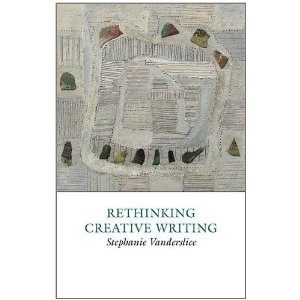
Author Interview: Stephanie Vanderslice on her new book, Rethinking Creative Writing: Programs and Practices that Work


I invited Stephanie Vanderslice to either write a guest post, or to allow me to interview her here on the blog about newest book, Rethinking Creative Writing: Programs and Practices that Work. I loved opening my email a few days later, and finding this:

In appreciation for Lisa Romeo’s generous invitation, and after getting acquainted with her incredibly resource-rich blog, Stephanie decided to cut this obviously crazy-busy writer some slack and interview herself.
Stephanie Vanderslice:  So why this book?  Why now?
SV: Rethinking Creative Writing is actually the culmination of about ten years of work examining and writing about creative writing programs in higher education. In 2001 I worked with the author Tracy Chevalier, who was speaking at our university, the University of Central Arkansas and discovered Chevalier, an American, had done her graduate work in writing at the University of East Anglia, the UK equivalent, in stature, to the University of Iowa.
After talking with Chevalier, I became curious about how creative writing was taught in other English-speaking countries.  The web was just emerging at that point and it dovetailed with my interests beautifully. I spent the next five years forging ties with colleagues abroad and learning everything I could about the history of creative writing in the UK, how and why its path had diverged from ours. This culminated in 2006 with a one month study tour in the UK, visiting other flagship programs such as Bath Spa University. Seeing these programs in action made me realize that creative writing programs in the US could learn a great deal from them. 

Stephanie Vanderslice:  So why isn’t this book titled, Why Can’t We Be More Like the British?

SV:  Well, as I started writing it, I realized that the book just sounded like an anglophile (which I am) scolding American programs and, besides being one-dimensional, that wasn’t going to go over too well here in the US.  Also, looking closely at the programs in the UK made me realize that I really needed to get to know the creative writing program landscape in the US better.

I got an MFA in fiction writing from George Mason University in the early nineties and went on to get a Ph.D. in English with a creative dissertation from the University of Louisiana-Lafayette. I knew a lot of people from other programs (Iowa, Maryland, Emerson, American University) but I only had their perspective on those programs. So I began to really study creative writing teaching in America as well, via the Association of Writers and Writing Programs conference and publications, several books and program histories and of course, what was available online. I was looking for “best practices” at American programs that I could also talk about in my book. And I found them.

Stephanie Vanderslice:  So does creative writing in higher education really need to be rethought? 
SV:  Creative writing in higher education in the US was stagnant for a long time, almost defiantly so. There was this feeling that getting together a few writers and students to form a community,  to lead intense workshops toward a degree—which was how Iowa had started the whole movement—was enough (Mark McGurl writes about this history brilliantly his book, The Program Era: Postwar Fiction and the Rise of Creative Writing). 

In the early years, perhaps it was enough. My book argues that it’s not anymore, not with the sea changes in publishing in the last ten years, not with the exponential growth of MFA programs themselves, flooding the market with aspiring writers. Programs need to be more proactive about how they’re teaching students to make lives for themselves as working artists in the twenty-first century.  They need to think about the world they’re graduating their students into and reflect on how to address that reality that in their courses. They need to go beyond the workshop.

I identified many programs in the US and in the UK that are making these changes, such as the University of North Carolina-Wilmington and Bath Spa University. I told their stories in my book in the hopes of inspiring other programs to take a closer look at the writing educations they were providing their own students.

Stephanie Vanderslice:  So who should read this book?

SV:  If you’re thinking about getting an MFA in creative writing, this book can help you think about what to look for in a program, how to ask the right kind of questions in finding a program to suit your individual needs. If you teach creative writing or help to guide one of the hundreds of creative writing programs in the US and abroad, this book will show you a number of innovative programs and practices that will hopefully help you to think more creatively about your own. 

For example,  UNC-Wilmington’s publishing lab is something many programs could aspire to and the program anthologies that creative writing programs in the UK publish and send to agents and editors (often leading to representation) is definitely an idea ripe for replicating in the US.

Stephanie is also the author of Teaching Creative Writing to Undergraduates, with Kelly Ritter and editor of Can It Really Be Taught?: Resisting Lore in Creative Writing Pedagogy, also with Ritter. Her essays on teaching creative writing are published in many journals and anthologies, nationally and internationally in journals such as College English and New Writing: An International Journal of Creative Writing Theory and Practice. Stephanie publishes creative nonfiction and fiction, is finishing a novel, The Lost Son, and is working on a memoir, Malls of America, about growing up along with this American consumer icon in the seventies and eighties.

Notes from Lisa:  If you have a question for Stephanie, leave it in comments, and she will check back here a few times over the next couple of days to answer. We're also giving away one signed copy of Stephanie's book, to a blog reader. To enter, leave a comment by Feb. 28. (Must have a U.S. postal address.)

Friday, February 10, 2012

Friday Fridge Clean-Out: Links for Writers, Feb. 10, 2012 Edition


►Fans of Julia Cameron's The Artist's Way -- there's an app for that.

►Over at Fiction Writers Review, challenging advice on fiction writing, yearning, and being fearless, from Robert Olen Butler.

►For those who want to do more magazine writing, check out this excellent instructional post on The Science (Not Art) of the Magazine Pitch, from a Stanford University journalism professor. (via @LaurieAbkemeier)

►In a guest post on Jane Friedman's blog, C.S. Lakin has helpful tips for choosing a freelance editor. Since I do that work myself, I'm in favor of prospective clients putting a lot of thought into the selection process, and agree with her advice for a test-drive: "If you’ve found someone who might be the right editor for you, but you’re still hesitant, hire her to edit a few chapters. See how it goes—not just the editing but the overall communication and support."

►I am occasionally asked to suggest online poetry classes that, like mine for creative nonfiction, last only a few weeks, are affordable, and provide a lot of feedback. A poet friend I trust recommends the offerings at The Rooster Moans Poetry Cooperative.

►Poet and essayist Sheila Squillante, on saying goodbye -- to the just-folded MFA program where she earned a degree and once worked, to a writer friend, and more. 

►Northern New Jersey nonfiction writers might want to check out this ArtsQuest  one-day memoir writing conference in Bethlehem, PA on April 28.

►The ASJA (American Society of Journalists and Authors) is hosting a two-hour seminar on "Writing About Your Mother and/or Father," in Manhattan (also available via live webcast) on March 6.

Have a great weekend!

Wednesday, February 8, 2012

Getting the Most from Writing Workshops

Over at the Women's Memoir group on LinkedIn yesterday, someone posed a question about the value of writing workshops. There has been much discussion lately among creative writing teachers (and students) about the relative merits of the traditional workshop model in academia, and I certainly agree that the workshop alone shouldn't be the only element of any writer's education - in or out of the academic setting. However, I don't think workshops should be abandoned, either in MFA programs or the wider writing world, and I also believe that more writers have been helped by workshops than not. That is, writers who go into a workshop with a healthy dose of common sense – and some humility.

As a writer-participant, I have had some wonderful experiences and a few not-so-hot ones around the workshop table, and the same goes for when I lead workshops – some situations turn out better than others, depending on a combination of the mix of writers at the table, and the attitudes and expectations everyone brings, including me.

When someone asks me about how to prep for a workshop, I advise (in addition to turning in your very best work!) learning something about the workshop leader, and asking enough questions in advance so that you understand how the workshop will unfold, as there are different models and approaches, and workshop leaders have varying policies.

Know, for example:  Does everyone get to hear feedback from every other writer at the table? Will the writer whose work is being discussed need to remain silent during the discussion? Does the workshop leader also provide in-depth written detailed feedback as well as roundtable discussion? If it's an on-going series, how many times will your work come up for discussion?  Will there be an instructional component as well as peer review?

One thing I think a lot of people fail to realize (including me, at one time) is that a workshop exists not only so that writers can get feedback on work, but also to provide an opportunity for us to improve critical reading skills and practice articulating what it is about a piece of writing that works (and doesn't) -- and why, and to cogently express ideas about revision possibilities.  When we are better able to do this for others, we are better able to see the possibilities -- and holes -- in our own pages.

When I decide to attend a workshop, I make sure my tough writer skin is in place, my mind is in the open position, and that I've brought along my sense of humor. I try not to expect that the workshop will be a life-changing experience (though two workshops come to mind that did positively upend my writing life.) The same holds for when I lead a workshop, though then I tend to soften the tough skin criteria – a bit, but not too much, because I wouldn't be doing anyone any favors if I metaphorically pat heads and avoid the difficult writing issues presented on the pages.

Everyone who has sat around more than one workshop table will eventually understand we all tend to emerge with a grab bag of mixed options for our work -- terrific feedback, insightful suggestions, exciting possibilities, and some pretty awful or unworkable ideas, and occasional harsh opinions.

Post-workshop:  Digest. Hold onto the good ideas, try out the promising suggestions, see what's possible.  File the rest away.  I won't say where.

Tuesday, February 7, 2012

Guest Blogger Steph Auteri on Building an Author Platform when You Know Nothing About Publicity


While sipping cappuccino at a Rome sidewalk café, my mother and I once bumped into a friend of hers, who lived nearby back home. My mother, relieved she was dressed nicely that day, whispered, "Always remember, it's a small world."  Steph Auteri and I met about three years ago and worked together  -- exclusively online -- when I was a contributing essayist, and she an editor, for YourTango. Then we discovered we lived about 3 miles from one another in northern New Jersey, and even haunted the same café (where no one cares how we dress!). Small world, indeed. Steph is a freelance writer and editor, whose work has appeared in Time Out New York and Inside Jersey. She also works as a career coach to, as she puts it, Word Nerds.

Please welcome Steph Auteri.

Well hello there writer-types on the path to publication. I assume that, much like me, you’ve been workshopping chapter drafts and researching lit agents, drawing up competitive analyses and organizing your annotated Table of Contents, considering your author photo and daydreaming about the book tour you will eventually embark upon. (Because who doesn’t want a book party at their favorite independent bookshop?)

This is all well and good but, in between zeroing in on your target word count and polishing up your book proposal, you may have caught wind of a rumor that the work doesn’t stop when you wrap up your manuscript and land that much-sought-after publishing contract. Authors are ignored, you probably heard. Publicity departments are kaput, you read. Want book sales? The marketing is all on you now.

To an extent, the rumors are true. While there are still publishers doing interesting and innovative things to promote their books (Sourcebooks, for example, once traded book purchases for proposal critiques in an effort to increase sales of Publish This Book), many publicity departments find themselves severely limited by miniscule budgets.

So when a publisher sees proof that an author is self-starting, resourceful, and marketing-savvy — when they see someone with a strong platform, and the knowledge of how best to use it — they’re more likely to take a chance. It means there is a greater probability the publisher will receive a return on their investment.
How can you build your own platform without a lick of publicity experience? Beyond blogs, Facebook pages, and social media, I suggest you focus on your strengths as a writer.

Freelance writers — those who make their money writing articles for glossy magazines, regional newspapers, and other print and online publications — already know this and are masters at platform-building. As their own bosses, they’re not just writers. They’re also business owners, responsible for marketing themselves to new editors/clients on a regular basis. A strong platform helps them bring in more work by spotlighting their experience and expertise. And the more clips they can add to their online portfolio, the stronger their platform.

It’s time you thought like a freelancer and built up your own collection of shorter-form pieces, stories that highlight your abilities as a writer. Luckily, your book project holds a lot of potential when it comes to brainstorming story ideas.

1. Pinpoint a major theme from your book that lends itself to shorter-form articles. This is easy enough when you are writing prescriptive nonfiction, but can be more challenging if you’re writing a novel, memoir, or book of short stories. Still, ask yourself: what is the common thread holding this book together?

2. Generate different types of story ideas. You may think your topic is fairly limited, but there’s a mental exercise I like to employ when I’m feeling stuck for ideas. I take one subject and try to apply it to several common story formats. Those writing prescriptive nonfiction, for example, may find that the subject of their book easily lends itself to service pieces. Those shopping around a full-fledged memoir, meanwhile, may find the personal essay a more natural fit. Some publications prefer listicles (articles comprised mostly of a list – like this one), while others prefer roundups of expert advice. In brainstorming your batch of story ideas, why not hit them all?

3. Do your homework. In the course of generating story ideas, you’ll also have to pinpoint the publications you’d like to target. And there are so many options. Take a field trip to your local bookstore and flip through the newspaper and magazine racks. Consider not only national magazines, but also regional publications, literary magazines, and trade magazines. Back home, check out Mediabistro’s How To Pitch series, or their series on personal essay markets. Or read through the good old Writer’s Market guide. And don’t neglect online publications! Head on over to your favorite web magazines and see who their content partners are. Basically, be open to the variety of possible markets for your work.

4. Query the hell out of a wide range of publications. Once I’ve drawn up a pretty sizable list of story ideas, and have matched them each to a different publication, I get into the querying groove. You can read a more in-depth post on the basics of querying right here. 

5. Build a super-pretty portfolio. By this point, I’m sure you’ve followed everyone else’s advice and have already built yourself a basic website, or at least a blog. Once the assignments — and then the clips — start rolling in, throw them on up there! It will give you something to direct editors to in the future. And eventually, prospective publishers will eyeball it, too. At that point, they will see that you have established yourself as an expert in your subject area, or have at least built up a pretty sizable following. And they will be impressed.

6. Roll around in money and glory. And by glory, I mean pretty dresses, and perhaps a sexy new pair of boots.  

Of course, if this post leaves you wanting even more information, I’ve got you covered. I’ll be revisiting this post over the next few days and answering any questions you care to ask, in the comments.

You can also snag a free copy of Freelance Awesome: A Starter Kit — an electronic workbook containing spreadsheets for idea generation, query letter development, and more — by signing up for my mailing list right here. Finally, if you feel you could benefit from even more, hands-on help, I’m giving one lucky commenter a free pass at one of my one-on-one coaching packages: One Hour to a Word Nerd Action Plan (you can read more about it here). Just answer this one question in the comment section below no later than midnight on Sunday, Feb. 19.
What topic can I write about that will best help me build my unique author platform?