Showing posts with label social media. Show all posts

Tuesday, May 26, 2020

Guest Blogger Christin Geall on Insta-prose: Developing an Audience Through Images

Christin Geall is a Canadian writer, designer, photographer, and author of Cultivated: Elements of Floral Style (Princeton Architectural Press, 2020). Her writing and floral work focuses on the intersections of nature, culture, and horticulture, and she teaches internationally. Trained in horticulture at the Royal Botanic Gardens, Kew, she completed a BA in Environmental Studies & Anthropology and a MFA in Writing (at the Stonecoast Program in Maine, which is where we met), and has been a writing professor and gardening columnist for Gardenista. Architectural Digest called her book “delightfully vibrant” and the Seattle Times recently quipped "Geall might just be the M.F.K. Fisher (American grande dame of food writing) of flowers." 

Please welcome Christin Geall

Flash nonfiction? The segmented memoir? The prose poem? When I was in graduate school studying creative nonfiction, I mastered none of these forms. Despite a background as a lifestyle columnist and editor, I couldn’t write both poetically and short. But I yearned to, so I studied stylists like Abigail Thomas, MFK Fisher, and Annie Dillard.

To get one thing straight right away: I’m a terrible storyteller. And not a great consumer of aural nonfiction stories, either. At dinner parties I’d sooner listen to someone tell a tale as watch them pick their teeth. I like ideas, conversation, and a bit of banter, yes, but I didn’t think myself ironic enough, clever enough, or frankly even online enough, for Twitter. And Facebook, well, I found it either too political or too congenial for decent exchange of thought, much less story.

Enter the image as a writing prompt. A subject for discussion, and suddenly all my storytelling and audience problems were solved. Looking back on how I accumulated 97,000 Instagram followers, and the success of my recent book Cultivated: The Elements of Floral Style (Princeton Architectural Press, 2020), I see now how my training in the micro-essay changed my career as well as my relationship to nonfiction.

I had evolved into a personal essayist, memoirist, and an academic by the time I joined Instagram in 2015, yet I had always struggled to write the longform pieces that my career required. I did possess a deep knowledge and love for plants, so I had thirty years of passion to write about, in addition to a fascination with the ideas and language of the fine arts. Creativity is universal—what I’d learned in grad school about the process of writing, workshopping and critique, I applied to my work with flowers – and then to how I’d tell short stories around them.

On Instagram, where a post is driven by one image, you are limited to 2,200 characters, or roughly about 350 words. Given I’m more sprinter than marathoner, the platform fit. Those 350-ish words, I found, are ample space for a concept to be explained, an idea explored, or even a bit of narration.

As I lobbed ideas to a hash-tagged audience and reflected on their comments, I found my thinking (and opinions) refined. As I encountered friction, or clarification, I entered into conversation. I made friends, of course, learned, networked, and steadily over the past few years, became a sought-after voice in my field.
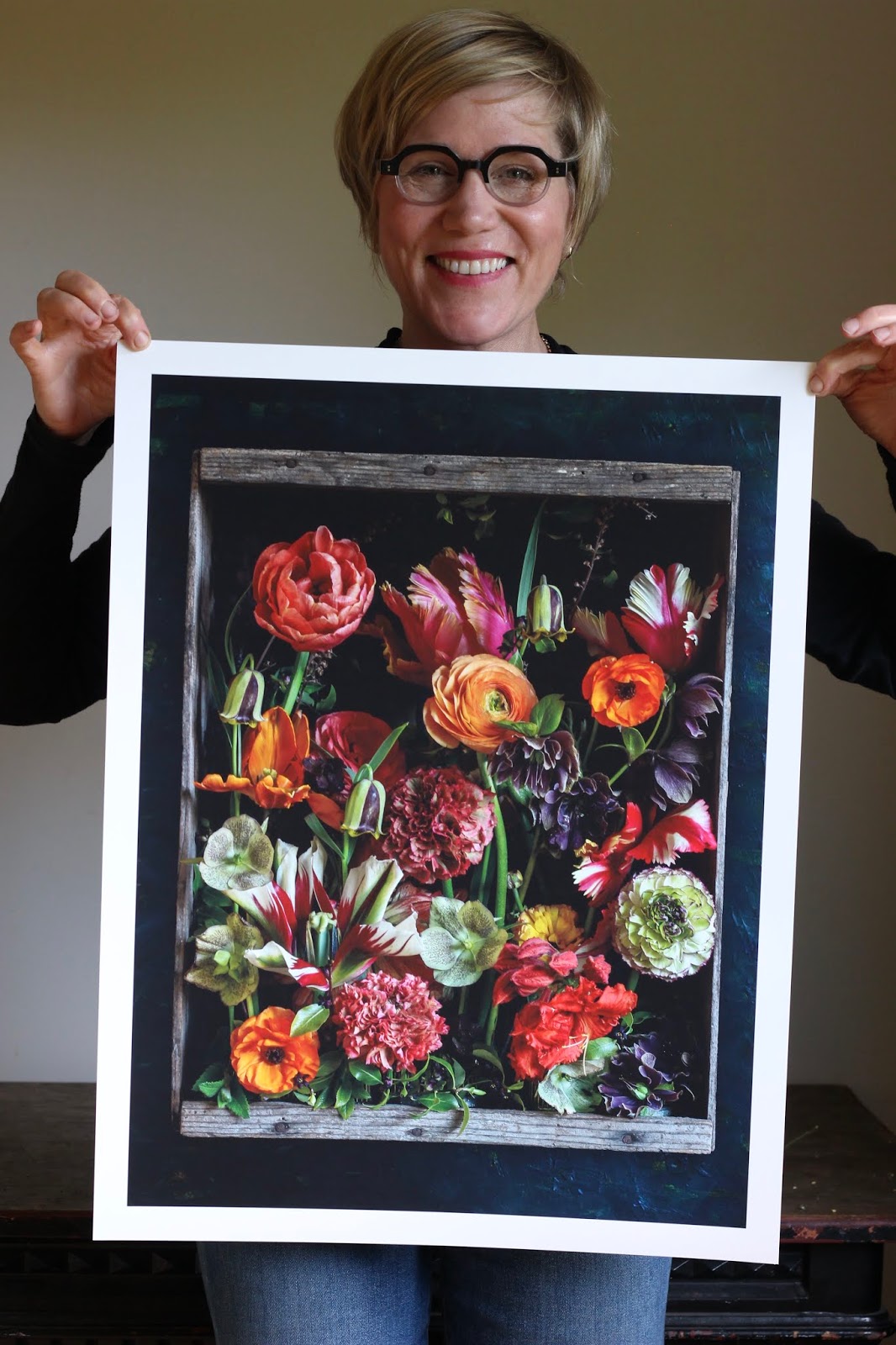
 When the speaking invitations arrived, I was ready; I built my talks with multiple short “stories” about flowers and the ways they connect us with nature, painting, history, ourselves—just as a good essayist, memoirist, or columnist might do on the page.

By the time the book deal happened—a book combining my photographs with short essays on style, creativity, and everything from Baroque music to wabi sabi to the psychology of colour—I not only had an audience who wanted to learn more, but also 20,000 of the 40,000 words needed for the book.

Photography was not something I’d ever truly wanted to learn, but now that I have, I’m grateful for its silence and the way it pulls me creatively. At first, I had to stretch to create images I thought worthy of an Instagram post, let alone a book, but as I learned to use a camera I found the art itself became another subject for inquiry, which is of course, always a good thing for an essayist. Long or short form.

Note from Lisa: You can connect with Christin at her website, and on Instagram, Facebook, or Twitter. You can find her book, Cultivated, at major online retailers, or order from Indiebound or through your local independent bookstore.


Friday, October 30, 2015

Friday Fridge Clean-Out: Links for Writers -- October 30, 2015 Edition

> Can Terry Gross really have conducted some 13,000 interviews for NPR over 40 years? If that information alone gets you excited, then this New York Times profile about the "Fresh Air" host is for you.

> How (or why) to market yourself before you even have a book to sell? The Write Life explains.


> And some tips on Pinterest, Street Teams, and Blog Sharing.

> Fascinating--and visually beautiful piece--at The Morning News, about the intersection of fiction and painting, including narrative arcs, linked scenes, emotional response, and much more. 

> I'm so proud of the Fall issue of Compose Journal, and would love to share it with you. I'm the creative nonfiction editor there, so of course I'm partial to those six pieces, but there's also a slew of terrific fiction, poetry, and an interview with Sonja Livingston about Queen of the Fall: A Memoir of Girls and Goddesses.

> The role of place in essay has been the central theme in many an anthology, including 
Here: Women Writing on Michigan's Upper Peninsula. One of the contributors, Emily VanKley, explores distance, place, geography, and their influence on the nonfiction writing process (over at Essay Daily).

> Some of the literary nonfiction world is at the NonfictioNow conference this weekend in Flagstaff. If, like me, you're not, follow some of the action on Twitter via #NFNow15 or @Nonfictionow.

> Punctuation nerds: you probably really want to know about the earliest use of the ellipsis, right? The Guardian to the rescue.

> Finally, answers to all your important writer life questions via Dear Advice Person Lady.


Have a great weekend!

Friday, August 7, 2015

Friday Fridge Clean-Out: Links for Writers -- August 7, 2015 Edition

> Still need some summer reading? The Atlantic's list (all with links) of "100 Fantastic Pieces of Journalism" is the ticket. Many of the pieces straddle lines between straight journalism, long-form nonfiction, literary journalism, creative nonfiction, and personal essay. The mix ranges from The New Yorker ("This Old Man," by Roger Angell), to Modern Farmer ("The Abstinence Method").

> This is by far the best, most interesting, nuanced argument I've read yet in favor of not only reading Harper Lee's Go Set a Watchman, but also considering what the book's (draft's?) existence suggests about the writer Lee might have become had it been published when first written. I wasn't at all surprised that the byline on this insightful commentary was Ursula K. Le Guin. (And if you missed it, check out Le Guin's speech upbraiding the publishing industry at her recent National Book Foundation awards dinner.)

> Now that the 500-plus panels, presentations, and readings for the 2016 AWP conference have been announced (alas, both of the proposals I was included on did not make the cut from the 1900+ submitted), you can peruse the full list of accepted events at your leisure, leaving you plenty of time to plan for next April in Los Angeles.


> The Essay Prize asked 28 top contemporary essayists to each select their top 10 essays of all time.


> Fiction writers may want to bookmark Now Novel's "151 Must-Visit Writing Websites."

> BookFox has gathered "The Top 20 Places to Submit Flash Fiction" (under 1000 words), ranked by number of website visitors.


> Want to get the hang of Persiscope? Writer/blogger Estelle Erasmus offers some basic guidelines for a quick start.


> Should major traditional publishing houses be able to bar their authors from giving endorsement blurbs to self-published, indie, hybrid, and/or POD books? Brooke Warner, of SheWrites.com and SheWrites Press, weighs in, emphatically.


> If your weekend plans include HippoCamp15, the conference for creative nonfiction writers in Lancaster, PA, please say hello. I'll be around, giving a presentation Saturday afternoon, on a panel on Sunday morning, and otherwise listening, mingling, and hanging about.

> Finally, have a few laughs at the funny/not-funny #ThingsNotToSayToAWriter, which trended last week on Twitter.
Have a great weekend!

Image: Flickr/Creative Commons - USDAGov

Friday, April 11, 2014

Friday Fridge Clean-Out: Links for Writers -- April 11, 2014 Edition

> The Oxford (serial) comma: fan or foe? Or, no idea what the fuss is about? Check out  this short TEDed video. 

> Planning a blog tour (virtual book tour) to help publicize your book?  Dana Sitar lists nine useful tips.

> When author Jill Smolowe needed to help market her new memoir, Four Funerals and a Wedding, she quickly realized social media was not her forte. In a post at SheWrites, Smolowe describes how hewing to the skills and connection style that feels comfortable is delivering results (and peace of mind).

> But if you are working the social media PR angle, then it's handy to understand how time-0f-day posting affects response and interaction. Social Media Today has the details.

> Leslie Jamison, author of a new essay collection, The Empathy Exams, shares thoughts about writing the personal essay, over at Publisher's Weekly.

> Looking to expand your literary reading? At the Ploughshares blog, Steph Auteri lists some favorite literary mags, lit blogs, lit sites, online lit resources.

> Not a new piece, and not a quick read, but Debra Gwartney's excellent  "
A Few Memoir Pitfalls, and some thoughts on how to avoid them," is well worth the time.

>Songwriters apparently sometimes suffer a form of writer's block too. Here's what Sting did and where he went to break out.

> Novelists grappling with timelines and time-related logistics in their unfolding plots, flashbacks, and backstory will appreciate Kathy Crowley's tips, insights, and systems.

> Finally, got a pet business-speak language peeve? Is it "reach out"? Then you might enjoy this, from ThinkMap.  And, what would a mash up of the Amtrak writers residency and an oddly named literary journal look like

Reminder:  If you're interested in *I Should Be Writing!* Boot Camp: Reclaim Your Writing Life, the final 2014 group class begins on Monday, 4/14.  


Friday, March 14, 2014

Friday Fridge Clean-Out: Links for Writers -- March 14, 2014 Edition

> In The Atlantic, Megan McCardle breaks down the psychological origins of procrastination, and explains why writers are such champions in this department. 

> The Boston Public Library offers an annual Writer-in-Resident fellowship, offering a private office and $20,000 stipend over nine months, to an emerging children's writer. The current and former recipients talk about the experience

> How much do I love notebooks?  I keep a large writer's notebook near my desk at all times, and stash tiny ones (Staples sells the 2" x 4" ones in groups of five, often on sale), in car, purse, laundry room, kitchen, bathroom.  Jessica Morell concurs.

> Scrabble players: Nominate the word you think should be added to the official Scrabble dictionary's next edition. 

> The National Book Critics Circle book awards are finalized, and you can find the list and links to excerpts from some over at The Millions.

> Whether you're visiting book clubs from your own dining room table, participating in an online class or critique group that meets via Skype, or conducting interviews, you can use these three tips for looking good on your webcam.

> I have one or two of these "10 Self-Limiting Habits Successful Writers Don't Have," but I fight them, sometimes successfully.

> If you're promoting a book or writing-related event, or sharing links to your published work or resources, the time of day when you post to social media sites does matter.

> This article is nearly a year old, and Ms. Howard has since died, but I'm still passing it around, especially to any writer friend who moans about being too old for this game.

> Here's a cool step-by-step peek into the art and process of designing a book cover when the book's subject is well-known (and not universally liked).

> Finally, rejection is rarely fun, but the Form Rejection Decoder Thingy (pdf) by Sarah Einstein, is. (via Brevity)

Have a great weekend!

Image: G&A Sattler/Flickr Creative Commons

Friday, November 8, 2013

Friday Fridge Clean-Out: Links for Writers -- November 8, 2013 Edition

> Here's a beautifully succinct, but substantial piece, by Stephanie G'Schwind at Essay Daily, on parallel narratives in essay, with links to illustrative essays in the Colorado Review (hat tip - Brevity blog).

> Like podcasts about writing, book publishing, and marketing? Thanks to Marion Roach Smith (who has a terrific blog on memoir writing), for alerting me to this trove of more than 160 podcasts by Joanna Penn over at her Creative Penn site, also a vital resource. 

> On YouTube, coach Debbie Reber is compiling a series of (mostly-under three minute) answers to commonly asked questions, such as the importance of the title of a book, what permissions are needed, the difference between royalties and an advance, when book promotion should begin.

> Very cool Tumblr -- self-pics of writers at work at Every Day I Write The Books. No carefully made-up, staged shots here, just regular folks cranking out the words, wherever, whenever. Any writer can send in their own photo.


> Wooden Horse Publishing asks an intellectual law attorney to explain the intersection of copyright and the web (and whether everything on Facebook is up for grabs).


> Not new, but helpful: Jane Friedman with a comprehensive, clear breakdown to help you "Understand the Key Book Publishing Paths" (pdf) -- traditional, partnership, fully assisted, DIY plus distributor, and DIY direct. Plus "special and hard to classify cases."


> A few months ago, Vela Blog posted an "Unlisted List" of women writers (dozens and dozens of them, with links to their work!): 
"A list of women writers of various forms of creative nonfiction that future list-makers and anthologists, should they notice that their inclusion of women is on the paltry side, might peruse and thereby make their “bests” and “greats” better and greater, their collections more representative of the world we live in, rather than reminiscent still of those dead white guys we were raised up on..." Plus, lots of additional suggestions in the many comments.

> Still mystified by Twitter, or just a late adopter?  The New York Times' Personal Tech blog breaks it down

> Finally, the terrible, horrible, no good, very bad business of being a successful best-selling author. Yes, lots of non-writing tasks are required. Yes, those activities squeeze out writing time. But, seriously?


Have a great weekend!

Tuesday, September 18, 2012

Some days, the news is all good, so what could be bad about that?


I love seeing good news from writers I know personally, those I would like to get to know, from authors I admire, publishers I respect, from literary publications I enjoy, and the writing organizations I belong to or follow for the good work they do.  Usually this comes in the form of Facebook, Twitter, and LinkedIn updates, as well as emails, newsletters and blog posts. 

In a few minutes (often a few too many minutes!) I get all the up-to-date info on who just signed with an agent, whose manuscript just sold to which publisher, what literary award was earned, which grant received.  It all scrolls by my eyes, all that great good news I'm happy to hear – whose essay is now live at what site, which bookstore is hosting what author, which writer just got hired by what college to teach which genre, whose book made a coveted list.

When I can, when I have a minute or it's news I've been hoping for on someone else's behalf, I click Like, or write a quick Kudos! comment, or just nod and smile and think, that's great.

And then there are the other days. The ones when I just don't want to know. I don't.  The days when I nearly sneer at the screen and think, sarcastically, yeah terrific. Days when the last thing I want to hear about is another writer (who is not me) accomplishing something, getting awarded something, getting published someplace, landing an agent, book deal, teaching job, residency.

It's not that I want writers to stop tooting their horns. We all need to, once in a while. Plus, it's a career imperative, bound up in platform building, book promotion, student recruitment, reader engagement, and editorial relationships.

And of course I do this myself too, and yet even while doing so, I'm aware of a double edged reality; that there are writers out there – in many cases who may in fact even like me or wish me good things – who on a given day just don't want to hear about anyone else's good fortune. 

Because maybe that day for them (as it is for me some days), the manuscript-in-progress is being an uncooperative bitch, or the machinery of freelancing is slow and cruel and broken, or the email inbox is filling with too much rejection for a single day.  Or maybe none of that happens, but even so, it's still too much to contemplate all the good things happening everywhere else to everyone else.

On those kind of days, I avoid social media, open emails carefully if at all, and take no meandering walks around the internet. Those days, I kind of long for the days when good news only arrived once a month between magazine covers which you could then either read in the bathtub or stack on a shelf, or at a monthly networking meeting when you could blunt the impact with a glass of wine, or in a chatty phone call which you could field while cooking or painting your nails.

I get over it quickly, and fairly soon I am back to being happy for everyone, retweeting and sharing their good news. Still, I think my father was onto something when he used to say, in the days before cell phones and email and CNN, "No news is good news."  

Friday, December 30, 2011

Friday Fridge Clean Out – Links for Writers, December 30, 2011 Edition


Riverteeth Journal has announced its first Nonfiction Conference, May 18-20, 2012. Robert Atwan and Hope Edelman are featured guest speakers. Check out the full schedule and other writers on the agenda (including many friends of this blog) here.

►Tips for writers on using LinkedIn (via Poets & Writers).

► Carol Tice has few – make that 113 -- tips for growing one's freelance writing income.

► Anna Quindlen has called World Book Night (a huge give-away event scheduled for April 23, 2012), "..like Halloween on an intellectual level."

► Speaking of giving away books, I was awed to learn about The Book Thing, a Baltimore book *store* which collects and then gives away books. Free. To Everyone. Really. (hat tip Jenny Rough)

► The January 2012 Mindful Writing/River of Stones challenge is to, quite simply: "1. Notice something properly every day during January. 2. Write it down." Get more info at the Writing Our Way Home blog or Facebook page.

►What do you think about the idea of "paying" for something (ebook, video) with a Twitter message or Facebook update announcing the "purchase"? (via GalleyCat)

►In a wonderful interview at Hippocampus, Beverly Donofrio talks writing process (and so much more): "I print out constantly and edit with a pencil. On the memoir I’m writing now, I rewrite and polish a chapter until I think it is good and it is finished. I pin it to the wall. Write the next chapter till I think it is good and finished, then go back to the previous chapter and sometimes the one or two before that one. Invariably I find that none are good enough or finished. But, by moving on to the next, I’ve gained enough distance to view it with a fresh eye. My first take on situations, my memories, the stories I want to tell is fairly superficial. I hate this about myself: I’m fairly superficial. Only through writing do I go deep, and each draft brings me deeper still. Perhaps if my default weren’t to be so shallow, it would take many less drafts to get to the good stuff: the truth."  Read the full interview here.

►Finally, did Santa strike out this year? Out of Print Clothing has a nifty selection of tees featuring classic book covers. And Rokki Handbags turns actual old books and vintage album covers into cool handbags and totes.

Have a great weekend.

Friday, November 5, 2010

Friday Fridge Clean-Out: Links for Writers. November 5th Edition

► Even if you're not a poet, a rhyming dictionary can be fun. This one is online and free (hat tip Pimp My Novel's fabulous and always funny Friday Round-up by Laura).

►What are the economic realities of being a novelist? Catherine Ryan Hyde shares. Warning: you may wish to be seated, drink at hand.

► Authors setting up a Facebook fan (sorry, "Like") page should consider delivering a "signature experience" according to this advice from Amy Porterfield (via Arielle Ford on HuffPo).

► I've done my share of fact-checking at numerous jobs and couldn't help but feel a mix of nostalgia, indignation and resignation when I read this piece (WAY back in August) about what passes for fact-checking at many online venues today.

► The pro/con Is An MFA Worth It? debates continues. This one runs down the pro side of the list, from an instructor's perspective. Here, another look at the question, with links to some of the most relevant screeds, endorsements and tips.

Puking. Hot-blooded. Alligator. What do they have in common? Oh, my liege, you need to brush up on words Shakespeare invented. Be warned: This one's from Cracked.

► Chuck Sambuchino on "writing for love and money." Are there any other reasons?

► Finally, when an agent or editor says sure, send it along, that amounts to "requested materials." How to send them? Probably not like this.

Have a great weekend.

Friday, May 14, 2010

Friday Fridge Clean-Out: May 14th Edition

► Over at Digital Book World, there is an excellent interview with Gretchen Rubin, author of The Happiness Project (a NY Times bestseller), about the ever-increasing value of social media to today’s writer, how she managed to engage thousands of readers several years ahead of her publication date, and tips for keeping all that outreach from making a writer unhappy.

►I've been lax in regularly relaying to my readers other writing blogs I’ve come across and think are worth the time, depending on your interests. Please do check out: Write it Sideways, Writer Unboxed, Plot Whisperer for Writers and Readers (not just for fiction folks), and MamaWriters: Raising Kids, Writing Romance.

► The 10,000 Words blog has a list of helpful, (mostly) free web tools to solve various tech dilemmas, including resizing photos, embedding audio, and turning a spreadsheet into graphics.

► Pimp My Novel offers this insider’s explanation of what the various departments do within a major traditional publishing house.

►I admit it, I love the comma, so I’m grateful to Fog City Writer for pointing me to this vintage piece by Pico Iyer piece, in which he praises this humble piece of punctuation. I also love FCW’s sometimes cheeky Friday posts, too.

► Don’t forget, if you want to win a signed copy of the new novel Cars From a Marriage by Debra Galant (I interviewed here yesterday), please leave a comment on that post (NOT here). You have until May 20 to try your luck.

► And finally, what writer hasn’t, at some low point, appealed for divine intervention to get through the next chapter, page, sentence? Check out Jenny Rough’s A Writer’s Prayer. (I chimed in on the comments, too, with my own slightly less-reverent, highly pragmatic version).

Have a great weekend.

Friday, January 15, 2010

Friday Fridge Clean Out: January 15 Edition


• In a 1969 interview with E.B. White on the art of the essay from the archives of The Paris Review: I have no warm-up exercises, other than to take an occasional drink. I am apt to let something simmer for a while in my mind before trying to put it into words. I walk around, straightening pictures on the wall, rugs on the floor—as though not until everything in the world was lined up and perfectly true could anybody reasonably expect me to set a word down on paper.”

•Kudos to fellow Stonecoast MFA alumna Kim Dana Kupperman, whose essay collection, I Just Lately Started Buying Wings: Missives from the Other Side of Silence, won the 2009 Katharine Bakeless Nason Prize in Nonfiction, and will be published this summer by Graywolf Press

GalleyCat, the popular publishing industry news blog at Mediabistro, will begin posting book reviews.

•You labor for years, writing, writing, writing. Finally a book's success brings in some decent money...and then do you give most of it away to charity, while inspiring others to make contributions too? Patrick Rothfuss, author of The Name of the Wind, did. "I thought, 'I've been poor my whole life,'" he recounted. "'I might as well be poor for a good reason.'" His story here.

•I liked memoirist Dani Shapiro’s post about publication anxieties. I like her whole blog, too.

The slush pile is dead. I think most people pretty much know this already, but apparently the Wall Street Journal just got the memo. Still, it was sobering to read (yet again) about the marketing-over-literary value judgments in today’s publishing industry:

A primary aim of the slush pile used to be to discover unpublished voices. But today, writing talent isn't necessarily enough. It helps to have a big-media affiliation, or be effective on TV. "We are being more selective in taking on clients because the publishers are demanding much more from the authors than ever before," says Laurence J. Kirshbaum, former CEO of Time Warner Book Group and now an agent.

"From a publisher's standpoint, the marketing considerations, especially on non-fiction, now often outweigh the editorial ones. "These days, you need to deliver not just the manuscript but the audience," says Mr. (Jim) Levine (of Levine Greenberg Literary Agency). "More and more, the mantra in publishing is 'Ask not what your publisher can do for you, ask what you can do for your publisher."

•Check out this meaty interview with novelist Tayari Jones.


•Not sure what wiki wart, mobile necking, and blog dodger mean? Get the deets on these and the rest of the latest social media buzzwords here.


•One writer’s take on the problem with the marriage memoir.

•Joyce Carol Oates, author of some 80 novels and short story collections, is to publish her first memoir. An article at WSJ Online, notes the book will cover, the aftermath of her husband Raymond Smith's death in February 2008. She describes the book, "A Widow's Memoir," as practical and darkly funny (Ms. Oates says she plans to include a "widow's handbook" with advice on fundamentals such as how to pick out a grave plot).” Oates is legendary for her self-editing, the article explains: "She's an obsessive self-editor. She has rewritten short stories and revised a novel after publication for anthologies or updated editions of her books. She had a finished manuscript of her recent novel, "Little Bird of Heaven," but held onto it and rewrote it after her husband's death, in part to keep herself occupied, she said. During a reading in the fall at Barnes and Noble in New York, Ms. Oates told the audience that "Little Bird of Heaven" was "a life line" after her husband died, and the only thing that got her out of bed.”

•A Room of Her Own Foundation now has an online book club and blog.


Have a great weekend.

Sunday, October 26, 2008

Twitter, Tweet, Twitterpated

One of my clients is using Twitter to lure in more website visitors, so they'll get interested in subscribing and/or buying products from the site. An editor friend is taking a break to read through the Twitter postings of friends every hour or so, to keep from going insane while doing tedious edits on a scientific manuscript. Me? I'm wandering around Twitter every so often to get a feel for this newest social/business communication tool. Occasionally I also Tweet.

So, it being Sunday night, and having just wrapped up plans for a class I'm teaching tomorrow morning, and my brain feeling a little lazy, here's what just occurred to me: In the movie, when Bambi emerged from hibernation to discover he'd started growing antlers and no longer felt like a little boy, and instead starting falling in love with Faline, all the other little animals said, "Aw, he's twitterpated".

So, what'll we call falling in love w/Twitter?

P.S. If you feel about Twitter the way I did six weeks ago (What the??), then click here for the details - clever & quick.